
Original Source: Journal of Clinical Psychiatry, all rights reserved. —
This Academic Highlights section of The Journal of Clinical Psychiatry presents the highlights of the virtual consensus panel meeting “Comparative Evidence in Adjunctive MDD: A Network Meta-Analysis Perspective,” which was held June 29, 2026.
The meeting was chaired by Andrew J. Cutler, MD, Department of Psychiatry and Behavioral Sciences, SUNY Upstate Medical University, Syracuse, New York, and Neuroscience Education Institute, Malvern, Pennsylvania, and Roger S. McIntyre, MD, FRCPC, Department of Psychiatry, University of Toronto, Toronto, Ontario, Canada (correspondence: [email protected]; 77 Bloor St. W Ste 617, Toronto, Ontario M5S1M2, Canada). The faculty were Christoph U. Correll, MD, Donald and Barbara Zucker School of Medicine at Hofstra/Northwell, Department of Psychiatry and Molecular Medicine, Hempstead, New York; Northwell, New Hyde Park, New York; Charité Universitätsmedizin – Berlin, Department of Child and Adolescent Psychiatry, Berlin, Germany; German Center for Mental Health (DZPG), partner site Berlin, Berlin, Germany; and Einstein Center for Youth Mental Health (ECYM), Berlin, Germany; Joseph F. Goldberg, MD, Department of Psychiatry, Icahn School of Medicine at Mount Sinai, New York, New York; and Stephen M. Stahl, MD, PhD, Department of Psychiatry, University of California, San Diego, and Honorary Visiting Senior Fellow, University of Cambridge.
Financial disclosures appear at the end of the article.
Sponsor Acknowledgment: This evidence-based, peer-reviewed Academic Highlights article was prepared by Healthcare Global Village, Inc. The meeting was sponsored by Johnson & Johnson/Intra-Cellular Therapies, Inc. Content development and consensus recommendations reflect the independent clinical perspectives of the participating faculty. Editorial support was provided by Shailesh M. Advani, PhD, and Ryan R. Bailey, PhD, OTR/L, with funding from Johnson & Johnson/Intra-Cellular Therapies, Inc.
Published Online: October 23, 2026.
To Cite: Cutler AJ, Correll CU, Goldberg JF, et al. Adjunctive atypical antipsychotics in major depressive disorder: a network meta-analysis perspective and consensus panel discussion. J Clin Psychiatry. 2026;87(4):JCP.hlumnma2608.
To Share: https://doi.org/10.4088/JCP.hlumnma2608
© 2026 Physicians Postgraduate Press, Inc.
INTRODUCTION
Major depressive disorder (MDD) is a prevalent and disabling psychiatric condition globally, impacting almost 332 million individuals, or 5.7% of the global adult population.1,2 Globally, MDD is responsible for 56.3 million disability-adjusted life-years, corresponding to an age-standardized prevalence rate of 4,006.8 cases per 100,000 population.1 Further, MDD shows a predisposition toward women, with prevalence rates approximately 1.5 times higher than those reported among men (6.9% vs 4.6%, respectively).2 Differences in prevalence of MDD across regions are driven by multilevel factors including disparities in social determinants of health, family history of psychiatric disorders, demographic characteristics, comorbid medical conditions, access to healthcare, and broader socioeconomic and environmental stressors.3,4
MDD is characterized by persistent, depressed mood and/or a marked loss of interest or pleasure in previously enjoyable activities, accompanied by cognitive, emotional, and somatic symptoms that significantly impair daily functioning.5 Common symptoms include fatigue, sleep disturbance, appetite changes, impaired concentration, feelings of guilt or worthlessness, psychomotor changes, and recurrent thoughts of death or suicide.2 MDD is associated with substantial morbidity, impaired quality of life, reduced work productivity, increased healthcare utilization, and elevated suicide risk, making effective long-term management a public health priority.6,7
Despite the availability of effective pharmacologic and psychological treatments, MDD is frequently characterized by relapses and recurrence. Relapse refers to the return of depressive symptoms during the same depressive episode following remission, whereas recurrence denotes the onset of a new depressive episode after recovery.8 Approximately 25% to 50% of patients experience relapses within 6 months of antidepressant discontinuation, while continued treatment significantly reduces, but does not eliminate, the risk of relapse.9,10 Findings from the Sequenced Treatment Alternatives to Relieve Depression (STAR*D) study similarly demonstrated substantial relapse rates among patients who achieved remission, with relapse rates varying according to the treatment step.11 Lifetime recurrence rates may exceed 80%, underscoring the chronic and recurrent nature of the disorder.8
Current guidelines recommend early identification of inadequate treatment response and implementation of evidence-based treatment optimization strategies. Several factors dictate management of MDD and follow a stepwise and individualized approach based on symptom severity, treatment history, comorbidities, and patient preferences. First-line treatment typically includes psychotherapy, pharmacotherapy, or a combination of both.12 Commonly recommended antidepressants include selective serotonin reuptake inhibitors, serotonin-norepinephrine reuptake inhibitors, bupropion, and mirtazapine because of their established efficacy and tolerability profiles.12,13 Evidence-based psychotherapies such as cognitive behavioral therapy, interpersonal therapy, and behavioral activation are also effective treatment options.14,15
For patients who fail to achieve an adequate response after an appropriate antidepressant therapy, treatment strategies include optimizing the dose, switching to a different antidepressant of a different primary mechanism, or combining the current antidepressant with a second antidepressant or another agent that has antidepressant properties.16,17 Among the agents used in this way, atypical antipsychotics are the most established, and several have received regulatory approval for adjunctive use in MDD.18,19 Atypical antipsychotics differ with respect to efficacy, tolerability, and cardiometabolic risk,16,20,21 allowing clinicians to individualize treatment based on patient characteristics, treatment history, comorbidities, and preferences.22
Real-world treatment patterns suggest that adjunctive atypical antipsychotics remain underused and are often introduced late in the treatment course of MDD, despite being established evidence-based options for patients with an inadequate antidepressant response.23,24 Available observational data indicate that only a minority of appropriate patients receive adjunctive atypical antipsychotic treatment, and when augmentation is used, initiation is frequently delayed until after multiple treatment failures and prolonged periods of inadequate response. Observational studies show that only 2%–4% of eligible patients receive any adjunctive atypical antipsychotic therapy, with initiation frequently delayed for months after diagnosis and, in some cohorts, occurring more than 400 days after the start of antidepressant treatment.24,25 This underutilization may prolong exposure to ineffective treatments, delay symptom improvement, and increase the risk of persistent illness, relapse, and functional impairment. Earlier and more consistent implementation of evidence-based treatment strategies therefore represents an important opportunity to improve patient outcomes.
Although several approved adjunctive antipsychotic treatments for MDD exist, direct head-to-head comparative trials remain very limited. As a result, treatment selection is frequently based on indirect evidence, individual efficacy and safety profiles, and clinical experience rather than robust comparative effectiveness data. Network meta-analysis (NMA) enables indirect comparisons across a connected network of randomized controlled trials sharing a common comparator, most commonly placebo plus antidepressant therapy.26–28 Recently, two NMAs examining the efficacy, safety, and tolerability of FDA-approved adjunctive atypical antipsychotics in MDD were published to narrow the evidence gap.27,28 The purpose of this consensus panel report was to critically discuss the comparative evidence from the two recent and relevant NMAs and to translate their findings into guidance for the practicing clinician.
METHODS
To evaluate the comparative efficacy, safety, and clinical utility of approved adjunctive atypical antipsychotics for MDD, an expert consensus panel was convened virtually to review and discuss evidence from two recently published NMAs.27,28 The panel was established to provide clinical interpretation of the available comparative evidence and to identify areas of consensus regarding the use of adjunctive atypical antipsychotics in patients with an inadequate response to antidepressant therapy.
The discussion was conducted using a semistructured discussion guide and moderated to ensure comprehensive evaluation of the evidence. Panelists reviewed the methodology, data sources, strengths, limitations, and clinical relevance of NMA as a tool for comparative effectiveness assessment. Efficacy, safety, and tolerability results across approved adjunctive atypical antipsychotic therapies from the two NMAs were reviewed.27,28 The panel also discussed the practical implications of the findings for clinical decision-making, including treatment selection, sequencing of adjunctive therapies, management of adverse effects, and application of the evidence in routine clinical practice. Emphasis was placed on balancing efficacy and tolerability to support individualized treatment approaches for patients with MDD.
The expert panel consisted of five internationally recognized psychiatrists with expertise in mood disorders and psychopharmacology. The discussion was co-chaired by Roger S. McIntyre, MD, FRCPC, Professor of Psychiatry and Pharmacology at the University of Toronto, and Andrew J. Cutler, MD, Clinical Professor of Psychiatry at SUNY Upstate Medical University and Chief Medical Officer of the Neuroscience Education Institute. Additional panel members included Christoph U. Correll, MD, Clinical Professor of Psychiatry and Molecular Medicine at the Zucker School of Medicine at Hofstra/Northwell and The Zucker Hillside Hospital; Joseph F. Goldberg, MD, Clinical Professor of Psychiatry at the Icahn School of Medicine at Mount Sinai; and Stephen M. Stahl, MD, PhD, Adjunct Professor of Psychiatry at the University of California, San Diego, and Honorary Visiting Senior Fellow at the University of Cambridge.
Following the panel discussion, the meeting transcript was analyzed using a qualitative descriptive approach29 to identify themes that emerged across discussion topics, which were framed as consensus statements summarizing panel agreement. Four key consensus statements emerged from the discussion and are presented below.
COMPARATIVE EVIDENCE WITHOUT HEAD-TO-HEAD TRIALS
Consensus Statement 1
Network meta-analysis offers the most rigorous available quantitative approach for indirect comparisons for the approved adjunctive atypical antipsychotics in major depressive disorder, where head-to-head trials do not exist.
What Is Network Meta-Analysis?
NMA is an extension of conventional pairwise meta-analysis that enables the simultaneous comparison of multiple interventions within a single analytical framework. Unlike traditional meta-analysis, which can only compare treatments that have been evaluated directly against one another, NMA combines both direct evidence from head-to-head randomized controlled trials and indirect evidence derived through a shared comparator, allowing estimation of relative treatment effects even when direct comparative studies are unavailable (Table 1).30–32
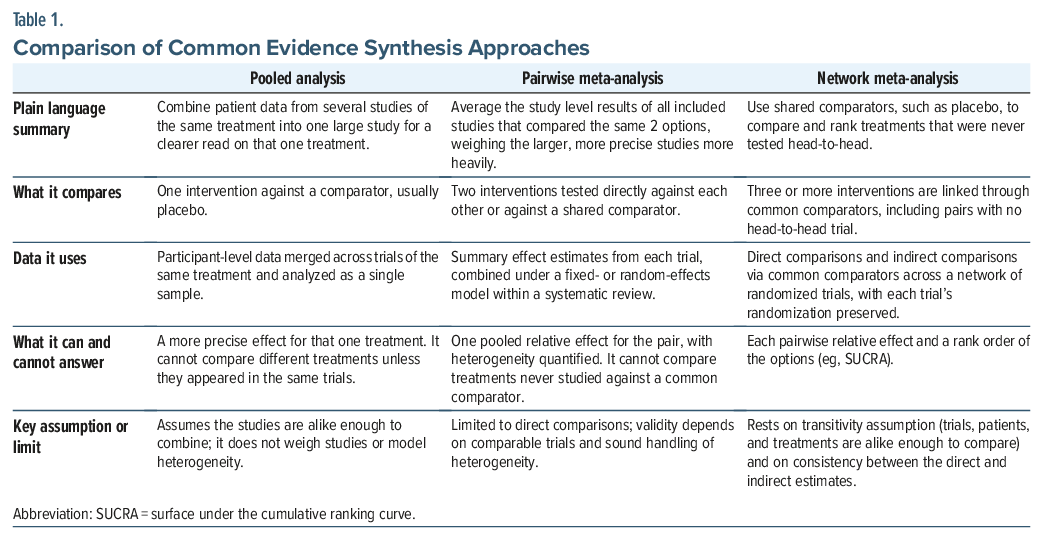
Pooled analysis is a statistical approach that combines results from multiple independent studies to generate a single overall effect estimate. By synthesizing study-specific effect sizes, pooled analysis increases statistical power, improves the precision of estimates, and provides a more comprehensive assessment of the intervention effect than any individual study alone.33,34 Additionally, subgroup and predictor analyses are possible that take each patient’s characteristics, actually received treatments, and outcomes into account. In a meta-analysis, the pooled estimate is typically calculated as a weighted average of individual study (not individual patient) results, with greater weight assigned to studies that provide more precise estimates. Conventional meta-analyses and pooled analyses, however, cannot compare treatments that were never tested against one another, which is a limitation that is addressed by the NMA. In practical terms, NMA constructs a network of evidence connecting multiple interventions through common comparators (Figure 1). For example, if Treatment A and Treatment B have each been compared with placebo but not with each other, NMA can generate an indirect estimate of the relative effect of Treatment A versus Treatment B. Further, NMA can also integrate direct comparison results (eg, between Treatments C and D). By integrating direct and indirect evidence across a connected network of interventions, NMA enables simultaneous estimation of relative treatment effects for multiple interventions, including comparisons for which direct head-to-head evidence is unavailable or insufficient. Additionally, a distinct advantage of NMA is its ability to rank multiple treatments simultaneously using statistical measures such as the surface under the cumulative ranking curve (SUCRA) to estimate the probability that a treatment is among the most effective, safest, or best tolerated.35
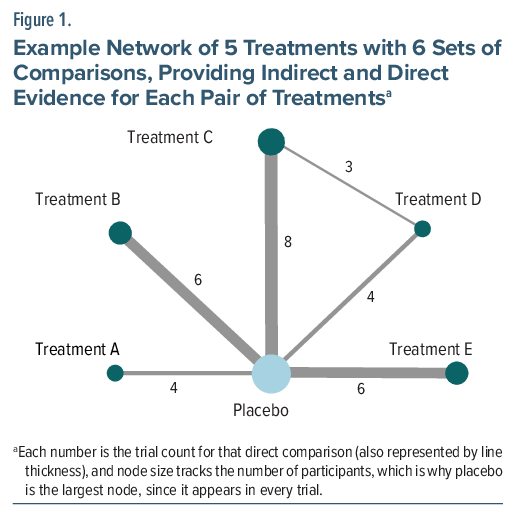
The validity of any NMA depends on several key methodological and statistical assumptions. The most important is transitivity, which assumes that studies included in the network are sufficiently comparable with respect to study design, patient characteristics, disease severity, treatment history, intervention dose, outcome definitions, and other potential effect modifiers. Under this assumption, valid indirect comparisons can be made between interventions that have not been directly compared in randomized trials against a common comparator.30,31 Closely related to transitivity is joint randomizability, which assumes that the interventions and study populations are sufficiently comparable that participants could, in principle, have been randomized to any treatment in the network.36,37 The additional concept of consistency requires agreement between direct (actually conducted trials) and indirect (statistically derived) estimates, whereas heterogeneity reflects clinical or methodological differences across studies that may influence treatment-effect estimates.36,37
The panel asserted that when direct comparative studies are unavailable, NMA represents the highest level of comparative evidence for evaluating multiple treatment options simultaneously. In the field of adjunctive atypical antipsychotics for MDD, where head-to-head randomized trials are largely absent, NMA provides the most rigorous available approach for comparing efficacy and safety across therapies. The panel therefore endorsed NMA as the preferred methodological framework for informing evidence-based treatment selection in the current evidence environment.
Two Complementary Network Meta-Analyses
The two recently published NMAs evaluated the efficacy, safety, and tolerability of adjunctive atypical antipsychotics for MDD.27,28 Both included adults with MDD who had demonstrated an inadequate response to antidepressant therapy, and both evaluated approved adjunctive atypical antipsychotics in combination with background antidepressant treatment. The agents investigated in the NMAs included aripiprazole, brexpiprazole, cariprazine, quetiapine extended-release (XR), and lumateperone. The two analyses are complementary rather than competing; they address the same clinical question while differing in which trials they admit and in study design, including study and population selection, treatment-node definition, statistical models, and effect measures (Table 2).27,28
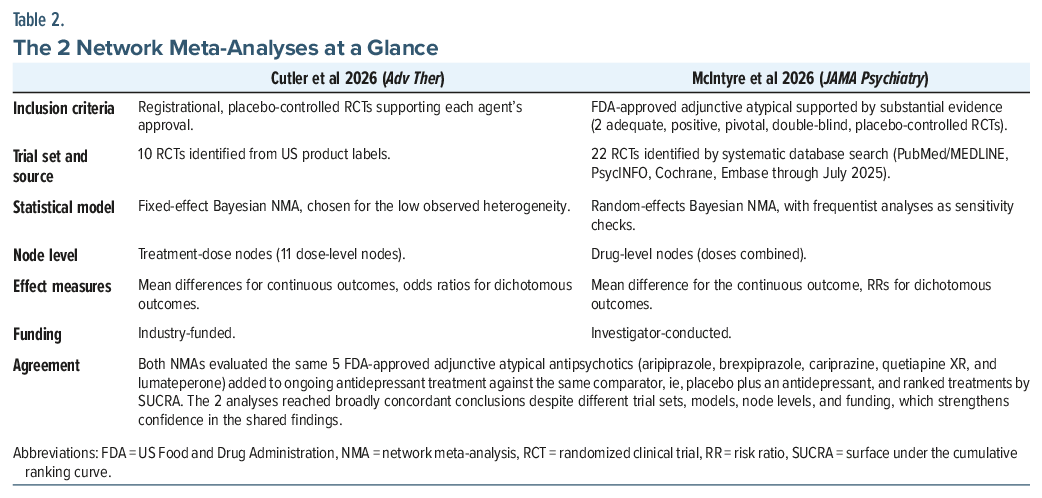
Despite the NMA studies’ differences, their conclusions were highly concordant. The panel considered this agreement particularly important because the analyses were conducted independently and differed in sponsorship, evidence base, and analytical assumptions; concordance across these approaches strengthens confidence that the observed comparative findings do not depend on a single analytical framework.
Several effect modifiers should nevertheless be considered when interpreting the results. These include baseline depression severity, duration of the current depressive episode, the number and definition of prior antidepressant treatment failures, prospective versus retrospective confirmation of inadequate response, study duration and era, geographic setting, number of treatment arms, type of concomitant antidepressant therapy, and second-generation antipsychotic dosing or titration strategy. Each of these factors can affect the drug-placebo differences within individual trials, which in turn influences between-treatment comparisons in indirect analyses. The number of trials contributing to each estimate, and the balance of positive and neutral studies among them, can likewise affect the magnitude and precision of the pooled effects. Although placebo-arm response was not explicitly modeled as an effect modifier in either analysis, it also represents an important unmeasured source of variation that can influence indirect treatment comparisons, particularly between newer and older agents, because placebo response varies with patient characteristics, study design, and study era.38 These considerations do not invalidate the NMA findings, but they underscore the importance of interpreting treatment rankings and between-agent differences within the context of the underlying evidence network and clinical trial characteristics.
COMPARATIVE EFFICACY OF THE APPROVED AGENTS
Consensus Statement 2
Across both network meta-analyses, nearly all agents showed efficacy over placebo, and lumateperone consistently ranked first.
Antipsychotic Agents Showed Efficacy Over Placebo
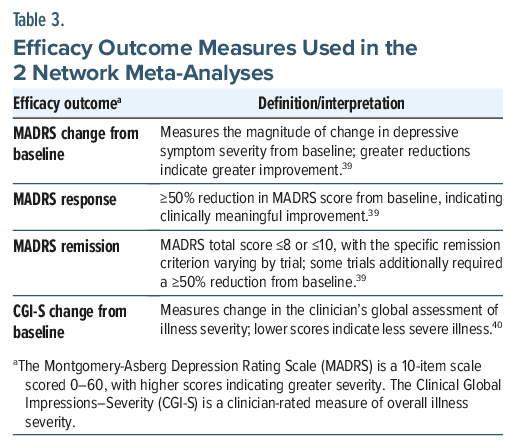
Efficacy was assessed using four complementary measures, although their role and priority differed between the two NMAs.27,28 Each measure is defined in Table 3. Montgomery–Åsberg Depression Rating Scale (MADRS) and Clinical Global Impressions–Severity (CGI-S) change from baseline scores were continuous outcomes that reflect the magnitude of change in depressive symptoms and clinician-rated overall illness severity, respectively, whereas MADRS response and remission were dichotomous outcomes, indicating whether predefined thresholds were achieved. Cutler et al reported all four without designating a primary outcome,27 whereas McIntyre et al designated MADRS response as a co-primary outcome,28 with MADRS remission and change from baseline (termed “severity of depressive symptoms” in their analysis) as secondary efficacy outcomes.
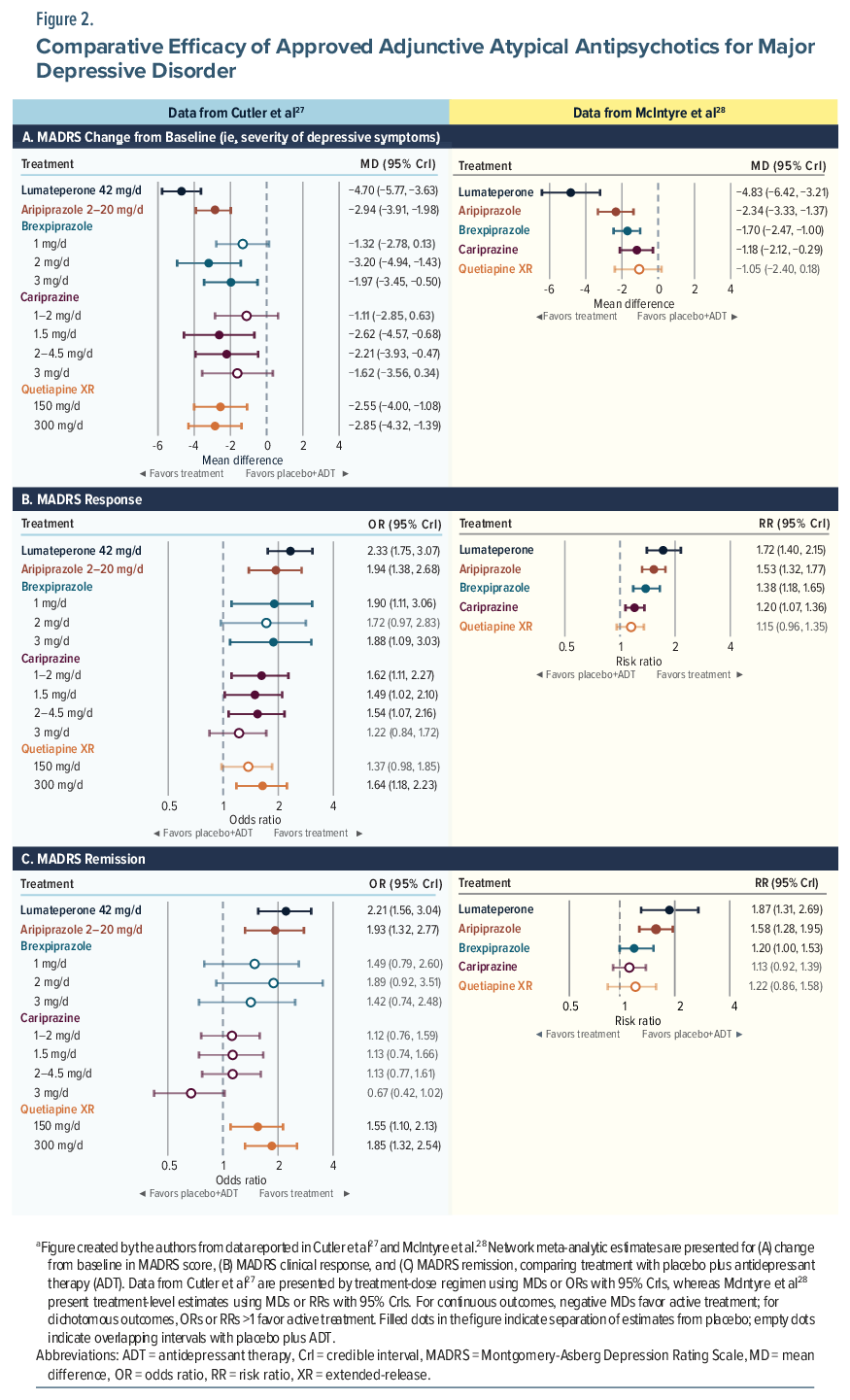
Across both NMAs, the approved agents generally separated from placebo. Separation was most consistent for the continuous MADRS change from baseline (Figure 2A) and the dichotomous response rate outcome (Figure 2B). In contrast, on the dichotomous remission rate outcome, several agents overlapped the null (Figure 2C), and in the McIntyre et al analysis, quetiapine XR overlapped with placebo on all of these outcomes (Figure 2A-C).28 The panel noted that demonstrating superiority to placebo is the fundamental efficacy requirement underlying regulatory approval; therefore, the observation that the approved agents separate from placebo is not, by itself, sufficient to distinguish among them. The panel emphasized that the added value of the NMA is that they quantify the magnitude of separation from placebo across agents and enable indirect comparisons within the same evidence network, providing information that may help clinicians distinguish among otherwise incomparable approved treatment options.
Lumateperone Demonstrated Most Consistent Efficacy Across Multiple Endpoints
The panel concluded that lumateperone demonstrated the most consistent efficacy findings across endpoints in both NMAs, supporting the consistency of the observed efficacy signal across outcomes and analytic approaches (Figure 2). On continuous MADRS change from baseline, point estimates were –4.7 and –4.8. Notably, in McIntyre et al,28 lumateperone had the largest estimated reduction in MADRS scores, with a point estimate of −4.83 (95% credible interval: –6.42 to –3.21), compared with smaller point estimates for the other four agents. On dichotomous MADRS response and remission, point estimates ranged from 1.7 to 2.3 and exceeded estimates for the other agents examined. Noting these findings, the panel asserted that regardless of whether an outcome was measured continuously or dichotomously, lumateperone’s performance was consistent. Furthermore, the panel emphasized that these findings should not be interpreted as evidence of superiority of lumateperone over comparators across efficacy outcomes. Rather, the evidence supports a consistent pattern of favorable efficacy observed across multiple independent measures of treatment response.
The two NMAs further ranked treatment strategies against placebo by measuring SUCRA analysis, which is a rank-order summary rather than a statistical test of superiority.27,28 In Cutler et al, lumateperone 42 mg/day ranked first across all four efficacy outcomes, with SUCRA values of 97.4% for MADRS change from baseline, 91.9% for MADRS clinical response, and 90.4% for MADRS remission.27 SUCRA values likewise placed lumateperone first in the efficacy hierarchy in McIntyre et al.28 The panel cautioned that a SUCRA ranking is a rank-order summary rather than a test of statistical superiority and that because the order is derived from indirect comparison and placebo response varied across the trials, rankings can change.
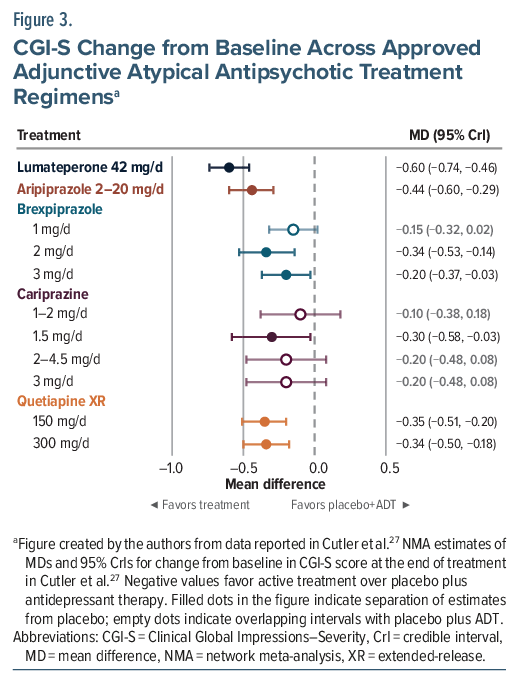
The fourth and final efficacy outcome was the CGI-S (Figure 3). The MADRS and the CGI-S are both clinician-rated, but they assess different things. The MADRS evaluates ten specific symptoms, whereas the CGI-S is a single global judgment of the patient’s overall illness severity, offering a complementary view of treatment benefit. Because McIntyre et al28 examined CGI-S only as an exploratory outcome, the comparison here is limited to Cutler et al.27 Most agents were favored over placebo on CGI-S, although the magnitude of improvement varied across agents and dose levels. Lumateperone 42 mg/day produced the greatest reduction in illness severity (mean difference: –0.60, 95% credible interval: –0.74 to –0.46), further supported by the highest SUCRA value for CGI-S change (98.9%) (Figure 3). The panel noted that because MADRS and CGI-S measure different constructs, a patient can improve on one but not the other. However, lumateperone’s lead on both the CGI-S and MADRS change from baseline strengthens confidence in its efficacy for improving illness severity and depressive symptoms.
SAFETY, TOLERABILITY, AND ACCEPTABILITY
Consensus Statement 3
The approved agents differ meaningfully in safety and tolerability; however, these differences should be weighed simultaneously with efficacy in treatment selection.
Most agents separated from placebo on the principal efficacy outcomes, although the pattern was not uniform across agents and outcomes, so the decision for choosing among them shifts to safety and tolerability, where clinically meaningful differences emerged.27,28 The panel was clear that selection should weigh tolerability and efficacy together rather than treat either one as decisive. The two analyses assessed different tolerability outcomes. Cutler et al27 compared weight gain, akathisia, and somnolence, whereas McIntyre et al28 compared acceptability (ie, all-cause discontinuation) and adverse-event discontinuation.
Weight Gain
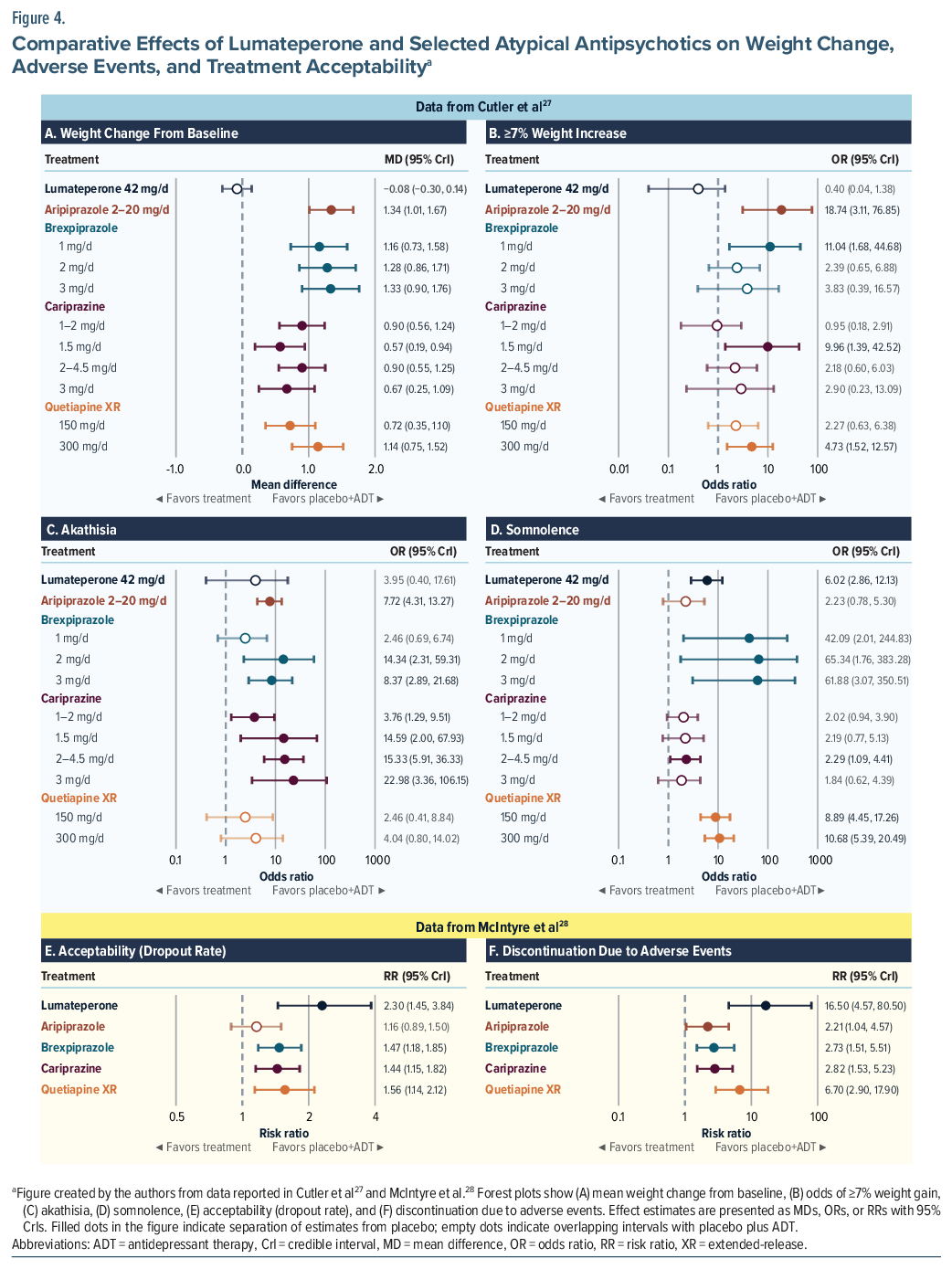
The panel evaluated weight gain as a crucial factor that can help distinguish between antipsychotics.41,42 Weight gain is one of the most clinically relevant tolerability outcomes associated with atypical antipsychotic augmentation because of its potential to contribute to metabolic dysfunction and cardiovascular risk, adversely affect quality of life, and reduce medication adherence and treatment persistence.43 However, certain agents within these classes have become available with lower liability for weight gain as an adverse event and should be prioritized.44 Cutler et al27 measured mean weight change from baseline and the proportion of patients with a weight gain ≥7%, which is considered a clinically significant weight gain.45 Lumateperone was the only treatment whose mean weight change was comparable with placebo plus antidepressant therapy (Figure 4A, B), and it demonstrated less weight gain than the other approved adjunctive atypical antipsychotics. For clinically significant weight gain (≥7% increase from baseline), lumateperone also ranked first (SUCRA, 95.6%) and was favored over nearly all regimens, although it was comparable to cariprazine 1–2 mg/day (Figure 4B). Results also showed that aripiprazole, rather than quetiapine XR, had the highest weight-gain estimate. The panel discussed and emphasized that this finding should be interpreted in the context of differences in the underlying evidence base, including that aripiprazole was evaluated exclusively in US trials. Taken together, the findings support a comparatively favorable weight profile for lumateperone, which may be particularly relevant when selecting treatment for patients in whom weight gain and metabolic risk are important treatment considerations.
Akathisia and Somnolence
The panel also discussed neuromotor adverse events, particularly akathisia,46 which emerged as the most consistently observed extrapyramidal symptom among adjunctive atypical antipsychotics. In Cutler et al, the highest risks were observed with dopamine D2 partial agonists, including aripiprazole and cariprazine (Figure 4C, D).27 Akathisia appeared most strongly associated with the dopamine D2 partial agonists and is dose-related. Somnolence showed a more heterogeneous pattern, with overlapping estimates among lumateperone, quetiapine XR, and brexpiprazole.
One of the key limitations highlighted by panelists involved usage of fixed-dose regimens without gradual titration across these studies, which may not give a clear indication of drug-adverse event relationships. In real world settings, akathisia is often dose-dependent and may be influenced substantially by study design.27 Many registrational trials utilize fixed-dose regimens without gradual titration, potentially increasing the observed incidence of treatment-emergent akathisia compared with routine clinical practice. The panel noted that careful dose titration, individualized dosing strategies, and early recognition of symptoms can reduce the clinical impact and severity of akathisia and improve treatment adherence. Similarly, the panel observed that rates of somnolence varied considerably across agents. Consequently, somnolence should be interpreted as a relative rather than an absolute differentiator among treatments. The clinical significance of somnolence may also differ according to individual patient tolerance, potentially representing either a beneficial or undesirable effect depending on comorbid insomnia, daytime functioning requirements, and patient preferences.47,48
Acceptability and Treatment Discontinuation
Tolerability was explored by McIntyre et al,28 with a focus on acceptability (ie, all-cause discontinuation) as a primary outcome and discontinuation due to adverse events as a secondary outcome. Lumateperone had the least favorable acceptability, with an all-cause treatment discontinuation risk ratio (RR) of 2.30 versus placebo; discontinuation due to adverse events was also highest, with a RR of 16.50 (Figure 4E, F). The panel discussed the term “all-cause discontinuation” and noted that it is a catch-all measure of a patient’s continuity or an indirect measure of nonadherence to treatment and should not be interpreted as adverse-event discontinuation. In two phase 3 trials of adjunctive lumateperone in patients with MDD and inadequate antidepressant response, discontinuation due to treatment-emergent adverse events occurred in approximately 5.4% versus 0.8% of patients receiving lumateperone and placebo, respectively, in one trial, and 12.4% versus 0.8%, respectively, in the other.49,50 These unusually low placebo rates substantially amplified the corresponding relative-risk estimates. The excess discontinuation was primarily adverse-event-driven rather than attributable to withdrawal of consent, and no individual adverse event accounted for more than 2% of discontinuation, suggesting that the acceptability findings were not driven by a single prominent adverse reaction.28
Again, the panel noted the use of fixed dose regimens as a key limitation with respect to acceptability. Lumateperone was evaluated at a single 42 mg dose without the option for downward titration, whereas flexible dosing with lower doses may allow clinicians to adjust treatment when tolerability is an issue. McIntyre et al28 noted that greater dose flexibility may permit patients having trouble with a given dose to remain on treatment rather than discontinue altogether. In clinical practice, lumateperone is available in 10.5, 21, and 42 mg strengths, allowing clinicians to adjust dosages to balance the benefits to patients against potential risks. Hence, panelists cautioned that the higher discontinuation results should be acknowledged rather than discounted, while recognizing that fixed-dose trial designs may not fully reflect treatment adherence under real-world titration. The panel concluded that acceptability should be considered alongside weight gain, other tolerability outcomes, and efficacy, rather than used as a standalone determinant of treatment selection.
DISCUSSION
Clinicians choosing among the approved adjunctive atypical antipsychotics for MDD have no direct head-to-head trials to guide them. In the absence of such information, the two recent network meta-analyses by Cutler et al27 and McIntyre et al28 help close this gap, providing a framework for indirect comparison of the agents through a common comparator and yielding broadly concordant findings despite their methodological differences. The preceding sections reviewed the efficacy and safety and acceptability findings from the two analyses. The discussion that follows draws on the panel’s deliberations to help clinicians understand how the data can inform treatment selection for the individual patient.
The panel agreed that network meta-analysis is an appropriate and robust approach for comparing approved adjunctive atypical antipsychotics when direct head-to-head trials are unavailable, provided that the underlying evidence meets key methodological requirements, including transitivity, comparability of patient populations and study designs, and appropriate assessment and handling of heterogeneity.51–53 Despite the two NMAs using different inclusion criteria and trial designs, their results reached broadly concordant conclusions, which strengthens confidence in the comparative findings and suggests that the results were not dependent on a single analytical approach.27,28
Before 2025, NMAs consistently found atypical or second-generation antipsychotics effective as adjunctive treatments for inadequate antidepressant response but did not establish a consistent efficacy hierarchy among agents. A 2015 NMA reported that all standard-dose atypical antipsychotics were more effective than placebo, without significant between-agent differences.54 Later analyses that included newer agents, such as brexpiprazole and cariprazine, likewise showed comparable efficacy for the included second-generation antipsychotics but identified important differences in tolerability and acceptability.55 In 2025, a network meta-regression analysis that adjusted for follow-up duration continued to find broadly comparable efficacy among several second-generation antipsychotics, although aripiprazole was considered relatively more effective and better tolerated.56
The principal advance of the two 2026 NMAs discussed by the panel was the new inclusion of lumateperone, which showed the strongest and most consistent efficacy findings among the five approved adjunctive atypical antipsychotics, including change from baseline on both the MADRS and CGI-S and dichotomous response and remission outcomes. Because these endpoints capture related but different dimensions of improvement (eg, symptom-level severity and global illness severity), consistency across outcomes strengthens confidence in lumateperone’s efficacy as an adjunctive treatment.
Safety, tolerability, and acceptability differed meaningfully across the investigated agents, and the panel emphasized that the differences should be weighed together with efficacy in shared decision making. Weight gain is a consistent adverse event across antidepressant treatments and remains a significant barrier to treatment adherence and completion.57,58 Lumateperone demonstrated a comparatively favorable weight profile and ranked lowest for clinically significant weight gain, although estimates overlapped with some comparator regimens. Additionally, all atypical antipsychotics were notable for akathisia and somnolence. In contrast to the strong efficacy results, lumateperone carried the highest risk for all-cause and adverse-event discontinuation, which may partly reflect the fixed-dose design and the unusually low placebo discontinuation rates. In real-world settings, many of these adverse events may be mitigated through dose reduction or titration.59 Thus, the panel cautioned that study design may conflate tolerability with acceptability, and the discontinuation findings should be interpreted accordingly.
Individualizing Treatment and Agent Selection
Consensus Statement 4
Because the analyses describe population averages, selection of an adjunctive agent should integrate the comparative evidence with individual patient factors, including prior response, metabolic risk, symptom profile, and tolerability priorities, through shared decision-making.
NMAs report population averages. The panel stressed that an average across a trial population cannot inform what is best for an individual patient. Consistent with clinical guidelines, agent selection should therefore integrate comparative evidence with individual patient factors including prior treatment response, comorbidities, anticipated adverse effects, and treatment preferences through shared decision-making.13,60 Drawing on the factors McIntyre et al28 raised and the considerations the panel emphasized, clinicians and patients should weigh prior treatment response and history; baseline metabolic status and concern about weight gain; the predominant symptom cluster, including anxious, mixed, or anhedonic features, though neither NMA establishes which agent works best for these features; the patient’s own ranking of adverse effects from lived experience, such as weight, lethargy, emotional blunting, and akathisia; dosing and titration strategy and its effect on tolerability; and cost, access, and prescriber familiarity. These factors may meaningfully alter the relative value of an agent for a particular patient even when efficacy estimates are broadly similar across treatments. Thus, the NMA rankings should be used to inform the set of options, rather than dictate a single treatment, with shared decision-making incorporating the patient’s clinical characteristics and priorities to determine the most appropriate balance of efficacy, tolerability, safety, and treatment goals.
Regarding agent sequencing and selection of a particular agent, the panel was deliberately nonprescriptive. Furthermore, the panel’s intent was meant to complement rather than replace existing clinical practice and treatment guidelines. Current guidelines support individualizing the decision to switch versus augment according to prior treatment history, degree of response, tolerability, severity, and patient preference, rather than requiring a fixed number of unsuccessful augmentation trials.16,61 Consistent with existing practice, the panel discussed sequencing without prescribing it. For inadequate efficacy, a trial of up to two agents within the class may be reasonable before moving on; and early improvement, on the order of a 20%–25% reduction in symptoms within the first two weeks, can help determine whether to persist with or adjust the current agent.16,62
Knowledge Gaps
Despite the advances offered by the two recent network meta-analyses, important evidence gaps remain. Key gaps include the lack of long-term and maintenance data, the absence of head-to-head comparative trials among the approved adjunctive atypical antipsychotics, and limited evidence on phenotype-or patient-specific differences in treatment response.27,28 Neither analysis included subgroup-specific or categorical reanalyses, which were beyond the scope of those analyses. These gaps also set the priorities for future work: acute and longer-term head-to-head comparative effectiveness trials, maintenance data, and analyses of how response differs across clinically meaningful subgroups.28,54
CONCLUSIONS
NMA provides a robust evidence base for comparing the efficacy, acceptability, and safety of approved adjunctive atypical antipsychotics in MDD where direct comparisons of these agents do not exist. The two analyses were broadly concordant in demonstrating efficacy for most investigated agents, with lumateperone consistently yielding the largest efficacy point estimates and highest efficacy rankings, though the panel acknowledged the need to balance efficacy and tolerability when selecting a treatment. Agreement between the two differently designed analyses strengthens confidence in the overall pattern of findings, though the limitations inherent in indirect comparisons remain; the greater challenge lies not in the evidence but in implementing it in routine clinical practice.
Two key principles emerged from the panel discussion: Use a treatment that works and select one the patient will continue. Efficacy and tolerability therefore cannot be judged independently; they must be weighed together during treatment selection, because an effective treatment that is discontinued for adverse effects, treatment burden, or other patient concerns cannot deliver sustained clinical benefit.13,59
The panel emphasized that the NMAs support using evidence-based, FDA-approved adjunctive options sooner, if available and clinically appropriate, rather than allowing an inadequate response to persist through therapeutic inertia or defaulting to a familiar option without weighing the comparative evidence. The two analyses give clinicians a clearer view of how treatments differ in efficacy and tolerability, supporting earlier intervention and individualized shared decision-making, with the goal of selecting an effective, tolerable treatment that patients are willing and able to continue.
FINANCIAL DISCLOSURES
Dr Cutler has been a consultant and/or been on advisory boards for AbbVie, Acadia, Actinogen, Alfasigma, Alkermes, Anavex Life Sciences, Arrivo BioVentures, Autobahn Therapeutics, Axsome, Aytu BioPharma, Bristol Myers Squibb, Collegium Pharmaceutical, Definium Therapeutics, 4M Therapeutics, Helus Pharma, Incannex Healthcare, J&J Innovative Medicine, Jazz Pharma, Knight Therapeutics, Kye Pharmaceuticals, Kuvatris Therapeutics, LivaNova, Lundbeck, Luye Pharma, MapLight Therapeutics, Mentavi, Neumora, Neurocrine Biosciences, Noven, Otsuka, Sensorium Therapeutics, Sirtsei Pharmaceuticals, Supernus, Syremis Therapeutics, Teva, Thynk, Transneural Therapeutics, Tris Pharma, Vanda Pharmaceuticals, and Vistagen; has been on speakers bureaus for AbbVie, Alfasigma, Alkermes, Axsome, Aytu BioPharma, Bristol Myers Squibb, Collegium Pharmaceutical, J&J Innovative Medicine, Knight Therapeutics, Kye Pharmaceuticals, Lundbeck, Luye Pharma, Neurocrine Biosciences, Noven, Otsuka, Supernus, Teva, Tris Pharma, and Vanda Pharmaceuticals; has been on a Data Safety Monitoring Board for Compass Pathways; and has stock options/equity in EMA Wellness, Evolution Research Group, 4M Therapeutics, Jupiter Neuroscience, Sensorium Therapeutics, and Transneural Therapeutics. Dr Correll has stock options in Cardio Diagnostics, Kuleon Biosciences, LB Pharma, MedInCell, MedLink, Mindpax, Quantic, and Terra; has received consulting fees from AbbVie, Alkermes, Angelini, Autobahn, Boehringer Ingelheim, Bristol-Myers Squibb, Cardio Diagnostics, Cerevel, CNX Therapeutics, Compass Pathways, Denovo, Draig, Eli Lilly, EuMentis Therapeutics, Gedeon Richter, GH, Hikma, Holmusk, Intra-Cellular Therapies, Janssen/J&J, Karuna, LB Pharma, Lundbeck, MedInCell, MedLink Global, Merck, Mindpax, MapLight, Mylan, Neumora, Neuraxpharm, Neurocrine, Neurelis, Neurosterix, NeuShen, Neusignal Therapeutics, Newron, Noven, Novo Nordisk, Orion, Otsuka, PPD Biotech, Recognify Life Science, Recordati, Relmada, Response Pharmaceutical, Reviva, Rovi, Saladax, Sanofi, Seqirus, Servier, Sunovion, Sun Pharma, Supernus, Takeda, Teva, Terran, Tolmar, Vertex, Viatris, and Xenon Pharmaceuticals; has received honoraria for speaking/teaching from AbbVie, Angelini, Aristo, BMS, Boehringer Ingelheim, Cerevel, Gedeon Richter, Hikma, Intra-Cellular Therapies, J&J, Karuna, Lundbeck, Mitsubishi Tanabe Pharma, Mylan, Neurocrine, Otsuka, Recordati, Sanofi, Seqirus, Sunovion, Tabuk, Takeda, Teva, and Viatris; and has received advisory board fees from AbbVie, Alkermes, Allergan, Angelini, BMS, Boehringer Ingelheim, BMS, Cerevel, Compass, Gedeon Richter, Hikma, Janssen/J&J, Karuna, LB Pharma, Lundbeck, MedInCell, Merck, Neuraxpharm, Neurelis, Neurocrine, Newron, Novo Nordisk, Otsuka, Recordati, Rovi, Seqirus, Life Science, Sunovion, Supernus, Teva, Vertex, and Viatris. Dr Goldberg has received consulting fees from AbbVie, Alvogen, Genomind, Lundbeck, Neurocrine, Otsuka, and Pure Tech; has received honoraria for speaking/teaching from Alkermes, Axsome, Bristol Myers Squibb, Intra-Cellular Therapies, Johnson & Johnson, and Vanda Pharmaceuticals; has received advisory board fees from Almatica, Compass Pathways, Luye Pharmaceuticals, Neurelis, Neumora, and Seaport Therapeutics; and has received royalties from American Psychiatric Publishing and Cambridge University Press. Over the past 12 months, Dr Stahl has served as a consultant to Acadia, AbbVie, AdhereTech, Alkermes, Axsome, Autobahn, Aytu, Bristol Myers Squibb, Clexio, Delix, Intra-Cellular/Janssen, LivaNova, Lundbeck, Neurocrine, Otsuka, Supernus, Tonix, and Vanda; holds options in Genomind, Lipidio, NeuraWell, and Delix; and has served as a speaker for Intra-Cellular/Janssen. Dr McIntyre has received research grant support from Canadian Institutes of Health Research/Global Alliance for Chronic Diseases/National Natural Science Foundation of China and the Milken Institute and has received speaker/consultation fees from Lundbeck, Janssen, Alkermes, Neumora Therapeutics, Boehringer Ingelheim, Sage, Biogen, Mitsubishi Tanabe, Purdue, Pfizer, Otsuka, Takeda, Neurocrine, NeuraWell, Sunovion, Bausch Health, Axsome, Novo Nordisk, Kris, Sanofi, Eli Lilly, Eisai, Intra-Cellular, NewBridge Pharmaceuticals, Viatris, AbbVie, Bristol Myers Squibb (BMS), Teva, Adhere Tech, GH Research, Autobahn Therapeutics, and Atai Life Sciences.
Journal of Clinical Psychiatry, all rights reserved.