
Original Source: Journal of Clinical Psychiatry, all rights reserved. —
Combination psychopharmacology has become increasingly commonplace in clinical practice. Since the late 1990s, single- or even dual-agent regimens for patients with serious mental illnesses (SMIs) have become increasingly rare in real-world practice settings, with substantial growth and prolonged use of more complex drug combinations across many diagnoses.1 Among individuals with schizophrenia, worldwide use of multiple concurrent antipsychotic medications is estimated at about 20%,2,3 higher among inpatients, and more prevalent in Europe (∼23%) and Asia (∼43%)4 than in North America (∼16%).5 Among outpatients with bipolar disorder, observational studies show that about one-third are prescribed ≥3 psychotropic medications,6 even following a first episode of mania.7 In major depressive disorder (MDD), over half of individuals typically are prescribed ≥2 psychotropic medications.8 In older adults with late-life depression, more than half are prescribed 5 or more total medications.9,10 While elaborate combination pharmacotherapies may be a proxy marker for high illness severity, complexity, chronicity, or treatment resistance,11 they can also reflect fragmented care by multiple prescribers with suboptimal communication and coordination in health care systems. Furthermore, most medications used to treat SMIs have relatively small effect sizes12 and modest response rates13,14; consequently, prescribers may often use combination psychopharmacology in efforts to achieve a greater aggregate treatment response.15
Individuals with SMIs frequently present with comorbid psychiatric and/or substance use disorders,7,16 creating multidiagnostic presentations that foster ever-more elaborate drug combinations. Medical comorbidities are also common, further driving multiple prescriptions.17 Prescribers sometimes incorporate specific cotherapies to target distinct symptoms such as insomnia, anxiety, impulsivity, agitation, suicidal ideation or behaviors, inattention, or fatigue, especially if such features represent residual symptoms that are known to increase the likelihood of relapse.18 Finally, medications meant to counteract adverse drug effects (such as sedation, akathisia, or weight gain) can further contribute to complex combination regimens.19
Combination pharmacotherapy is commonplace beyond psychiatry throughout all areas of medicine, including oncology,20 infectious diseases,21 and cardiovascular medicine.22 Such approaches, across both psychiatric and nonpsychiatric medical conditions, can capitalize on strategic opportunities for pharmacokinetic or pharmacodynamic synergies that, at least theoretically, might broaden the spectrum of activity for complex or difficult-to-treat clinical presentations19 or potentially counteract commonly encountered adverse drug effects (eg, benztropine or amantadine for antipsychotic-induced parkinsonism, beta blockers for akathisia or tremor, stimulants or (ar)modafinil for sedation/somnolence, metformin or glucagon-like peptide-1 [GLP-1] receptor agonists for cardiometabolic burden, or vesicular monoamine transporter-2 [VMAT-2] inhibitors for tardive dyskinesia). It is also worth noting that many psychotropic medications intrinsically possess multiple putative mechanisms of action (eg, tricyclic and other antidepressants that affect serotonergic and noradrenergic reuptake or serotonin reuptake plus binding at multiple other serotonergic receptor targets; second-generation antipsychotics having multiple monoaminergic and other receptor targets, as well as off-target effects).
In routine practice, complex combinations of separate medications may not always reflect evidence-based, rational, and coherent regimens that avoid redundant or contradictory drug mechanisms.
Beyond pharmacokinetic, pharmacodynamic, or pharmacogenomic (gene-drug) interactions, psychotropic drugs can impact other bodily systems (eg, agents that affect renal and/or gut transporters [eg, P-glycoprotein, organic anion transporter (OAT1, OAT3), or organic cation transporters (OCT2)] to clear xenobiotics; prolonged exposure to serotonergic agents that desensitize or decouple receptors from signaling molecules), potentially further impacting both clinical outcomes and tolerability. In this context, in patients with schizophrenia, meta-analytic data suggest that conversion from antipsychotic polypharmacy to monotherapy is safely possible in many patients,23 calling into question the need for combined antipsychotic use, especially given the sparse evidence base for its efficacy and safety.3,24,25
To address these complex issues that have become increasingly prevalent in clinical practice, the American Society of Clinical Psychopharmacology (ASCP) convened a large international Task Force using a Delphi survey model to develop consensus recommendations on the rationale-based use of combination psychopharmacology regimens. We focused mainly on 3 SMIs: bipolar disorder, MDD, and schizophrenia, with mention of specific combination pharmacotherapies for certain common comorbidities as deemed relevant (eg, with respect to sequenced versus simultaneous treatment interventions). This initiative follows previous ASCP consensus statement initiatives regarding the deprescribing of “inappropriate” pharmacotherapies.26,27 We sought to ascertain consensus regarding the following clinical issues:
- What clinical criteria should practitioners consider when determining patient candidacy and appropriateness for undertaking or maintaining a combination psychopharmacology regimen?
- When are augmentation regimens preferable to the switching or replacement of foundational medications?
- How can prescribers of psychotropic medications actively address drug-drug interactions, synergistic versus illogical or incoherent combinations, and unique versus redundant components of a combination psychopharmacology regimen?
- Should combination psychopharmacology regimens be reserved mainly for instances in which optimized monotherapy trials do not produce adequate clinical improvements?
METHODS
The Task Force comprised 60 academic psychiatrists and psychiatric pharmacists with both clinical and research expertise in psychopharmacology, drawn predominantly from the United States (n = 37) but including 15 other countries, including Australia (n = 1), Austria (n = 1), Brazil (n = 1), Canada (n = 4), China (n = 1), Denmark (n = 1), France (n = 1), Germany (n = 2), Greece (n = 1), India (n = 1), Italy (n = 2), the Netherlands (n = 1), Spain (n = 1), Taiwan (n = 1), and the United Kingdom (n = 4). A core working group involved in previous ASCP Task Force projects collectively vetted prospective additional participants based on known expertise in clinical psychopharmacology, prior publications in clinical trials methods and outcomes, educational and research efforts in clinically oriented pharmacodynamic and pharmacokinetic mechanisms, and academic as well as professional leadership roles within the field of clinical psychopharmacology.
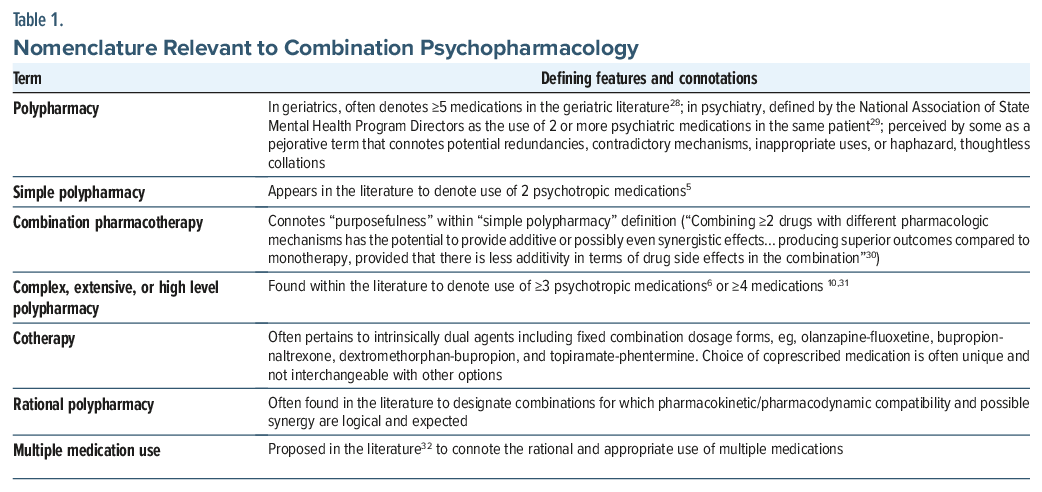
Although the term “combination psychopharmacotherapy” more specifically denotes therapeutic use of multiple psychotropic medications, the Task Force elected to use the broader and historically established term “combination psychopharmacology” because the consensus principles encompass pharmacodynamic, pharmacokinetic, and implementation considerations beyond treatment selection alone. See Table 1 for a brief discussion of the pertinent historical nomenclature.
The perspective of people with lived experience, while central to shared decision-making, was not included in the present Delphi exercise by design as the primary aim was specifically to canvass expert pharmacodynamic and pharmacokinetic perspectives relevant to combination psychopharmacology. Future work will aim to extend those principles through patient, caregiver, and other stakeholder input, particularly around acceptability, tolerability, treatment burden, and shared decision-making.
A multiround Delphi model was adopted to determine expert consensus,33,34 assuring anonymity (to minimize groupthink or undue influence from identifiable participants), iterative data collection, panelist feedback (provided as quantitative and qualitative summaries), and a statistical summary of findings for identifying consensus ratings.
Delphi statements were originally developed by a core work group within the Task Force who then vetted items for initial modifications and additions by all Task Force members. Ultimately, 66 conceptually distinct items were chosen based on panelists’ perceived clinical and practical relevance of essential tenets, after iterative rounds of discussion and virtual meetings by the core work group with input from the full Task Force. Several iterations of modified wordings and concepts for the first survey round were reviewed by all Task Force members before actual ratings were conducted. For each Delphi statement, panelists were asked to rate the extent to which they agreed or disagreed on a 5-point scale ranging from strong agreement to strong disagreement. A separate option of “abstain” was included for each item to reflect instances in which panelists may have felt they lacked sufficient knowledge and/or experience to provide an informed response. “Consensus” agreement or disagreement for each Delphi statement was defined as ≥75% endorsement of either agreement responses or disagreement responses, respectively, excluding abstentions from the denominator. Percentage agreement or disagreement was rounded to the nearest whole number before applying the ≥75% consensus threshold. This threshold was based on prior studies indicating 75% as the median value to define consensus, which has become a widely accepted percentage that provides a degree of methodological consistency across studies.35
Panelists were asked to rate each survey item with “high,” “medium,” or “low” confidence, as well as a rank ordering of the extent to which they primarily based their responses from among 3 factors: their own personal clinical experience, knowledge of the literature, or pharmacologic rationales. All 60 Delphi panelists completed both survey rounds with no attrition. Surveys were conducted online via SurveyMonkey (SurveyMonkey Inc; San Mateo, California) from November 2025 through March 2026. The reporting of results adhered to Accurate Consensus Reporting Document (ACCORD) guidelines36 as well as Guidance on Conducting and Reporting Delphi Studies (CREDES) standards.37
Descriptive statistics are presented as well as proportions of agreement with corresponding 95% confidence intervals (CIs), determined using the modified Wald method38 calculated by GraphPad (www. graphpad.com). Spearman rho was calculated as a measure of the strength of association between (ordinal) proportional ratings of Delphi statements with corresponding levels of confidence for each item rated.
Because the project consisted of expert consensus development and did not involve patient-level data, clinical intervention, experimentation on human subjects, or access to identifiable protected health information, formal institutional review board approval was not required. Participation in the Delphi process was voluntary, and responses were analyzed anonymously. All 60 panelists participated in the Delphi survey, and all authors contributed to the study design and manuscript preparation and met International Committee of Medical Journal Editors criteria for authorship.
RESULTS
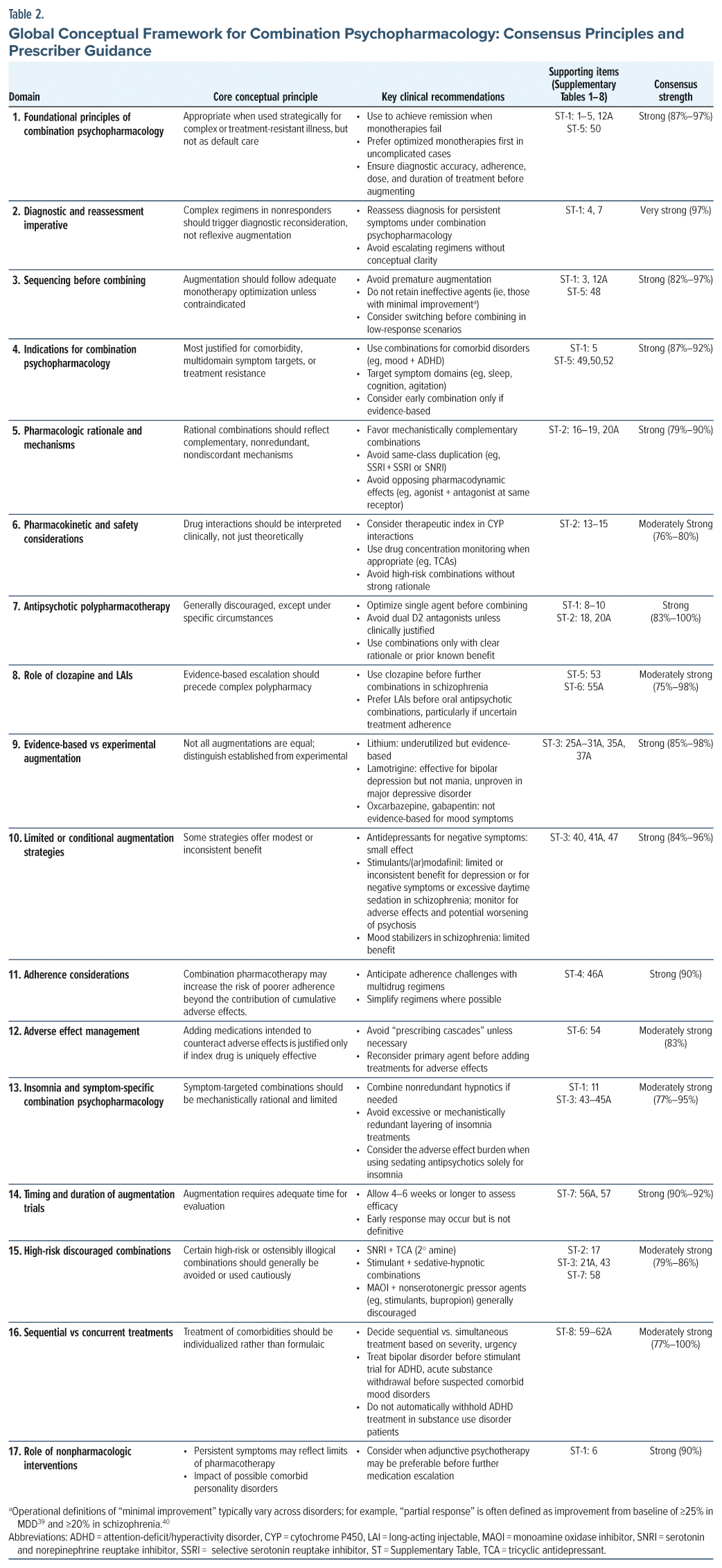
To facilitate interpretation, component dimensions of combination psychopharmacology queried in the Delphi survey were divided into 8 domains: (1) general prescribing principles for combination psychopharmacology (12 items), (2) pharmacokinetic and mechanistic considerations (8 items plus 3 not reaching consensus), (3) choosing appropriate (and avoiding inappropriate) augmentation agents (25 items plus 1 not reaching consensus), (4) medication adherence (2 items); (5) when to augment (6 items); (6) combination psychopharmacology and adverse effects (2 items); (7) logistics of augmentation/combination (3 items); and (8) concomitant versus sequential cotherapies (4 items). Individual items across both Delphi rounds that achieved consensus from among the 66 final items are conceptually grouped and summarized in Supplementary Tables 1–8, and a global synthesis of the concepts behind these core items is presented in Table 2.
Items That Achieved Consensus
For the 62 items that achieved consensus, respondents identified their reliance on knowledge of the literature (34/62, or 55%) as the most frequently cited primary source used to inform their ratings across items, followed by their own personal clinical experience (21/62, or 34%), with pharmacologic rationales being the least-cited source (7/62, or 11%). Percentages of agreement were strongly correlated with levels of “high” confidence ratings across survey items that reached consensus (rho = 0.61, P < .001).
Items That Fell Short of Consensus
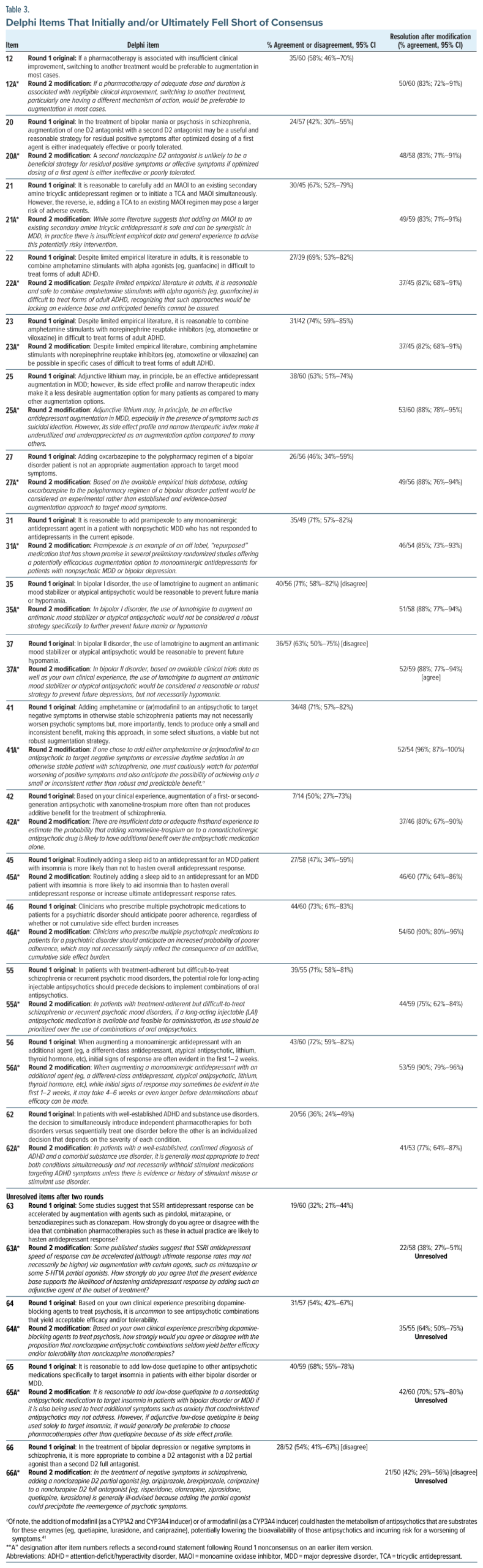
In Round 1, 21/66 Delphi items failed to reach consensus (ie, 45/66, or 68% consensus was achieved in Round 1). Reworkings of the 21 nonconsensus items led to their revision in Round 2, as presented in Table 3, producing eventual consensus in 17 of the 21 Round 1 nonconsensus items. Thus, in sum, 62 from a total of 66 final Delphi items (94%) ultimately achieved consensus agreement, as presented in Supplementary Tables 1–8.
Items That Could Not Achieve Consensus After 2 Rounds
As shown in Table 3, 4 of the initial 21 nonconsensus Round 1 items could still not achieve consensus after reworking them in a second Delphi round. These included the following:
- Skepticism that antidepressant response in MDD could be accelerated via augmentation with mirtazapine or serotonin 1A receptor (5HT1A) partial agonists (item 63: 32% agreement; 21/60 [35%] with high confidence; and item 63A: 38% agreement; 23/60 [38%] with high confidence);
- Skepticism that nonclozapine antipsychotic combinations yield better efficacy and/or tolerability than nonclozapine monotherapies (item 64: 54% agreement; 23/60 [38%] with high confidence; and item 64A: 64% agreement; 27/60 [45%] with high confidence);
- Modest enthusiasm for adjunctive low-dose quetiapine as an appropriate hypnotic (item 65: 68% agreement; 30/60 [50%] with high confidence; and item 65A: 70% agreement; 35/60 [58%] with high confidence);
- Uncertainty regarding combinations of D2 partial agonists and full antagonists: item 66 addressed whether such combinations were preferable to combining 2 full antagonists (54% disagreement; 9/60 [15%] with high confidence), whereas revised item 66A addressed whether adding a partial agonist could precipitate psychotic symptom recurrence (42% disagreement; 15/60 [25%] with high confidence).
DISCUSSION
The findings of this ASCP Task Force provide a unique and important perspective on a common but poorly codified and empirically understudied aspect of contemporary psychiatric practice, namely, the role of combination psychopharmacology in patients with serious mental health conditions. The Task Force reached consensus on 94% of the 66 survey items, reflecting substantial agreement across a broad range of clinical domains. An overarching concept derived from the consensus findings is that mechanistic coherence should be prioritized over the sheer number of medications being prescribed. Prescribers must remain mindful of drug-drug interactions, potential toxicities, and cumulative adverse effects when gauging logical or synergistic combinations that are both safe and appropriate.
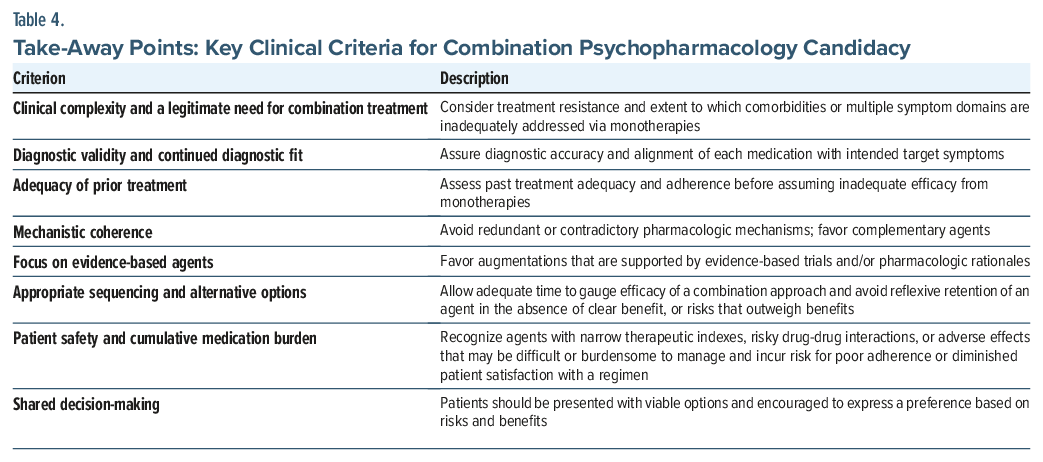
Distilled to their most actionable form, the Task Force’s core clinical recommendations are as follows: (1) assure diagnostic accuracy and optimize dose, duration, and adherence before adding further agents; (2) favor switching agents over augmentation when response to a single agent is minimal and consider augmentation in the setting of a partial response, particularly in complex presentations; (3) select combinations with complementary rather than redundant pharmacodynamic mechanisms; (4) retain a given component within a complex regimen if it addresses a distinct residual or target symptom (eg, insomnia, agitation, suicidality); (5) treat persistent, complex polypharmacotherapy as a prompt to reassess diagnosis, comorbidity, and adherence before contemplating the addition of further medications; (6) proactively anticipate and monitor for cumulative adverse effects and drug-drug interactions; and (7) regularly reevaluate any polypsychopharmacology regimen to ensure it remains clinically appropriate rather than continuing it by default. Additional key “take-away” concepts, based on the 4 study goals outlined in the Introduction, are further summarized in Table 4.
Combination pharmacotherapy generally should occur when appropriate, optimally delivered monotherapies are deemed inadequate or insufficient for optimal outcomes, but such approaches should not necessarily be contingent on failures of monotherapy, particularly in the setting of high severity, complex, or comorbid illness presentations. Thus, in more urgent or closely monitored settings, such as inpatient units, the balance of risks and benefits may favor a more accelerated or intensive approach, provided this is accompanied by correspondingly close clinical monitoring.
Delphi panelists most often cited the empirical literature as the basis for their responses, although randomized controlled trial (RCT) evidence on multidrug strategies remains limited. This dilemma reflects a common challenge in psychopharmacology and medicine more broadly: Clinicians must often make real-world treatment decisions based on limited empirical evidence.42 Accordingly, the statements presented here should be interpreted as expert consensus rather than evidence-based recommendations or standards of care.
Previous literature on combination psychopharmacology has focused largely on potential risks, particularly cumulative adverse effects, drug-drug interactions, and associations with poorer clinical outcomes.3,43 While these concerns are important, the present findings suggest that such a perspective may be overly reductive, especially because few if any controlled trials have explored the relative risks versus benefits of extensive pharmacotherapy regimens.44
The Task Force emphasized that the components of a complex regimen should fit a cohesive clinical and pharmacologic rationale. In clinical practice, routine prescribing may not consistently follow this core tenet.11 Examples included same-class combinations, subtherapeutic dual antipsychotic mechanisms, and medications without demonstrated efficacy for the target condition (eg, gabapentin or pregabalin to treat mood symptoms in bipolar disorder45). Such patterns may reflect treatment resistance, fragmented care, limited familiarity with trial evidence, or attempts to address persistent symptoms where guidance is limited.
Strong consensus supported establishing adequate pharmacotherapy trials before escalating regimen complexity, including confirming diagnosis and adherence and ensuring adequate dose and duration. When improvement is minimal, switching may be preferable to premature augmentation that adds complexity without benefit. This position is consistent with pragmatic trials showing diminishing efficacy and high adverse-event discontinuation across successive treatment steps.13 However, evidence remains limited regarding when selected combinations may be advantageous earlier in treatment (eg, whether adjunctive mirtazapine at treatment onset might hasten response to a selective serotonin reuptake inhibitor, serotonin and norepinephrine reuptake inhibitor, or bupropion46). Strategic timing may help prevent later accumulation of incoherent multidrug regimens.
This perspective extends prior concepts of “rational polypharmacy” and multiple medication use32 by incorporating clinical context, sequencing, and therapeutic intent in addition to pharmacologic compatibility. Beyond safety and tolerability, complex regimens should have a clear pharmacodynamic and pharmacokinetic rationale. Structured decision-making that incorporates pharmacologic principles, patient characteristics, prior response, and evolving clinical circumstances may therefore be more useful than rigid prohibitions against “polypharmacy.”
A complex polypharmacotherapy regimen may also function as a clinical signal of illness complexity rather than solely a treatment strategy. Associations between polypharmacy and high relapse rates, hospitalization, or adverse effects3,47 are difficult to disentangle from confounding factors such as illness severity, chronicity, poor adherence, treatment resistance, and diagnostic complexity. These characteristics often drive the use of more intensive treatment strategies, resulting in possible protopathic bias (ie, reverse causation bias, in which poor outcomes become attributed to treatments that were initiated in efforts to avert poor outcomes but may simply fail to do so). Elaborate regimens may therefore be a marker for, rather than cause of, low treatment responsivity.
Polyantipsychotic regimens can at times be perceived as substandard care,47 and guidelines generally discourage their use.48 Meta-analyses report little or no efficacy in randomized trials,24,25 whereas observational studies associate polyantipsychotic use with relapse, rehospitalization, and cumulative adverse effects.3 In the randomized SWAP trial, reducing clozapine–first generation antipsychotic combinations to clozapine monotherapy was associated with a lower risk of relapse.49 Some large cohort studies, however, report modest reductions in rehospitalization with selected combinations, particularly those involving clozapine.50 These observational findings remain susceptible to confounding by illness severity and treatment selection. Together with evidence supporting clozapine’s efficacy,51,52 these findings suggest that clinical outcomes may depend less on the number of medications prescribed than on the specific agents involved and the rationale underlying their use.
Persistent symptoms despite extensive pharmacotherapy should prompt assessment of pharmacologic coherence rather than automatic intensification or medication reduction. Relevant considerations should include diagnostic reassessments, assessment of treatment adherence, and consideration of the role for nonpharmacologic interventions (and the limits of psychopharmacotherapy in cases that appear to be highly refractory).53 This approach is consistent with iterative diagnostic reassessment54 and, when appropriate, substitution of nonpharmacologic or psychotherapeutic interventions for conditions less responsive to pharmacotherapy, such as borderline personality disorder.26,55
Review of panelists’ comments on Delphi items that failed to reach consensus often cited skepticism about the breadth of available data or absence of replication studies before making generalizable treatment recommendations. Areas of observed nonconsensus further illustrate gaps between real-world practice and the evidence base. Examples included strategies to accelerate antidepressant response (eg, adjunctive 5HT1A partial agonists or mirtazapine), nonclozapine antipsychotic combinations, low-dose quetiapine for insomnia, and combining D2 partial agonists with full antagonists. Lithium augmentation provides another example: Despite substantial support for treatment-resistant mood disorders, it appears less frequently used than newer options such as second-generation antipsychotics.8,56,57 Tolerability and monitoring requirements may contribute, but “innovation (or ‘novelty’) bias”—the tendency to assume newer technologies are superior—may also play a role.58,59 Similarly, underuse of monoamine oxidase inhibitors in appropriately selected patients60 may contribute to avoidable treatment complexity when high-efficacy monotherapies are not systematically sequenced.
The conclusions drawn from this study reflect opinions of the Task Force members, and, while informed by their understanding of the empirical literature, they are not synonymous with empirically validated experimental observations. The Task Force findings are intended to complement and contextualize, rather than replace, treatment guidelines by addressing clinical circumstances that traditional evidence hierarchies incompletely capture. However, consensus-based clinical practice guidelines themselves are perceived as holding lower evidentiary strength than primary experimental evidence—most notably, RCTs and meta-analyses.61 On the other hand, RCTs often exclude patients with comorbidities, treatment resistance, ambiguous diagnoses, or clinical complexity. Consequently, many real-world decisions arise in populations underrepresented in RCTs, where combination pharmacotherapy may extend beyond the existing evidence base. Because of that limited body of knowledge for combination psychopharmacology in real-world practice, expert consensus may presently be one of the few practical means by which to help clinicians address complex treatment issues in this area.
Guidelines that aim to be evidence-based can also be evidence-biased insofar as the most methodologically pristine studies that inform guidelines tend to be those that seek regulatory approval for new drugs, placing greatest emphasis on monotherapy. Up to 80% of patients with schizophrenia in clinical practice would be deemed ineligible to enroll in placebo-controlled monotherapy clinical trials,62 as may up to one-third in major depression.63 Observational evidence suggests that some comorbid presentations, including bipolar disorder with obsessive-compulsive disorder64 or ADHD,65 may be better managed with combination pharmacotherapy. Trials of new antipsychotic or antidepressant medications also commonly exclude treatment-resistant patients, further limiting evidence and extrapolation for those most likely to receive newly approved agents.
Future Directions
Future research should include comparative effectiveness studies and pragmatic trials of specific combinations and broader strategies, including optimized sequential monotherapy versus earlier combination treatment. Studies selecting combinations based on mechanistic complementarity may identify settings in which multidrug strategies provide meaningful benefit.
Advancing the evidence base will require methodologies that extend beyond traditional randomized trials. Contemporary electronic health records offer an opportunity to generate large-scale real-world evidence, particularly when symptom severity, functioning, quality of life, and other clinically meaningful outcomes are measured systematically.66 Such data could provide valuable insights into treatment sequencing, comparative effectiveness, and patient-level predictors of response and adverse outcomes while generating hypotheses for prospective investigation.67 Integration with machine learning, artificial intelligence, and biomarker research may further improve individualized treatment selection.68 Global measures such as the Clinical Global Impression of Severity69 may support measurement-informed care70 and early detection of emerging signs of clinical deterioration.71
Limitations
Several limitations warrant consideration regarding the current findings. Although the panel included participants from multiple countries, representation was weighted toward clinician-investigators in high-income nations, particularly the United States, which may limit applicability to other health care settings. Although the survey addressed selected issues concerning concomitant versus sequential treatment of comorbid disorders, it did not comprehensively examine how specific comorbidities should inform the selection and management of combination psychopharmacotherapy. Patient and caregiver perspectives were not represented despite their importance to shared decision-making. As with all Delphi studies, the findings reflect expert opinion rather than empirical validation and may be influenced by prevailing norms, professional experience, and shared biases. Finally, constructs such as rational and complex polypharmacy remain incompletely operationalized, limiting immediate application to research, quality assessment, and health policy. Despite these limitations, the high level of agreement across diverse clinical topics suggests that these principles are broadly shared among experienced clinicians and may inform future research and guideline development.
CONCLUSIONS
Combination psychopharmacology should not be considered inherently appropriate or inappropriate. For some patients, synergistic use of medications may deliver the best results, including response and remission to treatment and improved function across domains of life.
Its clinical value depends on the degree of treatment resistance, patterns of prior responsivity, treatment rationale, regimen structure, comorbidities, clinical context, and ongoing reassessment. Although the panel broadly supported optimizing monotherapy before combination treatment, the findings emphasize the quality, coherence, and purpose of treatment strategies rather than medication count. The consensus findings emphasize individualized formulation, thoughtful sequencing, mechanistic complementarity, diagnostic vigilance, assessment of risks and benefits, patient-centered decision-making, and systematic monitoring. Although based on expert opinion and clinical experience and learning rather than definitive empirical evidence, they provide a practical framework for complex combination treatment. The limited evidence base underscores the need for more rigorous investigation to guide clinical practice.
Article Information
Published Online: November 9, 2026. https://doi.org/10.4088/JCP.26cs16574
© 2026 Physicians Postgraduate Press, Inc.
Submitted: June 23, 2026; accepted September 28, 2026.
To Cite: Goldberg JF, Malhi GS, Jha MK, et al. The American Society of Clinical Psychopharmacology Task Force consensus statement on combination psychopharmacology. J Clin Psychiatry 2026;87(4):26cs16574.
Author Affiliations: Department of Psychiatry, Icahn School of Medicine at Mount Sinai, New York, New York (Goldberg); Academic Department of Psychiatry, Kolling Institute, Northern Clinical School, Faculty of Medicine and Health, The University of Sydney, Sydney, New South Wales, Australia (Malhi); CADE Clinic and Mood-T, Royal North Shore Hospital, St. Leonards, New South Wales, Australia (Malhi); Department of Psychiatry, University of Oxford, Oxford, UK and Oxford Uehiro Centre for Practical Ethics, Faculty of Philosophy, University of Oxford, Oxford, United Kingdom (Malhi); Department of Psychiatry, UT Southwestern Medical Center, Dallas, Texas (Jha); Duke-NUS Medical School, Singapore (Rush); Department of Psychiatry, SUNY Upstate Medical University, Syracuse, New York (Mago); Department of Psychiatry and Neurobehavioral Sciences, University of Virginia School of Medicine, Charlottesville, Virginia (Clayton); Department of Psychiatry and Behavioral Sciences, New York Medical College, Valhalla, New York (Citrome); Department of Psychiatry and Behavioral Sciences, Northwestern Feinberg School of Medicine, Chicago, Illinois (Citrome); University of Pittsburgh, Western Psychiatric Institute and Clinic, Pittsburgh, Pennsylvania (Swartz); Department of Psychiatry, Ammon-Pinizzotto Center for Women’s Mental Health at Massachusetts General Hospital, Boston, Massachusetts (Freeman); Department of Psychiatry, Harvard Medical School, Boston, Massachusetts (Freeman, Ghaemi, Nierenberg); Institute for Mental and Physical Health and Clinical Translation (IMPACT), School of Medicine, Deakin University, The Geelong Clinic and Barwon Health, Geelong, VIC, Australia (Berk); Orygen The National Centre of Excellence in Youth Mental Health, The Florey Institute of Neuroscience and Mental Health and Department of Psychiatry, University of Melbourne, Melbourne, Australia (Berk); Department of Public Health and Preventative Medicine, Monash University, Melbourne, Australia (Berk); Emeritus Chair, Department of Psychiatry and Psychotherapy, Center for Brain Research, Department of Molecular Neuroscience, Medical University of Vienna, Vienna, Austria (Kasper); Department of Psychiatry, University of Toronto, Toronto, Ontario, Canada (McIntyre); Department of Psychiatry and Behavioral Sciences, Kansas University School of Medicine-Wichita, Kansas (Preskorn); Department of Mental Health and Sensory Organs, University of Siena School of Medicine, Siena, Italy (Fagiolini); Department of Psychiatry, NYU Grossman School of Medicine, New York, New York (Iosifescu); Nathan Kline Institute, Orangeburg, New York (Iosifescu); College of Pharmacy & Department of Psychiatry, The University of Texas at Austin, Austin, Texas (Crismon); Department of Pharmacotherapy, University of North Texas Health College of Pharmacy, Fort Worth, Texas (Cohen); Touro College of Pharmacy, New York, New York (Cohen); Bristol Myers Squibb, Cambridge, Massachusetts (Ghaemi); Department of Pharmacotherapy and Translational Research, University of Florida, Gainesville, Florida (Markowitz); Department of Psychiatry, Yale School of Medicine, New Haven, Connecticut and Department of Public Health Sciences, University of Connecticut, Farmington, Connecticut (Rhee); Bipolar and Depressive Disorders Unit, Hospital Clínic de Barcelona, Barcelona, Spain (Vieta); Institute of Neurosciences (UBNeuro); Institut D’Investigacions Biomèdiques August Pi I Sunyer (IDIBAPS), Barcelona, Spain (Vieta); Biomedical Research Networking Centre on Mental Health (CIBERSAM), Instituto de Salud Carlos III (ISCIII), Barcelona, Spain (Vieta); Department of Medicine, School of Medicine and Health Sciences, University of Barcelona, Barcelona, Spain (Vieta); Department of Psychiatry, University of Cincinnati College of Medicine, Cincinnati, Ohio (Nasrallah); The Zucker Hillside Hospital/Donald and Barbara Zucker School of Medicine at Hofstra/Northwell/Northwell Health, Glen Oaks, New York (Correll, Kane); Department of Child and Adolescent Psychiatry, Charité Universitätsmedizin Berlin, Berlin, Germany (Correll); Department of Psychiatry, Kasturba Medical College, Manipal Academy of Higher Education, Manipal, India (Andrade); Department of Clinical Psychopharmacology and Neurotoxicology, National Institute of Mental Health and Neurosciences, Bangalore, India (Andrade); Department of Psychiatry, Perelman School of Medicine, University of Pennsylvania, Philadelphia, Pennsylvania (Thase); Corporal Michael J Cresencz VAMC, Philadelphia, Pennsylvania (Thase); Department of Psychiatry & Behavioral Sciences, University of New Mexico, Albuquerque, New Mexico (Tohen); Department of Psychiatry and Behavioral Neurobiology, The University of Alabama Heersink School of Medicine, Birmingham, Alabama (Macaluso); Department of Psychiatry and Behavioral Sciences, Dell Medical School, Austin, Texas (Shelton); Dell Medical School, University of Texas at Austin, Austin, Texas (Nemeroff); Experimental Therapeutics & Pathophysiology Branch & Section Neurobiology and Treatment of Mood Disorders, Division of Intramural Research Program, National Institute of Mental Health, Bethesda, Maryland (Zarate); Department of Psychiatry, David Geffen School of Medicine at UCLA, Los Angeles, California (Gitlin); Department of Clinical Medicine, University of Copenhagen, Faculty of Health and Medical Sciences, Denmark; Psychiatric Center Copenhagen, Frederiksberg, Denmark (Kessing); Bipolar Disorder Program, Department of Psychiatry, University of São Paulo Medical School, São Paulo, Brazil (Lafer); Centre for Affective Disorders, Department of Psychological Medicine, Institute of Psychiatry, Psychology and Neuroscience, King’s College London, London, United Kingdom (Young); Department of Psychiatry, University of California, San Diego, California (Stahl); Dept. of Psychiatry, Amsterdam University Medical Center, Vrije Universiteit, Amsterdam Public Health Research Institute, Amsterdam, Netherlands (Kupka); Altrecht Institute for Mental Health Care, Utrecht, Netherlands (Kupka); 3rd Department of Psychiatry, School of Medicine, Aristotle University of Thessaloniki, Thessaloniki, Greece (Fountoulakis); Department of Psychiatry, George Washington School of Medicine, Washington, DC (Post); Bipolar Collaborative Network, Bethesda, Maryland (Post); Center for Anxiety and Depression, Mercer Island, Washington (Dunner); Cleveland Clinic, Cleveland Clinic Neurological Institute, Cleveland, Ohio (Viguera); Maryland Psychiatric Research Center (MPRC), University of Maryland School of Medicine, Baltimore, Maryland (Kelly); Department of Psychiatry, University of British Columbia, Vancouver, British Columbia, Canada (Yatham); Department of Psychiatry and Department of Pharmacology & Toxicology, University of Toronto, Toronto, Ontario, Canada (Rosenblat); Mood Disorders Psychopharmacology Unit, University Health Network, Toronto, Ontario, Canada (Rosenblat); Institute of Medical Science, University of Toronto, Toronto, Ontario, Canada (Rosenblat); Institute for Advanced Diagnostics and Treatment, Sheppard Pratt Health System, Baltimore, Maryland (Aaronson); Department of Psychiatry and Psychology, Mayo Clinic, Rochester, Minnesota (Frye); Department of Psychiatry, University of Oxford, Oxford, United Kingdom (Geddes, Goodwin); COMPASS Pathfinder Ltd, London, United Kingdom (Goodwin); UNC Eshelman School of Pharmacy, Division of Practice Advancement and Clinical Education, Chapel Hill, North Carolina (Harris); UNC School of Medicine, Department of Psychiatry, Chapel Hill, North Carolina (Harris); Université Paris Cité, Institute of Psychiatry and Neurosciences of Paris (IPNP), Paris, France (Gorwood); GHU Paris Psychiatrie et Neurosciences (CMME, Sainte-Anne Hospital), Paris, France (Gorwood); Clinical and Experimental Sciences (CNS and Psychiatry), Faculty of Medicine, University of Southampton, Southampton, United Kingdom (Baldwin); College Keep, Southern Health NHS Foundation Trust, Southampton, United Kingdom (Baldwin); Department of Psychiatry and Mental Health, University of Cape Town, Cape Town, South Africa (Baldwin); Dauten Family Center for Bipolar Treatment Innovation and Center for Clinical Research Education, Massachusetts General Hospital, Boston, Massachusetts (Nierenberg); Feinstein Institutes for Medical Research, Institute of Behavioral Science, Manhasset, New York (Kane); United States Department of Veterans Affairs, Palo Alto Health Care System, Palo Alto, California (Ostacher); Department of Psychiatry and Behavioral Sciences, Stanford University School of Medicine, Stanford, California (Ostacher); Department of Psychiatry, Dalhousie University, Halifax, Nova Scotia, Canada (Alda); Department of Psychiatry, UMass Chan Medical School and UMass Memorial Health Care, Worcester, Massachusetts (Rothschild); Oasi Research Institute-IRCCS, Troina, Italy (Serretti); Department of Medicine and Surgery, Kore University of Enna, Enna, Italy (Serretti); Department for Psychiatry, Psychosomatic Medicine and Psychotherapy, University Hospital Frankfurt-Goethe University, Germany (Reif); The Dennis S. Charney, MD, Depression and Anxiety Discovery Center, Department of Psychiatry, Icahn School of Medicine of Mount Sinai, New York, New York (Murrough); Nash Family Department of Neuroscience, Icahn School of Medicine at Mount Sinai, New York, New York (Murrough); VISN 2 Mental Illness Research, Education, and Clinical Center (MIRECC), James J. Peters VA Medical Center, Bronx, New York (Murrough); School of Pharmacy, University of Missouri-Kansas City, Kansas City, Missouri (Stoner); Department of Psychiatry and Human Behavior, University of California, Irvine, California (Tang); Department of Psychiatry, Linkou Chang Gung Memorial Hospital, Taoyuan, Taiwan (Lin); Department of Psychiatry, Taipei City Hospital and Psychiatric Center, Taipei, Taiwan (Lin).
Corresponding Author: Joseph F. Goldberg, MD, 128 East Ave, Norwalk, CT 06851 ([email protected]).
Financial Disclosures: Dr Goldberg has been a consultant for AbbVie, Alkermes, Almatica, Alvogen, Compass Pathways, Genomind, Neurelis, Neurocrine, Neumora, Otsuka, PureTech, and Seaport Therapeutics; received royalties from American Psychiatric Publishing and Cambridge University Press; and has been on speakers bureaus for Alkermes, Axsome, Bristol Myers Squibb, Johnson & Johnson, and Vanda Pharmaceuticals. Dr Malhi has received grant or research support from National Health and Medical Research Council, Australian Rotary Health, NSW Health, American Foundation for Suicide Prevention, Ramsay Research and Teaching Fund, Elsevier, AstraZeneca, Janssen-Cilag, Lundbeck, Otsuka, and Servier and has been a consultant for AstraZeneca, Janssen-Cilag, Lundbeck, Otsuka, and Servier. He is the recipient of an investigator-initiated grant from Janssen-Cilag (PoET Study), joint grant funding from the University of Sydney and National Taiwan University (Ignition Grant), and grant funding from The North Foundation. Dr Jha has received research contract grants from Neurocrine Bioscience, Navitor/Supernus, and Janssen Research & Development; honorarium to serve as Section Editor of the Psychiatry & Behavioral Health Learning Network and as Guest Editor for Psychiatric Clinics of North America from Elsevier; consultant fees from Janssen Scientific Affairs, Definium/MindMed, AbbVie, Sanofi, Neurocrine, and Boehringer Ingelheim; fees to serve on Data Safety and Monitoring Board for Worldwide Clinical Trials (Eliem, Skye, and Inversargo), Vicore Pharma, Yale University (for Patient Centered Outcomes Research Institute funded study), and IQVIA (Click); and honoraria for educational presentations from North American Center for Continuing Medical Education, Medscape/WebMD, Clinical Care Options, Soterix Medical Inc., Physicians’ Education Resource, Efficient CME, and H.C. Wainwright & Co. Dr Rush has received royalties from Wolters Kluwer Health, Guilford Press, and the University of Texas Southwestern Medical Center, Dallas, TX (for the Inventory of Depressive Symptomatology and its derivatives); consulting fees from Beckley Psytech Inc., Better Up Inc., Evecxia Therapeutics, Inc., Holmusk Technologies, Inc., ICON, PLC, LivaNova, Neurocrine Biosciences Inc., MindStreet, Inc., and Otsuka US; and honoraria from LivaNova; and has the following patents: Patent No. 7,795,033: Methods to Predict the Outcome of Treatment with Antidepressant; Medication, Inventors: McMahon FJ, Laje G, Manji H, Rush AJ, Paddock S, Wilson AS; and US Patent No. 7,906,283: Methods to Identify Patients at Risk of Developing Adverse Events During Treatment with Antidepressant Medication, Inventors: McMahon FJ, Laje G, Manji H, Rush AJ, Paddock S. Dr Clayton has received grants from Dare Bioscience, Janssen, Neumora Therapeutics, Neurocrine Biosciences, NIH, Relmada Therapeutics, Reunion Neuroscience, and S1 Biopharma; royalties from Ballantine Books, Changes in Sexual Functioning Questionnaire, and Guilford Publications; and consulting fees from AbbVie, ACCUMIN, Actinogen, AdhereTech, Axsome Therapeutics, Aytu BioPharma; Biogen, Fabre-Kramer, Intra-Cellular Therapies, Janssen R&D, LivaNova, MycoMedica Life Sciences, Neumora Therapeutics, Reunion Neuroscience, S1 Biopharma, Seaport Therapeutics, Sirtsei Pharmaceuticals, and Vella Bioscience; and holds stock or stock options in Mediflix LLC, S1 Biopharma. Dr Citrome has been a consultant for AbbVie, Acadia, AdhereTech, Altus, Alumis, Axsome, Alkermes, Arc, Auritec, Autobahn, Avant Healthcare Solutions, Biogen, BioXcel, BMS/Karuna, Boehringer Ingelheim, Cadent, Cerevel, Clario/MedAvante/Prophase, Clinilabs, Compass, Corcept, Definium, Delpor, Eisai, Enteris BioPharma, Health Wellness Partners, HLS, Idorsia, INmune Bio, Intra-Cellular, Johnson & Johnson/Janssen, Little Bear, Lundbeck, Luye, Lyndra, MapLight, Marvin, MindMed, Neurelis, NeuShen, Neumora, Neurocrine, Noema, Novartis, Noven, Orexo, Otsuka, Ovid, Pontifax/Draig, Praxis, PSL, Real Chemistry, Relmada, Renew Research, Response, Reviva, Sage, Seaport, Sumitomo/Sunovion, Supernus, Teva, University of Arizona, Vanda, and Wells Fargo; and has done one-off ad hoc consulting for individuals/entities conducting marketing, commercial, or scientific scoping research; has received honoraria for lectures from AbbVie, Acadia, Alkermes, BMS, Eisai, Idorsia, Intra-Cellular, Johnson & Johnson/Janssen, Lundbeck, Luye, Neopharm, Neurocrine, Noven, Otsuka, Recordati, Takeda, Teva, Vanda, and CME activities organized by medical education companies such as Decera Clinical Education/Clinical Education Alliance/Clinical Care Options, CME Institute, CMEology, HMP/Psych Congress, Medscape/WebMD, MultiMedia Medical LLC, Neuroscience Education Institute, NEI, Paradigm, Real Psychiatry/Efficient, Real World; owns health-related stocks—portfolio of small number of shares of common stock of multiple companies and managed externally; has stock options in Reviva; and has received royalties/publishing income from Taylor & Francis (Editor-in-Chief, Current Medical Research and Opinion, 2022-date), UpToDate (reviewer), Springer Healthcare (book), Elsevier (Topic Editor, Psychiatry, Clinical Therapeutics, through Spring 2025). Dr Swartz has received royalties from American Psychiatric Publishing, Wolters Kluwer, and New Harbinger Publications; consulting fees from Mediflix; and honoraria for lectures from Clinical Education Alliance, Intra-Cellular Therapies, and WebMD/MedScape; and has participated in a Data Safety Monitoring Board for R01 MH125155 IM Ketamine vs. Midazolam for Suicidal ER Patients. Dr Freeman: as an employee of MGH, Dr Freeman works with the MGH CTNI and MGH Center for Women’s Mental Health, which has had research funding from multiple pharmaceutical companies and NIH. MGH National Pregnancy Registry: current sponsors: Alkermes, Inc. (2016–present); Dr. Reddy’s Laboratories, Inc. (2023–present); Eisai Inc. (2022–Present); Otsuka America Pharmaceutical, Inc. (2008–present); Supernus Pharmaceuticals (2021–present); and Teva Pharmaceutical Industries Ltd. (2018–present). Past sponsors: Forest/Actavis/Allergan (2016–2018, declined to sponsor: 2018–present); Aurobindo Pharma (2020–2022, declined to sponsor: 2022–present); AstraZeneca Pharmaceuticals (2009–2014, declined to sponsor: 2014–present); AuroMedics Pharma LLC (2021–2022, declined to sponsor: 2022–present); Johnson & Johnson/Janssen Pharmaceuticals, Inc. (2019–2023, declined to sponsor: 2024–present); Ortho-McNeil-Janssen Pharmaceuticals, Inc (2009–2014, declined to sponsor: 2015–present); Pfizer, Inc. (2009–2011, declined to sponsor: 2012–present); Sage Therapeutics (2019–2023, declined to sponsor 2024–present); and Sunovion Pharmaceuticals, Inc. (2011–2023, declined to sponsor: 2024–present). Updated sponsors can be found at https://womensmentalhealth.org/research/pregnancyregistry/. Research through MGH: Sage, National Institute on Aging, National Institute of Mental Health. Consulting through CTNI through MGH (see below). Advisory boards or consulting, Data Safety Committees/Independent Data Safety and Monitoring Committees: Janssen (Johnson & Johnson), Novartis, Neurocrine, Eliem, Sage, Brainify, Everly Health, Tibi Health, Relmada, Beckley Psytech, Brii Biotech, Reunion, Vistagen, educational activities (speaking, planning): MGH Psych Academy, WebMD, Medscape, Pri-Med, Postpartum Support International, PRIME, HMP Global, and CME Institute. Dr Berk has received grant/research support from National Health and Medical Research Council, Wellcome Trust, Medical Research Future Fund, Victorian Medical Research Acceleration Fund, Centre for Research Excellence CRE, Victorian Government Department of Jobs, Precincts and Regions, and Victorian COVID-19 Research Fund and has received honoraria from Springer, Oxford University Press, Cambridge University Press, Allen and Unwin, Lundbeck, Controversias Barcelona, Servier, Medisquire, HealthEd, ANZJP, EPA, Janssen, Medplan, Milken Institute, RANZCP, Abbott India, ASCP, Headspace, and Sandoz. Dr Kasper has served as a consultant or on advisory boards for Angelini, Biogen, Boehringer, Esai, Janssen, IQVIA, Mylan, Otsuka Inc., Recordati, Rovi, and Schwabe and has served on speakers bureaus for Angelini, Aspen Farmaceutica S.A., Biogen, Janssen, Recordati, Schwabe, Servier, and Sothema. Dr McIntyre has received research grant support from CIHR/GACD/National Natural Science Foundation of China (NSFC) and the Milken Institute and speaker/consultation fees from Lundbeck, Janssen, Alkermes, Neumora Therapeutics, Boehringer Ingelheim, Sage, Biogen, Mitsubishi Tanabe, Purdue, Pfizer, Otsuka, Takeda, Neurocrine, NeuraWell, Sunovion, Bausch Health, Axsome, Novo Nordisk, Kris, Sanofi, Eisai, Intra-Cellular, NewBridge Pharmaceuticals, Viatris, AbbVie, Bristol Myers Squibb (BMS), and Atai Life Sciences. Dr Fagiolini has received grants/contracts from Angelini, Boehringer Ingelheim, Janssen, Otsuka; consulting fees from Angelini, Boehringer Ingelheim, Idorsia, Italfarmaco, Lundbeck, Janssen, Medicamenta, Mylan, Otsuka, Pfizer, Recordati, Rovi, Sunovion, Teva, and Viatris; and payment or honoraria for lectures from Angelini, Boehringer Ingelheim, Idorsia, Italfarmaco, Lundbeck, Janssen, Medicamenta, Mylan, Otsuka, Pfizer, Recordati, Rovi, Sunovion, Teva, and Viatris and has participated in data safety monitoring boards for Angelini, Boehringer Ingelheim, Idorsia, Italfarmaco, Lundbeck, Janssen, Mylan, Otsuka, Recordati, Rovi, Teva, and Viatris. Dr Iosifescu has been a consultant for Alkermes, Allergan, Autobahn, Axsome Therapeutics, Biogen, Boehringer Ingelheim, Centers for Psychiatric Excellence, Clexio, Delix, Jazz, Lundbeck, Neumora, Otsuka, Precision Neuroscience, Relmada, Sage, and Sunovion and received research funding (through his academic institutions) from Alkermes, Astra Zeneca, BrainsWay, LiteCure, Neosync, Otsuka, Roche, and Shire. Dr Ghaemi is an employee of Bristol Myers Squibb. Dr Vieta has received grants and served as a consultant, advisor, or CME speaker for AB-Biotics, Abbott, AbbVie, Adamed, Adium, Alcediag, Angelini, Biogen, Beckley Psytech, Biohaven, Boehringer Ingelheim, Casen Recordati, Celon Pharma, Compass, Dainippon Sumitomo Pharma, Esteve, Ethypharm, Ferrer, Gedeon Richter, GH Research, GlaxoSmithKline, HMNC, Intra-Cellular therapies, Idorsia, Johnson & Johnson, Lundbeck, Luye Pharma, Medincell, Merck, Mitsubishi Tanabe Pharma, Newron, Novartis, Organon, Orion Corporation, Otsuka, Roche, Rovi, Sage, Sanofi-Aventis, Sunovion, Takeda, Teva, and Viatris, outside the submitted work. Dr Nasrallah has received honoraria for lectures from Acadia, Alkermes, Axsome, Johnson & Johnson, Luye, Vanda Neurocrine, Otsuka, and Teva. Dr Correll has been a consultant and/or advisor to or has received honoraria from AbbVie, Alkermes, Allergan, Angelini, Aristo, Autobahn, Boehringer Ingelheim, Bristol Myers Squibb, Cardio Diagnostics, Cerevel, CNX Therapeutics, Compass Pathways, Darnytsia, Delpor, Denovo, Draig, Eli Lilly, Eumentis Therapeutics, Gedeon Richter, GH, Hikma, Holmusk, Intra-Cellular Therapies, Jamjoom Pharma, Janssen/J&J, Karuna, LB Pharma, Lundbeck, Medincell, MedLink, Merck, Mindpax, Mitsubishi Tanabe Pharma, MapLight, Mylan, Neumora Therapeutics, Neuraxpharm, Neurocrine, Neurelis, NeuShen, Newron, Noven, Novo Nordisk, Orion Pharma, Otsuka, PPD Biotech, Recognify Life Sciences, Recordati, Relmada, Response Pharmaceutical, Reviva, Rovi, Saladax, Sanofi, Seqirus, Servier, Sumitomo Pharma America, Sunovion, Sun Pharma, Supernus, Tabuk, Takeda, Teva, Terran, Tolmar, Vertex, Viatris, and Xenon Pharmaceuticals; provided expert testimony for Janssen, Lundbeck, Neurocrine, and Otsuka; served on a Data Safety Monitoring Board for Compass Pathways, IntraCellular Therapies, Relmada, Reviva, and Rovi; has received grant support from Boehringer-Ingelheim, Janssen, and Takeda; received royalties from UpToDate; and is a stock option holder of Cardio Diagnostics, Kuleon Biosciences, LB Pharma, MedLink Global, Mindpax, Quantic, and Terran. Dr Andrade has received honoraria from Lupin Ltd, Hetero, Healthcare, SMZ Cube, Eisai India, Intas Pharmaceuticals, Torrent Pharma, and Renowa Edutech Private Limited. Dr Thase has been an advisor/consultant to AtaiBeckley, Autobahn Therapeutics, Axsome Therapeutics, Bristol Myers Squibb, Clexio Biosciences, Eli Lilly and Co., GH Research, H. Lundbeck, A/S, Johnson & Johnson (includes Intra-Cellular Therapies and Janssen Pharmaceuticals), Merck and Co., Otsuka Pharmaceutical Co., Ltd., Sage Pharmaceuticals; grants: AtaiBeckley, Johnson & Johnson (includes Intra-Cellular Therapies, Inc. and Janssen Pharmaceuticals, Inc.), National Institute of Mental Health; PCORI; and Reunion Pharmaceuticals; has received royalties from American Psychiatric Foundation and Kluwer Wolters; and has other financial interests in Open Health (spouse’s employment). Dr Tohen has received consulting fees from AbbVie, Alkermes, Bristol Myers Squibb, Johnson and Johnson, Otsuka, Lundbeck, Minerva, and Teva. Dr Macaluso has received grant support from Alto, Autobahn, Boehringer Ingelheim, LivaNova, Johnson & Johnson/Janssen, Merck, Navitor/Supernus, Neurocrine, Otsuka, PCORI, and NIH/NIMH; has been a consultant for Alfasigma, edYOU, Embody XR, Intra-Cellular, LivaNova, NuSachi Labs, PharmaTher, Residents Medical, Tactical Mind Solutions, and the University of Missouri; and has received royalties from American Psychiatric Association Publishing and Springer Nature. Dr Shelton has received grant/research support from AbbVie, Inc., Alto Pharmaceuticals, Boehringer Ingelheim, Bristol Myers Squibb, Denovo Biopharma, Intra-cellular Therapies, Johnson & Johnson, LivaNova PLC, National Institutes of Health, Navitor Pharmaceuticals, Neumora, Neurocrine Biosciences, NeuroRx, Novartis AG, Otsuka Pharmaceuticals, Patient-Centered Outcomes Research Institute, Sumitomo Group, Supernus Pharmaceuticals, Syndeio Biosciences, and Xenon Pharmaceuticals Inc. and has been a consultant for Boehringer Ingelheim, Denovo Biopharma, Equulus Therapeutics, Evecxia Therapeutics, Johnson & Johnson, Neurocrine Biosciences, Novartis AG, Otsuka Pharmaceuticals; Royalties: Springer-Nature Group, and Wolters Kluwer NV. Dr Nemeroff has received grants from National Institutes of Health, the National Institute of Mental Health, the Texas Child Mental Health Consortium and the National Institute of Alcohol Abuse and Alcoholism; has been a consultant for Abbott Laboratories, Engrail Therapeutics, Clexio Biosciences LTD, Sero (previously Galen Mental Health LLC), Senseye Inc., PreciseMent Health, Autobahn Therapeutics Inc., EMA Wellness, Denovo Biopharma LLC, Alvogen, Acadia Pharmaceuticals, Inc., Reunion Neuroscience, Kivira Health Inc., Wave Neuroscience, Patient Square Capital LP, Invisalert Solutions, Inc., Blyecarta, Inc., Incannex Healthcare, Inc., Supernus, Concierge Clinical Trials, Inc., Otsuka, Sensorium, and Sirtsei Biosciences, LLC; has the following patents: Method and devices for transdermal delivery of lithium (US 6,375,990B1), method of assessing antidepressant drug therapy via transport inhibition of monoamine neurotransmitters be ex vivo assay (US 7,148,027B2), Compounds, Compositions, Methods of Synthesis, and Methods of Treatment (CRF Receptor Binding Ligand) (US 8,551,996B2); and owns stock in Corcept Therapeutics Company, EMA Wellness, PreciseMent Health, Relmada Therapeutics Inc., Signant Health, Galen Mental Health LLC, Kivira Health, Inc., Denobo Biopharma LLC, Headlamp Health Inc., Bluecarta, Inc., and Senseye, Inc. The contributions of Dr. Zarate are considered works of the United States government. The findings and conclusions presented in this paper are those of the authors and do not necessarily reflect he views of the NIH or the US Department of Health and Human Services. Dr Zarate is listed as a coinventor on a patent for the use of ketamine in major depression and suicidal ideation; as a coinventor on a patent for the use of (2R,6R)-hydroxynorketamine, (S)-dehydronorketamine, and other stereoisomeric dehydroxylated and hydroxylated metabolites of (R,S)-ketamine in the treatment of depression and neuropathic pain; and as a coinventor on a patent application for the use of (2R,6R)-hydroxynorketamine and (2S,6S)-hydroxynorketamine in the treatment of depression, anxiety, anhedonia, suicidal ideation, and posttraumatic stress disorder. He has assigned his patent rights to the US government but will share a percentage of any royalties that may be received by the government. Dr Kessing has been a consultant for Teva and Lundbeck. Dr Lafer is supported by grants from the Baszucki Brain Research Fund and from the Conselho Nacional de Desenvolvimento Científico e Tecnológico (CNPq), Ministry of Science, Brazil. Dr Young was the Principal Investigator on multiple studies and has received grants for these. He has received funding for participation in advisory boards and lectures from Allergan, AstraZeneca, Bionomics, Boehringer Ingelheim, Compass, Eli Lilly, Flow Neuroscience, Janssen, LivaNova, Lundbeck, Neurocentrx, Noema Pharma, Novartis, Roche, Sage, Servier, Sumitomo Dainippon Pharma, Sunovion and Takeda. His independent research is funded by the NIHR Maudsley Biomedical Research Centre at South London and Maudsley NHS Foundation Trust and King’s College London. Dr Stahl has been a consultant to Acadia, AbbVie, AdhereTech, Alkermes, Axsome, Autobahn, Aytu Bristol Myers Squibb, Clexio, Delix, Intra-Cellular/Janssen, LivaNova, Lundbeck, Neurocrine, Otsuka, Supernus, Tonix, and Vanda; holds options in Genomind, Lipidio, NeuraWell, and Delix; has served as a speaker for Intra-Cellular/Janssen; and has not received research and/or grant support. Dr Post has been a consultant for Sunovion. Dr Dunner receives payment for clinical services for a former research patient from LivaNova; is a speaker for Janssen (esketamine nasal spray); and conducts forensic consultations, independent medical evaluations, and legal testimony for various firms. Dr Viguera has received grant/research support from Alkermes, Inc. (2016–present); Bristol Myers Squibb Company (2025–present); Eisai Inc. (2022-present); Otsuka America Pharmaceutical, Inc. (2008–present); Sage Therapeutics (2019–2023, 2024–present); and Supernus Pharmaceuticals (2021–present) and has been a consultant for UpToDate. Dr Kelly has served on an advisory board for Boehringer Ingelheim, Teva, and Amani Therapeutics and serves as a consultant for Alkermes and the Clozapine Product Manufacturer’s Group. Dr Yatham has been a speaker or on advisory boards for or has received research grants from Alkermes, Canadian Institutes of Health Research, LivaNova, Sumitomo Dainippon Pharma, Intra-Cellular Therapies, Merck, and Sunovion. Dr Rosenblat has received research grant support from the Canadian Institute of Health Research (CIHR), Physician Services Inc (PSI) Foundation, Labatt Brain Health Network, Brain and Cognition Discovery Foundation (BCDF), Academic Scholars Award, American Psychiatric Association, University of Toronto, and University Health Network Centre for Mental Health and industry speaker/consultation/research fees from iGan, Boehringer Ingelheim, AbbVie, Braxia Health (Canadian Rapid Treatment Centre of Excellence), Braxia Scientific, and Janssen. Dr Aaronson has received grant support from Compass Pathways and been a consultant for LivaNova, Neuronetics, AbbVie, and AtaiBeckley. Dr Frye has received grant support from Assurex Health, Baszucki Group, Breakthrough Discoveries for Thriving with Bipolar Disorder (BD2), and Mayo Foundation; has received CME/Travel/Honoraria compensation from or been a consultant for Carnot Laboratories and American Physician Institute; and has financial interest/stock ownership/royalties in Chymia LLC. Dr Goodwin is an employee of and holds shares and options in Compass Pathways and has been an advisor for Signant Health. Dr Harris is the recipient of the American Association of Psychiatric Pharmacists Foundation 2025–2026 and 2026–27 Collegiate Chapter Impact Grant and is a member and on the Board of Directors of American Association of Psychiatric Pharmacists. Dr Gorwood received fees for presentations at congresses or participation in scientific boards from Biogen, Janssen, Lundbeck, Merck, MS Pharma, Newron, Otsuka, Richter, and Viatris and is employed by Université Paris Cité and GHU Paris. Dr Baldwin has received institutional funding from the National Institute of Health Research (NIHR) Heath Technology Assessment Programme. Research within his clinical service is supported by the NIHR Translational Research Centre Mental Health Mission program. He receives a personal honorarium from the publishers Elsevier and Wiley for editorial work (Human Psychopharmacology and Medicine, respectively) and has received a personal honorarium from Neurotorium for contributing to an educational programme on anxiety disorders. He is an (unpaid) Medical Patron of Anxiety UK. Dr Kane has been a consultant to or received honoraria and/or travel support and/or speakers bureau compensation from AbbVie, Alkermes, Boehringer Ingelheim, Bristol Myers Squibb, Cerevel, Dainippon Sumitomo, HealthRhythms, HLS Therapeutics, Intra-Cellular Therapies, Janssen Pharmaceutical, Johnson & Johnson, LB Pharmaceuticals, Lundbeck, Mapi, MapLight, Merck, Minerva, Neurocrine, Newron, Novartis, NW PharmaTech, Otsuka, Saladax, Sunovion, and Teva; has been on advisory boards for AbbVie, Alkermes, Boehringer Ingelheim, Bristol Myers Squibb, Cerevel, Click Therapeutics, Lundbeck, Merck, Newron, Novartis, Otsuka, Sumitomo, Teva, Amari Therapeutics, NW PharmaTech, and MapLight; has received grant support from Lundbeck, Janssen, Otsuka, Sunovion, and Bristol Myers Squibb. Shareholder/private/stock or stock options: HealthRhythms, North Shore Therapeutics, NW Pharmatech, Saladax, Reviva, Terran, and Vanguard Research Group; public: Medincell, LB Pharmaceuticals, Inc. He receives royalties from UptoDate. Dr Nierenberg has received grant/research support from the Patient-Centered Outcomes Research Institute, the Baszucki Foundation, the Harvard Brain Initiative, the Milken Center for Strategic Philanthropy, Myriad, the National Alliance for Mental Illness, and FitBit; has done consulting or been on advisory boards for Alkermes, Clexio, Eisai, Ginger/Headspace Health, Janssen, Merck, Myriad, Neuronetics, Novartis, Otsuka, Protagenic, Sage, and Sunovion; and has received honoraria or royalties from Belvoir Publishing, Guilford Publications, Helio, and UpToDate Wolters Kluwer Health Wiley. He holds stock options in Altimate, Flow Neuroscience, NeuroRx, Unravel Bioscience, and 4M Therapeutics. Dr Ostacher has been chair of 2 independent data monitoring committees for Neurocrine Biosciences. Dr Rothschild has received grant or research support from Compass Pathways, Janssen, Otsuka, and the Irving S. and Betty Brudnick Endowed Chair in Psychiatry; is a consultant to Xenon Pharmaceuticals; and has received royalties for the Rothschild Scale for Antidepressant Tachyphylaxis (RSAT®), Clinical Manual for the Diagnosis and Treatment of Psychotic Depression, American Psychiatric Press, 2009; The Evidence-Based Guide to Antipsychotic Medications, American Psychiatric Press, 2010; The Evidence-Based Guide to Antidepressant Medications, American Psychiatric Press, 2012; and UpToDate. Dr Reif has received honoraria for lectures and/or advisory boards from Janssen, Boehringer Ingelheim, Compass, GH Research, SAGE/Biogen, LivaNova, Medice, Shire/Takeda, Newron, MSD, AbbVie, and Cyclerion and has received research grants from Medice and Janssen. Dr Murrough is a full-time employee of the Icahn School of Medicine at Mount Sinai and a part-time employee of the U.S. Department of Veterans Affairs. In the past 36 months, Dr Murrough has provided paid consultation services for Acadia Pharmaceuticals, Autobahn Therapeutics, Inc., Biohaven Pharmaceuticals, Inc., Clexio Biosciences, Definium Therapeutics, Frontier Pharma, LLC, HMP Collective, Janssen Pharmaceuticals, Merck & Co., Inc., Otsuka Pharmaceutical, Ltd, WCG Clinical, Inc., and Xenon Pharmaceuticals, Inc. Dr Murrough is a named inventor on patent applications filed by the Icahn School of Medicine at Mount Sinai covering methods for the treatment of mood and anxiety disorders, including approaches involving KCNQ channel openers, psychedelic compounds, immunotherapeutic strategies, and digital/sensor-based interventions for emotion regulation. None of these applications has been issued as a patent or licensed, and Dr Murrough has received no royalties or financial benefit from them. Separately, the Icahn School of Medicine (employer of Dr Murrough) is named on a patent and has entered into a licensing agreement and will receive payments related to the use of ketamine or esketamine for the treatment of depression. The Icahn School of Medicine is also named on a patent related to the use of ketamine for the treatment of PTSD. Dr Murrough is not named on these patents and will not receive any payments. Dr Stoner has been on advisory boards for Alkermes, Karuna, and Neurocrine; been a consultant for Teva; and been on speakers bureaus for Neurocrine and PsychU. Drs Mago, Preskorn, Crismon, Cohen, Markowitz, Rhee, Gitlin, Kupka, Fountoulakis, Geddes, Alda, Serretti, Tang, and Lin have nothing to disclose.
Funding/Support: None.
Previous Presentation: Presented, in part, at the Annual Meeting of the American Society of Clinical Psychopharmacology; May 26–29, 2026; Miami, Florida.
Use of AI-assisted Technologies in Manuscript Preparation: ChatGPT was used to help generate the core concepts summarized in Table 2 which were then manually revised by input from all authors.
Acknowledgments: Dr Malhi participated in the writing of this manuscript and interpretation of data but was not a participant in the Delphi survey. He is supported by the Wellcome Foundation UK and GALENOS. Dr Jha is supported by NIMH grant MH126202. Dr Berk is supported by a NHMRC Leadership 3 Investigator grant (GNT2017131). The authors thank the staff of the Parthenon Medical Group for their assistance with administering the Delphi survey.
Supplementary Material: Available at Psychiatrist.com.
Clinical Points
- Clinical indications for combination psychopharmacology should be based on illness complexity, degree of treatment resistance, comorbidities, and evidence-based alignment of specific medications with intended target symptoms, particularly when monotherapies or simpler regimens may fail to achieve optimal outcomes.
- The “appropriateness” of a combination pharmacotherapy regimen should depend more on logical and mechanistic coherence (complementary or synergistic actions; avoidance of redundant or discordant pharmacologic effects) than on sheer pill count or number of medications involved.
- Decisions to undertake complex combination psychopharmacology regimens should consider adequacy of past medication trials, adherence, diagnostic accuracy, benefits versus risks (eg, cumulative potential adverse effects), and patient preference within a shared decision-making model.
Journal of Clinical Psychiatry, all rights reserved.