
Original Source: Journal of Clinical Psychiatry, all rights reserved. —
Women with bipolar disorder (BD) are at substantial risk of relapse or recurrence (terms used interchangeably in this article) in the postpartum period. A study of 5,700 deliveries among 4,023 women with bipolar I (BD I) or II (BD II) found that the relapse risk in the first 12 months postpartum was 37%.1 The risk of severe mood episodes was significantly lower (17%) in women with BD than in those who had a history of postpartum (puerperal) psychosis (29%). Women with BD who received prophylactic pharmacotherapy had a significantly lower relapse rate (23%) compared with those who remained medication-free (66%). Preventing relapse is critically important due to the potentially profound consequences, including maternal psychiatric hospitalization,2,3 suicide,4 and infanticide.5 Women with a history of BD have a much higher risk of psychiatric admission after delivery than those with a history of schizophrenia or depressive disorders.6 The close temporal relationship with delivery, especially for manic or mixed episodes, presents a unique opportunity to prevent postpartum recurrences of BD.7
Numerous medications have been reported in the literature: For example, studies evaluating quetiapine,8 lamotrigine,9 and olanzapine10 have found them each effective in preventing postpartum relapse. However, such studies are few and are limited by small sample sizes. In contrast, lithium has been studied extensively in the context of BD, and its therapeutic effect has been well-established. While previous research has found the potential for teratogenicity when used in the first trimester,11 lithium use during the later months of pregnancy and into the postpartum period has been demonstrated to have a protective effect on mood stability.1 Therefore, since lithium is commonly recommended for the prevention of postpartum recurrence in women with BD and/or postpartum psychosis,11–13 its use is the focus of the present review.
It is relevant to note that postpartum psychosis is not a diagnostic entity in the Diagnostic and Statistical Manual of Mental Disorders, Fifth Edition, Text Revision (DSM-5-TR)14; the term generally refers to brief psychotic disorder, psychotic disorder not otherwise specified (NOS) (unspecified schizophrenia spectrum and other psychotic disorder or other specified schizophrenia spectrum and other psychotic disorder), or mood episodes (manic, mixed, or major depressive episode) with psychotic features.15 Delusions, hallucinations, disorganized speech, and behavioral disorganization lasting 1–29 days characterize brief psychotic disorder, which can begin during pregnancy or within 4 weeks postpartum. Psychotic disorder NOS is a diagnosis of exclusion and is given in instances of diagnostic ambiguity (eg, difficulty differentiating between substance-induced psychotic disorder and a primary psychotic disorder). It includes a heterogeneous group of psychotic conditions, with symptom severity and functional impairment intermediate between BD and schizophrenia.16 In contrast to brief psychotic disorder, manic/mixed or depressive episodes should last at least a week (or less if hospitalization is needed) and 2 weeks, respectively. Given their varying symptomatology, differing duration and onset of symptoms, delimitation to the postpartum period, and particular treatment needs, postpartum relapses of BD and postpartum psychosis might not exhibit the same degree of response to the prophylactic use of lithium during pregnancy. For example, Bergink et al found that individuals with a diagnosis under the umbrella of postpartum psychosis who were treated with lithium had no postpartum relapse of symptoms, while 22% of patients with a diagnosis of BD (n = 8) relapsed postpartum despite treatment.15
Therefore, this systematic review and meta-analysis aimed to estimate the risk of postpartum relapse, specifically in women with BD who received lithium as a prophylactic medication or in whom lithium was discontinued during pregnancy. Results of this review may help inform clinicians who are treating women with bipolar disorder both during pregnancy and postpartum, to ensure optimal care and treatment for these women and their newborns.
METHODS
Search Strategy and Selection Criteria
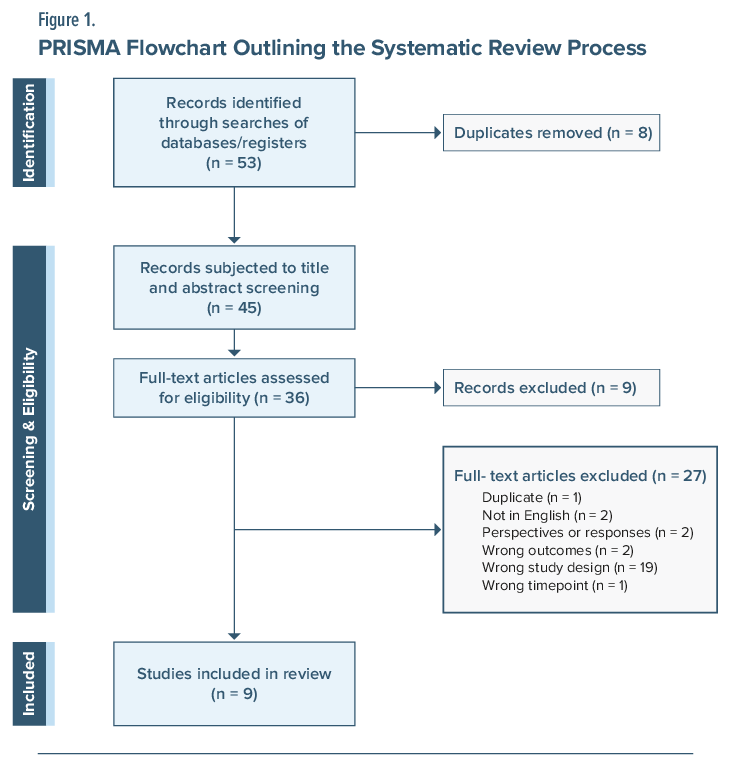
The systematic review was registered in PROSPERO (CRD420261357096) on March 31, 2026, and data extraction was conducted on April 2, 2026. Using the search terms “bipolar,” “lithium,” “puerperal,” “postpartum,” “postnatal,” “relapse,” and “recurrence,” a systematic literature search was conducted up to January 20, 2026, in PubMed, PsycINFO, and the Cochrane databases. Studies eligible for inclusion were selected according to the Preferred Reporting Items for Systematic Reviews and Meta-Analyses (PRISMA) guidelines,17 as shown in Figure 1. They were included if written in English and focused on BD I, BD II, or major depressive disorder (MDD) as defined by DSM criteria, International Classification of Diseases criteria, or the Research Diagnostic Criteria (RDC). Additional potentially eligible articles identified through bibliographic searching were also included. Two independent observers extracted data using a data extraction form created on Covidence. Exclusion criteria included review articles, studies written in a language other than English, and studies describing isolated cases of postpartum psychosis, where specific information about the diagnosis was not provided. We also excluded studies focusing on schizophrenia spectrum and other psychotic disorders. Use of concomitant medications was not considered a basis for exclusion, based on the paucity of available literature; however, such instances were noted and considered during analysis as possible sources of confounding. Risk-of-bias assessments were conducted using the Joanna Briggs Institute (JBI) checklists for case series (Supplementary Table 1) and cohort studies (Supplementary Table 2).18,19 These tools were selected with the understanding that there is a paucity of randomized controlled trials (RCTs) on lithium prophylaxis, which would therefore eliminate the use of other risk-of-bias assessment tools, such as the Cochrane Risk of Bias Tool or the Jadad scale. Additionally, the various JBI critical appraisal checklists assessed similar domains across different study designs, thus enabling the risk-of-bias assessments to be as consistent as possible between included studies.
Data Analysis
We conducted a random-effects meta-analysis of recurrence proportions using a generalized linear mixed model with a logit transformation. This approach was selected due to the variation in diagnostic criteria and study populations. Between-study variance was estimated using maximum likelihood, and 95% confidence intervals of individual studies were calculated on the logit scale and back-transformed. Heterogeneity was assessed, and the robustness of the pooled estimate was evaluated using leave-one-out sensitivity analyses. All statistical analyses were performed in R software (version 4.5.2) using the meta package.
RESULTS
The results of the search are outlined in the PRISMA flowchart below (Figure 1). Fifty-three studies were initially identified, 8 of which were duplicates. Title and abstract screening were conducted by E.L.D. for the remaining 45 studies, and 36 were subjected to full-text screening by V.S. and E.L.D. to assess eligibility. Any differences or discrepancies were discussed before making a final decision.
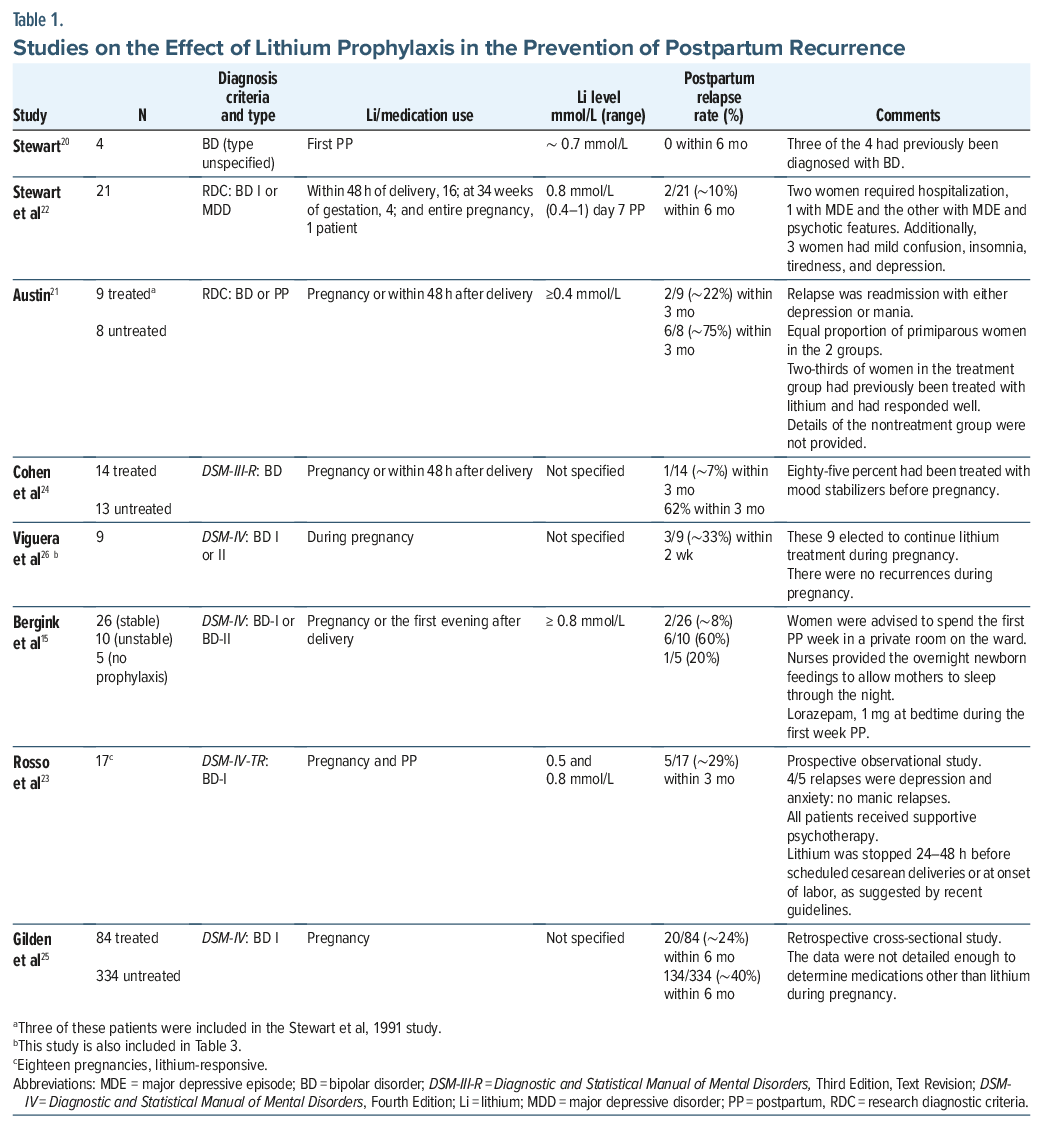
We found 8 studies (see Table 1) comprising 554 women with BD I, BD II, or MDD that provided information on the prophylactic effect of lithium treatment during the postpartum period. Of the included studies, only 2 involved women with BD II, but results were not reported separately for types I and II. There was 1 study that included women with MDD; however, recurrence rates were not reported separately from those in women with BD. In total, there were 9 women diagnosed with MDD and 545 women diagnosed with BD I or II included in this review. There were 2 case series,20,21 1 prospective multicenter case study,22 2 prospective observational cohort studies,15,23 a retrospective report,24 a retrospective cohort study,25 and a comparative study.26 The sample size-weighted mean duration of follow-up across these studies was 5.35 months, and the reported recurrence periods ranged from 4 days to 3 months postpartum. We found an additional study that looked at the effect of lithium discontinuation on postpartum relapse, which was included in our review (see Table 3).27 Viguera and colleagues’ study provided information on both the prophylactic effect of lithium and the effect of lithium discontinuation on postpartum relapse; hence, it was included in both Tables 1 and 3.26
Risk-of-Bias Assessment
Risk-of-bias assessments were conducted using the JBI critical appraisal tools for case series and cohort studies, respectively.18,19 Questions in each tool may address various domains, including risk of bias, adequate reporting, and statistical analysis, which may not be applicable to all studies. Of the 2 case studies, only one had an answer of “No” for an item that signaled potential for bias related to participant selection. Despite this, the 2 reviewers agreed that it did not hinder the quality of the case series, since it is one of the earliest available in the literature and attempts to provide guidance for clinicians considering implementation of lithium prophylaxis. The reviewers agreed that all other included studies were found to be of sufficient quality for inclusion in the systematic review.
Prophylactic Treatment With Lithium
Stewart reported a small case series (n = 4), 3 of whom (75%) had BD.20 Lithium carbonate 900–1,200 mg added on day 1 postpartum was effective in preventing recurrence of a mood episode for at least 6 months. Stewart et al22 later examined the effect of lithium prophylaxis on the recurrence risk of puerperal psychosis in 21 women. The definition of puerperal psychosis was not provided, but RDC-BD I or MDD was the most common diagnosis for previous puerperal or nonpuerperal episodes. Fourteen women (66.7%) experienced illness onset after delivery in the form of a psychotic episode; however, all except 1 had developed nonpuerperal episodes by the time of the study. Eight (38.1%) had only puerperal episodes, implying a good illness prognosis compared with an illness with prepregnancy onset characterized by both puerperal and nonpuerperal episodes. A history of at least 1 episode of postpartum psychosis requiring hospital admission was required for lithium prophylaxis. All but 5 women (76.2%) started lithium within 24 hours of delivery; 4 began at 34 weeks of gestation, and 1 took it throughout pregnancy. The mean lithium doses during and after delivery were 1,030 mg and 900 mg daily, respectively. Treatment and follow-up extended 6 months after delivery. Two women (10%) required hospitalization, one for a major depressive episode without psychotic features, and the other for the recurrence of BD. Additionally, 3 women (14.3%) had mild confusion, insomnia, fatigue, and depression, all of whom required treatment with lorazepam 1–2.5 mg at bedtime.
Austin compared the risk of postpartum affective psychosis in women receiving prophylactic medication (n = 9) and untreated women (n = 8).21 These women met the RDC criteria for BD or puerperal affective psychosis. All (except 1, who was treated with antipsychotic medication) had been considered for and/or prescribed lithium. Lithium prophylaxis was defined as at least 3 months of lithium therapy after delivery, with serum lithium levels >0.4 mmol/L. Puerperal relapse was defined as readmission for mania or depression within 3 months after delivery. Six women (3 in each group) had a history of mania occurring only in the postpartum period, and as many had been treated with lithium with a positive effect (6 in the treatment group, and none in the untreated group). For most patients (6/9), lithium was prescribed in the second or third trimester. Two of 9 (22.2%) treated patients relapsed, and 6 of 8 (75%) untreated patients relapsed (χ2 = 4.48, P < .05). Notably, all relapses were episodes of mania.
Viguera et al26 conducted a comparative study of recurrence risk among women with BD I or II who discontinued lithium during pregnancy compared to nonpregnant controls. Some individuals (n = 9) opted to continue lithium treatment during pregnancy, and none experienced recurrences during the first 40 weeks of the study period. Three individuals (33.3%) experienced recurrence within 2 weeks postpartum, despite the continuation of lithium treatment.
An observational cohort study by Bergink et al15 examined the prevention of postpartum psychosis and mania in mothers diagnosed with BD (n = 41) at elevated risk of recurrence. Of these women (11 primiparous; 27 with BD I and the rest BD II), 31 (75.6%) took medication(s) continuously during pregnancy. Of the remaining 10 (24.4%), 3 discontinued medications during the first trimester, and the rest were medication-free during the entire pregnancy. The relapse rate during pregnancy was 19.4% (6 of 31) with prophylaxis, compared with 40.0% (4 of 10) without prophylaxis. Among the 31 women who remained stable throughout pregnancy, 26 (83.9%) used prophylaxis postpartum. Of these, only 7.7% (2 of 26) relapsed postpartum, whereas 1 of the 5 women (20%) who were stable throughout pregnancy but declined prophylaxis postpartum relapsed. Of the 6 out of 10 women who relapsed during pregnancy despite treatment, all also experienced a postpartum relapse.
Cohen et al24 examined the effectiveness of mood stabilizers in the postpartum prevention of BD in women (n = 27), 16 (59.3%) of whom were primiparous. All but 1 were receiving pharmacotherapy 6 months before the index pregnancy. Of the 14 women receiving prophylactic medication, 11 (78.6%) continued the medication they were taking during pregnancy—lithium monotherapy in 6, carbamazepine and lithium in 2, antidepressant and lithium in 2, and carbamazepine monotherapy in 1. Three women had their lithium restarted within the first 48 hours after delivery. The relative risk of relapse among women who did not receive prophylactic treatment was 8.6 times greater than that among women who did (95% CI 1.24–59.7).
Rosso et al studied the effectiveness of lithium prophylaxis in lithium-responsive women (n = 17) with 18 pregnancies, all of whom had required psychiatric hospitalization, but not in the last 24 months.23 A history of psychotic features was present in 83%, mixed symptoms in 89%, and suicide attempts in 18%, with most being primiparous (13), indicating a high-risk group. Of the 18 pregnancies, 5 (27.8%) out of 5 patients (29.4%) were followed by recurrence: 2 mild depressions, 1 hypomanic episode with mixed features, and 2 anxiety disorders NOS. Both depressive episodes were successfully treated with psychotherapy and optimized lithium dosage, though the exact dosage was not indicated. The hypomanic episode was managed with the addition of 5 mg olanzapine daily, and the anxiety was treated with benzodiazepines as needed and psychotherapy.
Gilden et al retrospectively examined the effectiveness of lithium in reducing the self-reported risk of manic or depressive episodes during the first 6 months after delivery.25 Women with a DSM-IV diagnosis of BD I who had been pregnant at least once (n = 418) were included in the study. Data on lithium use were obtained through self-report, and information on dosing and blood levels of lithium was unavailable. Because detailed information on the use of other psychotropic medications was not collected, their effects on recurrence risk were not investigated. Of women who reported lithium during and after pregnancy (n=84), 20 (23.8%) experienced a postpartum recurrence, compared to 134 (40.1%) women not treated with lithium (crude odds ratio = 0.47; 95% CI 0.27–0.81; P = .006).
Timing of Initiation of Lithium Prophylaxis
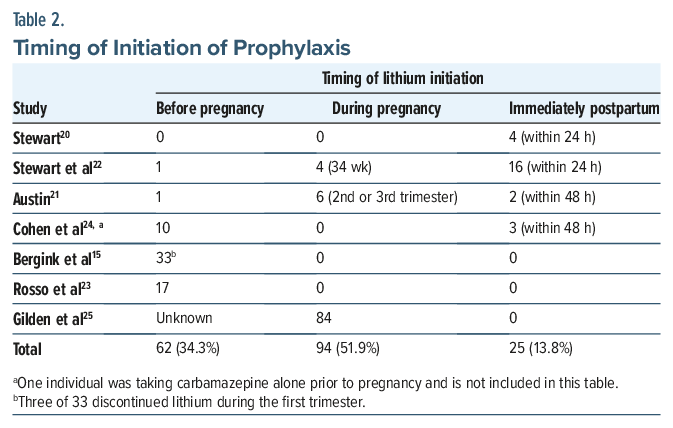
Table 2 outlines the timing of lithium initiation for postpartum prophylaxis found in this review. The most common timing was during pregnancy (51.9%), followed by prepregnancy (34.3%), with the remainder occurring immediately postpartum (13.8%).
Effect of Lithium Discontinuation on Postpartum Recurrence
Studies examining the impact of lithium discontinuation, as seen in Table 3, provide indirect evidence of its effectiveness in preventing postpartum recurrence. A case series by Targum et al found that 2 of 3 patients, all of whom had sustained euthymia following treatment with lithium before pregnancy and had remained symptom-free during pregnancy after its discontinuation, relapsed postpartum.27
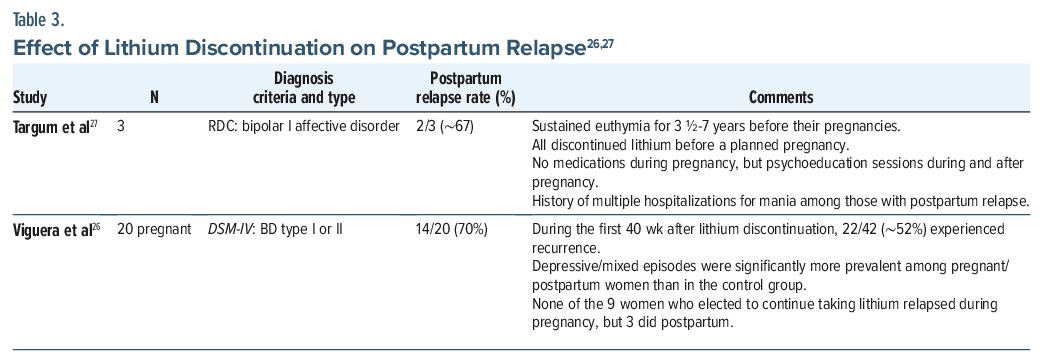
Viguera and colleagues’ comparative study found that recurrence rates rose from 21% in the year before discontinuation to 52% and 58% in the first 40 weeks after discontinuation for pregnant and nonpregnant women, respectively.26 Among those whose mood remained stable during the first 40 weeks after lithium discontinuation, recurrence rates in the two groups were 70% and 24%, respectively, during the weeks 41–64. Depressive or mixed episodes were more prevalent among pregnant than among nonpregnant women (63% vs 38%). Recurrence risk was higher after rapid (1–14 days) than after gradual (15–30 days) discontinuation but was similar across types I and II. Both studies show that euthymia, with or without treatment during pregnancy, attenuates but does not eliminate the risk of postpartum recurrence.
Meta-Analysis of Studies Including Lithium-Treated Patients
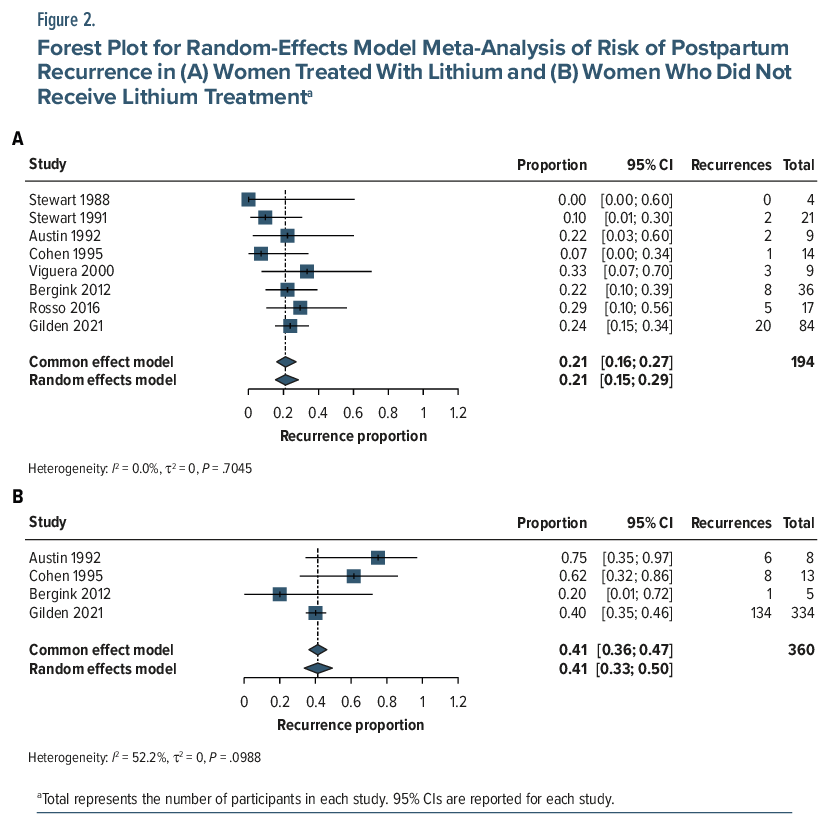
Across the 8 included studies, 41 recurrence events were observed in 194 participants treated with lithium. The pooled recurrence proportion using a random-effects model was 0.21 (95% CI 0.15–0.29). No statistically significant heterogeneity was detected (τ2 = 0, I 2 = 0%, 95% CI 0%–68%; Q test P = .70). However, moderate heterogeneity could not be excluded due to the small number of included studies. The 95% prediction interval of 0.15–0.29 indicated an expected range for recurrence rates in future comparable studies but must be interpreted cautiously. Leave-one-out sensitivity analyses demonstrated that the pooled recurrence estimate was not materially influenced by any one study, with proportions of 0.19 to 0.23. Between-study heterogeneity remained negligible in all leave-one-out models (τ2 = 0, I2 = 0%). A forest plot depicting studies including lithium-treated patients is shown in Figure 2A.
Meta-Analysis of Studies Including Untreated Patients
Four studies included participants who did not receive lithium treatment (n = 360), which resulted in 149 recurrence events. The pooled recurrence proportion using a random-effects model for these studies was 0.41 (95% CI 0.33–0.50). There was moderate heterogeneity detected among the studies (τ2 = 0, I 2 = 52.2%, 95% CI 0%–84.2%), though statistical tests of heterogeneity were not significant (Q test P = .099; likelihood ratio test P = .07). Leave-one-out sensitivity analyses showed that pooled recurrence proportions remained broadly consistent when omitting individual studies, ranging from 0.36 to 0.47. Heterogeneity also remained moderate across models (I 2 = 35%–63%). The pooled estimate was most sensitive to the exclusion of Gilden et al,25 which increased the estimated proportion to 0.58, while removal of other studies had minimal impact. A forest plot depicting studies including lithium-treated patients is shown in Figure 2B.
DISCUSSION
Findings of our systematic review and meta-analysis suggest an overall pooled estimate of postpartum relapse of 21% in individuals treated prophylactically with lithium, which aligns with similar meta-analyses.1 The pooled estimate of postpartum relapse in individuals who did not receive lithium treatment was 41%, which was slightly lower than what has been previously described by Wesseloo and colleagues.1 However, this difference may be attributed to our review’s specific focus on lithium treatment and the small number of included studies. Additionally, there was observed variation in the definition of a postpartum recurrence: some studies defined it based on the presence of psychiatric symptoms or disorders, such as depression, hypomania, and anxiety.15,22–24 In contrast, another study explicitly defined recurrence as readmission to hospital, within 3 months postpartum, with depressive or manic symptoms.21 The presence of postpartum psychosis was used as an additional measure of postpartum recurrence.22 This clinical heterogeneity could result in the overall pooled estimate being over-or underreported; therefore, the results of this review should be interpreted cautiously.
The most common time for initiating lithium prophylaxis was during pregnancy; however, this should not be misinterpreted as the optimal timing for prophylactic initiation, as timing varied considerably across studies. Numerous factors may influence the decision of when to start lithium, including previous response to lithium, maternal preference, and consideration of potential adverse effects on the fetus/newborn.20–23 Additionally, studies in this review included a range of serum lithium levels used in prophylactic treatment, while some studies did not report serum lithium levels. No studies evaluated a connection between the timing of prophylactic initiation or serum lithium levels and the risk of postpartum relapse. Therefore, physicians must conduct a thorough review of the illness course, in conjunction with the mother, when formulating a tailored pharmacologic treatment plan involving lithium prophylaxis.
Currently, there are no RCTs of lithium in the prevention of BD after delivery. The meager literature on the topic has focused mainly on BD I. Only 1 study included women with MDD,22 and 2 studies included women with BD II, but the results for these disorders were not reported separately.15,26 Most studies are case series, and sample sizes are small. Confounding by indication is a concern because lithium was continued during and after pregnancy in some women with a history of lithium responsiveness or a mania-preponderant illness course. Additional sources of confounding, which serve as limitations to the current review, exist throughout the included studies: for example, some patients were referred to specialized clinics for preconception counseling, allowing psychiatrists to optimize the medication regimen before pregnancy and confirm the response to lithium treatment before pregnancy. Additionally, multiple studies involved the use of concomitant medication, such as carbamazepine, lamotrigine, or olanzapine, thus making it difficult to assess the impact of lithium monotherapy.15,23 Factors other than lithium therapy, including sleep protection and psychotherapy, could have also affected the postpartum risk of relapse.15,23 Since relapse during pregnancy is a risk factor for postpartum recurrence, the low postpartum relapse rate may, in part, be attributed to the positive effect of pregnancy on mood in women with BD I.28,29 Avoiding antidepressants except on rare occasions could have improved postpartum outcomes. Other factors, including specialized expert care, close follow-up during and after pregnancy, psychoeducation, and an emphasis on early detection of emerging relapse symptoms and timely intervention, likely contributed to the positive outcomes. The study findings may not apply to women with BD II due to a lack of data on lithium’s use in preventing postpartum recurrence. A systematic review of randomized trials of lithium, lamotrigine, and placebo for BD II concluded that the evidence was very uncertain about lithium’s effect on the risk of new mood episodes.30
This study highlights knowledge gaps and the need for research. Currently, there are no published data on the role of lithium in postpartum prevention of BD II. Studies are also needed to determine predictors of response to lithium in the postpartum population. In general, factors associated with a good response to lithium among individuals with BD I include comorbidity with panic disorder, manic-predominant polarity, manic polarity onset, age at onset between 15 and 32 years, and family history of BD.31 Other predictors of response to lithium include mania-depression-interval sequence, absence of rapid cycling, absence of psychotic features, shorter prelithium duration of illness, and later age of illness onset. Factors most strongly linked to poor response include comorbid obsessive-compulsive disorder, alcohol and/or substance misuse, and psychosis (symptoms/syndrome).32 Timely initiation of lithium prophylaxis is important to avoid unnecessary exposure to the medication during pregnancy and to optimize the prophylactic response, but also to prevent postpartum recurrences. Starting lithium postdelivery may be too late for patients experiencing prepartum onset of “postpartum episodes.” Ideally, the decision about whether to continue pharmacotherapy during pregnancy should be made collaboratively with the patient, following careful consideration of the risks and benefits. For example, maintenance treatment during pregnancy may be a beneficial approach for someone with an early age of illness onset, high episode frequency, safety concerns, multiple hospitalizations, psychiatric comorbidities, and a history of peripartum recurrences. On the other hand, lithium could be tapered gradually, under supervision, in a euthymic individual who agrees to receive psychiatric care during pregnancy and values early recognition and treatment of emerging symptoms of relapse. This is especially prudent for mothers given concerns regarding the passage of lithium to the infant through breastmilk and subsequent potential for teratogenicity.11,33 The paucity of data has produced conflicting opinions; therefore, decisions regarding termination of lithium prophylaxis should be made alongside a thorough weighing of benefits and potential risks.
Conducting RCTs in the postpartum population is challenging due to difficulties in recruiting and retaining participants. The short duration of RCTs is another concern, as it may not capture data on the postpartum recurrence or occurrence of depressive episodes after the resolution of mania. Real-world data from large, multicenter prospective cohort studies might bridge the gap between clinical trials and practice and address the needs of mothers who wish to breastfeed.34 Such studies should also investigate the effectiveness of other commonly recommended prophylactic medications, such as atypical neuroleptics and lamotrigine, alone or in combination with lithium.35 Traditionally, practice guidelines address the prevention of mood episodes during and after pregnancy separately, which is understandable given the unique challenges of each period. The results of this study highlight the importance of preventing relapses during pregnancy to reduce the risk of postpartum recurrence in women with BD. Long-term studies are necessary to investigate the effects of pharmacotherapy, ideally in combination with psychoeducation, to assess treatment response during and after pregnancy. Because other psychiatric disorders often accompany BD, prophylactic treatment should also address common comorbidities, such as anxiety disorders.
CONCLUSIONS
Findings from our meta-analysis suggest that lithium is effective in preventing postpartum recurrence of mood disorders; however, caution is warranted when interpreting study results because of confounding by indication and limited literature. Since specific rates are not available for BD II or MDD with psychotic features, our findings may not apply to the prevention of postpartum episodes in these disorders. The studies reviewed herein may have underestimated the risk of depression and psychiatric comorbidities in both treated and untreated groups due to the short duration of the trials or to not counting depression without psychotic features as a recurrence or occurrence.
Continued use of lithium during pregnancy is necessary for some women to maintain mood stability; however, for others, tapering off lithium under supervision to minimize the risk of in utero medication exposure may not increase the risk of recurrence during pregnancy. In this group, increased frequency of visits is necessary to detect emerging symptoms, especially in the third trimester. Frequent contacts with health care professionals provide a remarkable opportunity to closely monitor high-risk patients to prevent postpartum psychiatric episodes. Postpartum relapse prevention plans should be drafted for all women at high risk.
Article Information
Published Online: October 21, 2026. https://doi.org/10.4088/JCP.26r16567
© 2026 Physicians Postgraduate Press, Inc.
Submitted: June 17, 2026; accepted August 18, 2026.
To Cite: Sharma V, Dietrich EL, Cha B, et al. Lithium in the prevention of postpartum recurrence of mood disorders: a systematic review and meta-analysis. J Clin Psychiatry 2026;87(4):26r16567.
Author Affiliations: Department of Psychiatry, Western University, London, Ontario, Canada (Sharma, Gonzalez-Torres); Department of Obstetrics & Gynecology, Western University, London, Ontario, Canada (Sharma); Parkwood Institute Mental Health, St. Joseph’s Health Care, London, Ontario, Canada (Sharma, Gonzalez-Torres); Lawson Research Institute, St. Joseph’s Health Care, London, Ontario, Canada (Dietrich); Department of Psychiatry, Gyeongsang National University College of Medicine, Jinju, Republic of Korea (Cha); Department of Psychology, Lakehead University, Thunder Bay, Ontario, Canada (Mazmanian).
Corresponding Author: Verinder Sharma, MB, BS, FRCP(C), Parkwood Institute Mental Health, St. Joseph’s Health Care, 550 Wellington Road, London, ON, N6C 0A7, Canada ([email protected]).
Financial Disclosure: Drs Sharma, Cha, Gonzalez-Torres, and Mazmanian and Ms Dietrich have no conflicts to disclose.
Funding/Support: This research received no specific grant from any funding agency, commercial, or not-for-profit sectors.
Supplementary Material: Available at Psychiatrist.com.
Clinical Points
- Women with bipolar disorder are at increased risk for relapse/recurrence during the postpartum period, and though lithium use in preventing relapse has been studied extensively in individuals with bipolar disorder, its specific use in the postpartum has not received as much attention.
- Findings from our meta-analysis suggest that lithium is effective in preventing postpartum recurrence of mood disorders.
Editor’s Note: We encourage authors to submit papers for consideration as a part of our Focus on Women’s Mental Health section. Please contact Marlene P. Freeman, MD, at Psychiatrist.com/contact/freeman.
Journal of Clinical Psychiatry, all rights reserved.