
Original Source: Journal of Clinical Psychiatry, all rights reserved. —
The discovery of ketamine’s antidepressant actions has dramatically impacted how psychiatry is practiced and helped change the landscape for antidepressant drug development. Since publication of the seminal paper showing ketamine’s rapid-onset antidepressant effects,1 there have been numerous, largely consistent, studies published,2 leading to a continued growth of ketamine’s use in a range of clinical settings.3,4 Following its initial US Food and Drug Administration (FDA) approval in 2019 for combined use with an oral antidepressant for treatment-resistant depression (TRD), intranasal (IN) esketamine’s approved TRD use has expanded to include monotherapy or adjunctive use with an oral antidepressant.5,6 Esketamine is also approved for depressive symptoms in adults with major depressive disorder (MDD) with acute suicidal ideation (SI) or behavior; however, the label notes that effectiveness in preventing suicide or reducing SI or behavior has not been demonstrated.
The approval of IN esketamine was contingent on the development of longer-term post-approval studies and the establishment of a risk evaluation and mitigation strategy (REMS) that created a registry of patients and clinicians using the treatment and recorded data on adverse events on now over 58,000 patients receiving nearly 1.5 million treatments.6 A consequent portfolio of registration trials, long-term safety and efficacy studies, and the REMS data provide vast information about IN esketamine use. However, the later stages of clinical translation have proven complex and challenging for ketamine-related treatments other than IN esketamine.7
Nationwide surveys of ketamine or esketamine providers indicate that 20%–30% administer these treatments in nonstandardized formulations (eg, oral or intramuscular [IM]) for off-label uses, with dosing frequencies at times at variance with on-label or protocol-established schedules.8,9 This variability in how ketamine treatment is employed in real-world settings, the lack of well-controlled data on the safety and efficacy of the various forms through which ketamine treatment is delivered clinically beyond IN esketamine, and the inability to effectively track and monitor its use in clinical settings raise concerns about the treatment methods employed and the actual effectiveness and safety of the treatments in clinical practice, including aspects of worsening suicidality and risk for substance abuse.10-13
To address uncertainties surrounding the use of ketamine and esketamine in routine clinical practice, the American Society of Clinical Psychopharmacology (ASCP) convened a Task Force to provide expert guidance on gaps between the “real-world” use of these agents, clinical experience, and the evidence base from controlled clinical trials.
METHODS
The Task Force was composed of 21 ASCP members, and invited panelists were appointed by the ASCP leadership based on their established specific expertise in the development and clinical use of ketamine or esketamine reflected by publications and/or extensive clinical and research experience. Task Force members represented 6 countries including the United States (n=13), Australia (n=1), Austria (n=1), Canada (n=2), Spain (n=1), and the United Kingdom (n=3).
The 21-member panel comprised academicians with specialized expertise in mood-disorder psychopharmacology and was intentionally designed to establish expert clinical consensus rather than broad stakeholder representation. This panel size was considered appropriate based on methodological literature indicating that Delphi panels comprising a single professional or clinical stakeholder group may achieve adequate stability and reproducibility with approximately 20–30 participants.14–16 Twenty of 21 panelists completed Round 1, and all completed Round 2. Individual survey responses were not identifiable to other panelists and were analyzed in aggregate.
Task Force members participated in in-person and virtual meetings and email discussions to identify clinical areas in which expert consensus could address perceived gaps between the empirical evidence and routine practice. Members collectively developed and refined consensus statements, informed by pertinent literature and their clinical and research experience. All Round 1 items were reviewed and vetted before survey launch. Panelists provided quantitative ratings and free-text comments to contextualize responses and guide revision of nonconsensus items.
Panelists were instructed to respond to items based on their synthesis of the published literature and their own clinical experience. They rated each item on a 1–5-point Likert scale with responses of “strongly disagree” (1), “moderately disagree” (2), “neither agree nor disagree” (3), “moderately agree” (4), or “strongly agree” (5). Consensus was defined a priori as ≥75% of respondents rating an item as either 1 or 2 (strong or moderate disagreement) or 4 or 5 (moderate or strong agreement). Items meeting the prespecified consensus threshold were retained without substantive modification, whereas Round 1 items achieving 66–74% agreement or disagreement were revised for Round 2 re-rating based on panelist feedback.
Median ratings and their interquartile ranges (IQRs) were calculated for each item to characterize the central tendency and dispersion of responses. IQRs of 0 or 1 indicate relatively low dispersion of responses, whereas IQRs of 2 or greater indicate greater dispersion. IQR was reported as a descriptive measure and was not used as an independent criterion for determining consensus.
Delphi items were developed around 8 topics identified by the Task Force as most pertinent to the field. Subgroups assigned to each topic, based on members’ expertise, reviewed the relevant literature and summarized the existing evidence regarding key clinical practices. Comprehensive literature reviews were not undertaken. Subgroup summaries and identified literature were shared with the full Task Force through written outlines and virtual meetings, after which the Task Force collectively identified the most clinically important and relevant questions for inclusion in the Delphi survey.
Surveys were conducted online using SurveyMonkey (SurveyMonkey Inc, San Mateo, California; www.surveymonkey.com) from March 2025 through September 2025. The reporting of results adhered to Accurate Consensus Reporting Document (ACCORD) guidelines17 as well as Guidance on Conducting and Reporting Delphi Studies (CREDES) standards.18 Findings are presented as descriptive statistics, with 95% Wilson confidence intervals (CIs) including continuity correction19 attached to proportions of agreement, calculated using VassarStats (http://vassarstats.net/); CIs are provided descriptively to convey the uncertainty surrounding observed proportions and are not intended to support population-level inferences.
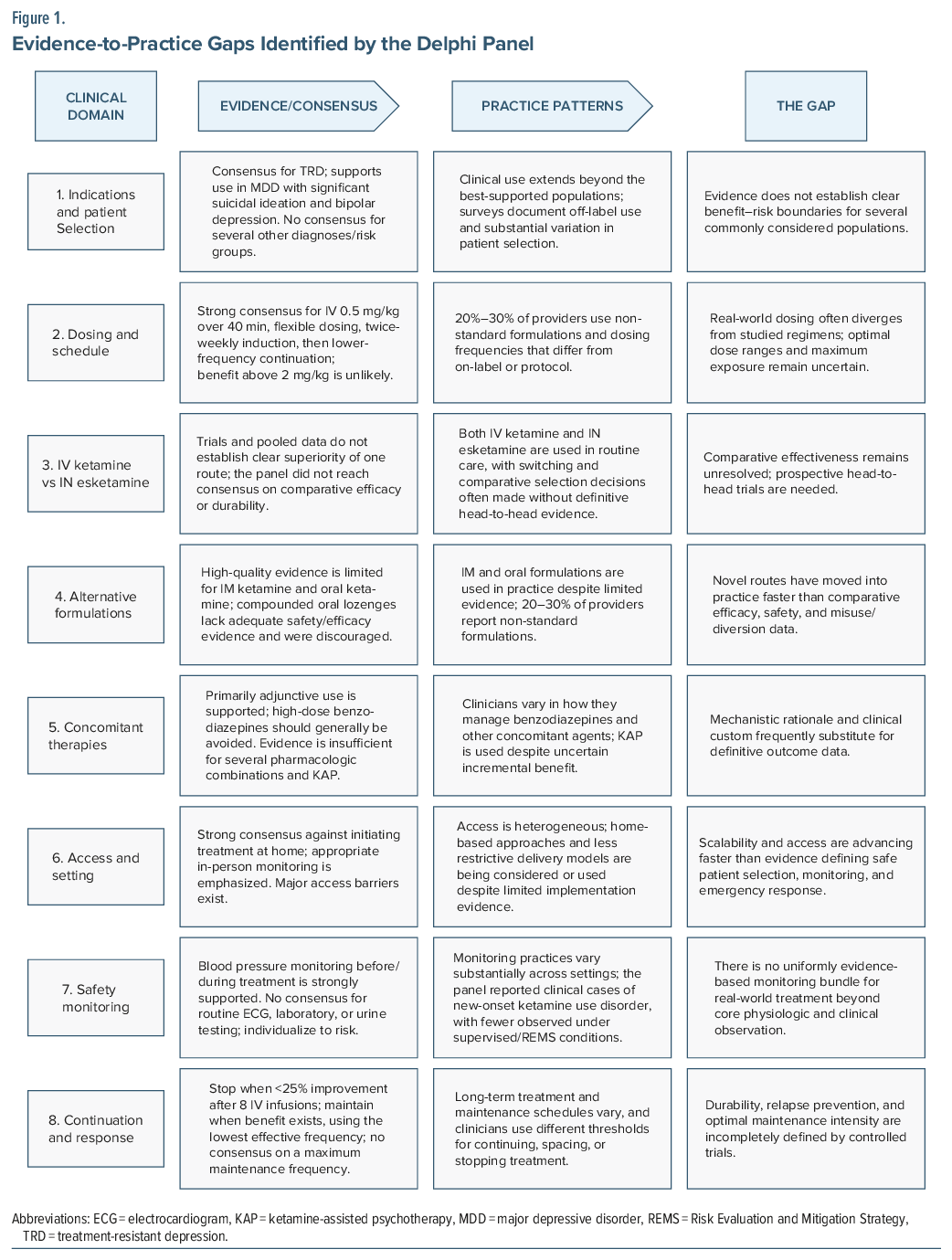
Artificial intelligence (ChatGPT; OpenAI) was used to assist with organization and synthesis of the Delphi panel findings, facilitate cross-referencing of individual Delphi items, and identify candidate core concepts for inclusion in Table 1 and Figure 1. All AI-assisted outputs were reviewed and verified by the authors against the original Delphi items and panel ratings. The authors take full responsibility for the accuracy and interpretation of the final content.
Because the panel was intentionally selected for specialized expertise, individuals with relevant industry, research, and clinical relationships were not excluded. These relationships were disclosed transparently. To reduce potential influence of individual interests, Delphi ratings were submitted independently and were not attributed to individual panelists in the group decision process; consensus was determined using prespecified quantitative criteria. No panelist had unilateral authority to determine whether an item achieved consensus.
The project was considered a consensus statement activity rather than human-subjects research because all participants were members of the expert panel and co-authors of the manuscript; accordingly, institutional review board review was not required under the journal’s policies.
RESULTS
The Task Force identified the following main general topics where consensus was sought:
- Indications and contraindications for treatment (22 items across 2 Delphi rounds, items #[1]–[22]), ultimately achieving consensus on 8/22 (36%), summarized in Supplementary Table 1;
- Appropriate dosing (33 items after 2 rounds, #[23]–[55]), with consensus achieved on 14/33 (42%), summarized in Supplementary Table 2;
- IN esketamine versus intravenous (IV) ketamine comparisons (9 items after 2 rounds, #[56]–[64]), achieving consensus on 1/9 (11%), summarized in Supplementary Table 3;
- Alternative formulations (4 items #[65]–[68]), achieving consensus on 1/4 (25%), summarized in Supplementary Table 4;
- Concomitant therapies (10 round 1 items, #[69]–[78]), achieving consensus on 3/10 (30%), summarized in Supplementary Table 5;
- Issues related to treatment access (8 items #[79]–[86a]), with consensus achieved on 4/8 (50%), summarized in Supplementary Table 6;
- Appropriate laboratory and safety monitoring before and during treatment (13 items, #[87]–[99]), achieving consensus on 2/13 (15%), summarized in Supplementary Table 7; and finally
- Parameters for judging improvement and continued treatment (6 items #[100]–[105]), with consensus reached on 2/6 (33%), summarized in Supplementary Table 8.
In sum, consensus was achieved on 35/105 total items (33%). Core concept findings based on the Delphi item sections are elaborated below.
Delphi item median ratings and IQRs are presented in Supplementary Tables 1–8; round 2 revisions are designated by the suffix “a,” and each unique item was counted only once, using either the original round 1 version or its revised round 2 version. Most items achieving the prespecified threshold for consensus agreement demonstrated relatively low dispersion (IQRs of 0–1), although several items meeting the consensus criterion had greater dispersion (IQRs ≥2), namely, items 40 (regarding the targeting of ketamine dosing to perceptual/dissociative effects), 59 (disagreement that IN esketamine has superior antidepressant efficacy to IV ketamine), 89 (respondents’ infrequent observations of new-onset ketamine use disorder during treatment), and 94 (frequency of blood pressure monitoring during treatments). Because IQRs were a descriptive measure rather than a criterion for consensus, these Delphi items were retained as having consensus.
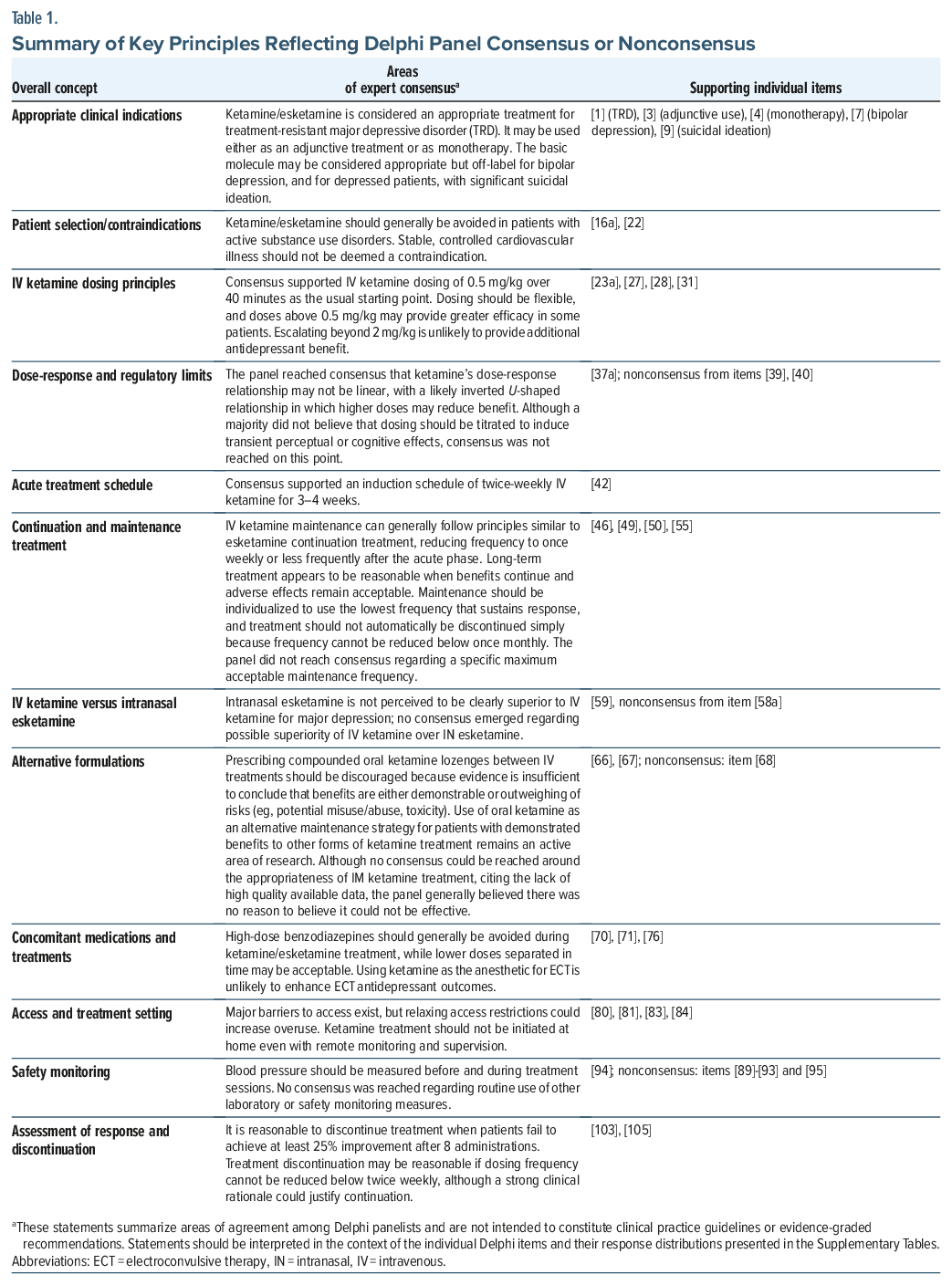
Table 1 presents a distillation of the core concepts reflecting areas in which consensus was reached across both Delphi rounds, with reference made to the component items on which consensus principles were derived from Supplementary Tables 1–8.
Treatment Indications and Contraindications
When considering broad treatment indications (Supplementary Table 1), panelists strongly concurred that ketamine or esketamine represents valuable, appropriate treatment options for patients with TRD as either adjunctive therapy or monotherapy. Strong consensus also supported use for patients with MDD and significant SI and bipolar depression. Panelists disagreed about the utility of ketamine or esketamine for SI unassociated with depression. Panelists strongly viewed ketamine or esketamine as inappropriate for bipolar mania, advising deprescription if mania symptoms emerge.
Panelists did not achieve consensus on use in patients with MDD with psychotic features, and 85% held no strong opinion on this issue, suggesting it is unresolved. No consensus was reached regarding the appropriateness of ketamine-based treatments for patients with primary diagnoses of posttraumatic stress disorder (PTSD), obsessive-compulsive disorder, primary anxiety disorders, or borderline personality disorder. Similarly, no consensus was reached about appropriateness of these interventions for patients with mood disorders with comorbid active alcohol or substance use disorders, those with a history of psychosis, or those with primary substance use disorder diagnoses.
Appropriate Dosing
As shown in Supplementary Table 2, there was strong consensus agreement (20/21) supporting standard initial dosing of IV ketamine at 0.5 mg/kg infused over 40 minutes. There was strong consensus that dosing should be flexible, allowing increases or decreases based on individual responses. Strong agreement was reached on the belief that dosing above 0.5 mg/kg is likely to achieve greater efficacy in some patients. There was no consensus surrounding the use of doses between 0.75 mg/kg and 2.0 mg/kg, but consensus disagreement about whether doses ≥2 mg/kg conferred greater efficacy. A nonconsensus majority disagreed with the use of the FDA recommendations of a 60 mg/day dosing maximum and an exposure limit of ≤8 lifetime treatments applied to all research studies, for clinical purposes.
Although the panel endorsed the possibility of an inverted-U dose-response relationship, a majority did not consider the available evidence sufficient to definitively establish this relationship. Additionally, a nonconsensus majority disagreed with the proposition that induction of acute perceptual, cognitive, and dissociative effects is necessary to achieve maximal antidepressant effect beyond the effect that it may have on patient expectation; accordingly, they disagreed that dosing should target the induction of transient dissociative effects.
There was strong consensus agreement about initial ketamine dosing of twice per week for a first 3–4-week induction phase. There was no consensus on criteria for minimal response to continue treatment before ending the induction phase, although the majority (71%) of respondents believed that most patients who will ultimately respond adequately likely experience at least a 20% improvement from baseline by their third treatment. By contrast, there was consensus agreement that treatments should be stopped if ≤25% improvement from baseline occurs after 8 administrations.
No consensus was reached on whether the FDA-approved IN esketamine dosing range (56–84 mg) is adequate for clinical practice, whether older patients should initially receive doses <56 mg, or whether doses >84 mg should be considered. Notably, half of respondents had no opinion regarding doses >84 mg, citing insufficient evidence. In contrast, there was strong consensus supporting reduced dosing frequency after the initial 4 weeks, specifically transitioning to a continuation phase with treatment no more than once weekly (Supplementary Table 2, item 46). Narrative comments further supported reducing treatment frequency to the lowest effective maintenance schedule.
There was unanimous agreement that long-term ketamine or esketamine treatment is appropriate when patients continue to benefit without concerning adverse effects. However, no consensus emerged regarding specific dosing-frequency limits or symptom-triggered dosing. In contrast, respondents agreed that maintenance treatment should use the lowest frequency that sustains the optimal response without clinical worsening (Supplementary Table 2, item 55).
No consensus was reached on the possible value of transitioning patients from esketamine or ketamine to the combination of oral dextromethorphan and bupropion, based on presumptive shared mechanistic properties involving NMDA receptor antagonism. Most respondents noted the lack of data from which to support a confident opinion.
IN Esketamine and IV Ketamine Perceived Comparisons
Supplementary Table 3 summarizes comparative findings for IN esketamine and IV ketamine. No consensus was reached regarding whether their clinical efficacy or duration of benefit is similar, whether IN esketamine is superior, or whether switching from IV ketamine to IN esketamine is effective for relapse prevention. Most respondents expressed no opinion regarding the latter. There was, however, narrow consensus disagreement with the statement that IN esketamine is superior to IV ketamine.
Alternative Formulations
As summarized in Supplementary Table 4, no consensus was reached regarding the efficacy or safety of IM ketamine, although panelists noted the absence of strong evidence against its efficacy and the lack of high-quality data in MDD/TRD. Similarly, no consensus was reached regarding robust antidepressant effects of oral ketamine; 71% disagreed that it is clinically appropriate for MDD, although some cited emerging evidence for extended-release formulations. There was consensus (75%) that compounded oral ketamine lozenges between treatment sessions should be discouraged because of insufficient high-quality safety and efficacy data. However, panelists remained divided on whether oral ketamine is a reasonable maintenance option after successful IV ketamine or IN esketamine treatment, citing limited evidence and potential risk of substance use disorders.
Concomitant Therapies
As shown in Supplementary Table 5, there was clear consensus (95% agreeing) that IV ketamine or IN esketamine are primarily appropriate as adjunctive treatments to other antidepressant medications, but 85% also agreed that either could be appropriate monotherapies for TRD. Respondents did not reach consensus on whether it is advisable to discontinue benzodiazepines prior to initiating ketamine or esketamine treatments, but there was strong agreement with avoiding high-dose benzodiazepines when feasible to avoid possible interactions. No consensus was reached about whether antidepressant efficacy is likely diminished by coadministration with mu-opioid antagonists (eg, naltrexone or samidorphan), lamotrigine, memantine, or psychostimulants. There was no agreement on the perceived value of dextromethorphan-bupropion combination as a desirable augmentation of ketamine or esketamine.
In regard to the concomitant use of ketamine or esketamine with nonpharmacologic therapies, 95% disagreed with the proposition that the use of ketamine anesthesia during electroconvulsive therapy would enhance antidepressant outcomes. Additionally, no consensus was reached regarding the value associated with ketamine-assisted psychotherapy
(KAP; defined as the use of specific psychotherapeutic approaches within 2 hours of receiving the treatment) in yielding greater antidepressant efficacy than ketamine or esketamine without concomitant psychotherapy.
Issues Related to Treatment Access
As shown in Supplementary Table 6, panelists strongly agreed that major access barriers to IV ketamine and IN esketamine exist in the US, although there was no clear consensus agreement on whether the FDA-mandated REMS posed a significant access barrier to IN esketamine. Interestingly, respondents nevertheless did not agree on whether current levels of availability are appropriate. Respondents agreed that more relaxed access to the treatments incurs a risk for promoting overuse.
Appropriate Laboratory and Safety Monitoring Before and During Treatment
Supplementary Table 7 summarizes panelists’ views on laboratory and other safety monitoring. There was strong consensus against initiating ketamine or esketamine treatment at home, even with in-home monitoring. However, consensus was not reached on whether at-home treatment may be appropriate after a patient has demonstrated safety with prior treatments in a health care setting. Panelists expressed strongly divergent views, reflecting the contextual complexities of this approach.
Forty percent of panelists reported having encountered at least 1 patient whom they believed developed new-onset ketamine use disorder associated with clinical ketamine or esketamine treatments of any type. However, only 15% reported observing cases where patients developed the disorder when the treatments were provided with adherence to the IN esketamine REMS protocol or IV ketamine was limited to that provided under supervision in a health care setting. In these cases, panelists’ comments noted instances in which patients had significant pretreatment risk factors or clinicians were practicing based on their own idiosyncratic strategies.
No consensus was reached regarding routine physical examination, laboratory testing, electrocardiograms, or urine toxicology before treatment initiation. Although most respondents favored these assessments, many considered them unnecessary for otherwise healthy patients and favored individualizing them based on age, health status, clinical risk factors, and regional requirements. Similarly, no consensus emerged regarding routine laboratory or urine toxicology monitoring during maintenance treatment. A slim majority supported periodic posttreatment laboratory testing, but many questioned its necessity absent patient-specific indications or regulatory requirements (eg, Health Canada recommends liver-function monitoring with repeated ketamine/esketamine treatment). Respondents also noted limited evidence supporting routine urine toxicology during maintenance. Although hepatic monitoring was not specifically queried, recent observational studies have not demonstrated an association between repeated ketamine exposure and liver enzyme abnormalities.20–22
Regarding other safety monitoring, there was strong agreement (85%) with blood pressure monitoring prior to and during treatment sessions, as required by the REMS program for IN esketamine. There was no consensus on whether validated tools should be employed to specifically assess acute perceptual, cognitive, and dissociative effects during treatment sessions. However, it was noted that some formal assessment was appropriate to assure patient safety before leaving a treatment facility.
There was no consensus on whether discontinuation of ketamine or esketamine incurred a specific risk for increased suicidal behavior as a discontinuation phenomenon (71% disagreed with this proposition). Respondents commented on the need to consider the possible reemergence of SI as a component of depressive relapse in any MDD patients with severe symptoms.
Judging Improvement
Supplementary Table 8 summarizes panelists’ responses to items involving issues related to gauging improvement. Panelists felt that failure to achieve at least a 25% improvement from baseline symptom severity after 8 IV ketamine infusions indicated a low probability of further improvement or late response. They also agreed that during the maintenance treatment phase, consideration should be given to halting treatment if frequency cannot be reduced to less than twice per week.
Figure 1 provides a schematic summary of identified gaps in the existing treatment evidence base relative to clinical practice patterns.
DISCUSSION
This ASCP Task Force Delphi survey sought to identify areas of agreement and disagreement among experienced clinicians and investigators regarding the use of ketamine and esketamine in contemporary psychiatric practice. Through a structured, anonymized, iterative deliberation and feedback process, only 35 of 105 statements reached consensus. This relatively low proportion identifies numerous areas in which expert opinion remains unresolved. Such nonconsensus may reflect limitations or heterogeneity in the empirical evidence, differences in clinical experience or practice settings, or other factors; the Delphi findings themselves cannot distinguish among these explanations. Importantly, while nonconsensus is itself a finding, it is not a surrogate measure of evidence quality. Areas of strongest agreement largely reflected indications and practices that are most closely aligned with existing evidence. Panelists supported the use of ketamine or esketamine for treatment-resistant major depression or bipolar depression and repeated infusions for depressive episodes with significant SI (consistent with recent meta-analytic findings23).
While the Delphi method itself is considered foundational to consensus-building in medicine,15 the process itself is subject to “specious consensus” (also known as “forced convergence”) or conceptual dilution if and when complex or nuanced concepts are reworded for the purposes of forcing agreement rather than determining true alignment of panelists’ opinions.24 In that respect, the sustained high divergence of panelists’ opinions despite iterative discussions and pollings offered some assurance against methodological drift toward consensus, where imposed negotiated rewordings might have forced consensus for concepts where none actually exists. Hence, the observed high degree of variability among experts’ opinions in this survey likely reflected true absence of conceptual agreement, mirroring the considerable gap between evidence-based prescribing and “prescribing-based evidence.”25
The divergent findings on clinical indications, formulations, and dosing contrast with a recent American Society of Ketamine Physicians, Psychotherapists, and
Practitioners (ASKP3) Delphi survey focused on IV ketamine for TRD, which showed high agreement.26 That survey primarily addressed patient evaluation, pretreatment medical and psychiatric assessment, safe initiation, informed consent, and documentation. Like the ASCP Task Force, the ASKP3 panel called for further research before endorsing novel formulations (eg, oral or IM), at-home administration, doses >1.0 mg/kg, or KAP.
These results highlight important gaps in knowledge and areas of clinical disagreement that represent important opportunities for future research. One of the most critical areas of nonconsensus is the comparative efficacy of IV ketamine and IN esketamine. The panel could not agree on whether the magnitude of benefit, speed of antidepressant onset, or duration of action meaningfully differ between the two treatments, as is reflected by a modest existing comparative literature,27 or whether differences may exist in comparative measures of functional outcome such as workplace productivity.28 This important gap in knowledge points to a critical need for prospective, head-to-head randomized studies, such as the EQUIVALENCE trial presently underway.29
The panel’s findings on concomitant therapies also revealed diverse opinions about expected benefits, detriments, or neutrality with certain pharmacotherapies based mainly on theoretical mechanistic rationales. For example, some practitioners caution against ketamine or esketamine coadministration with lamotrigine (a putative antiglutamatergic agent) as potentially conflictual; animal studies suggest possible synergy, and human studies report attenuated dissociation but no signal of blunted antidepressant efficacy.30 Similarly, while some preclinical studies suggest that benzodiazepines might diminish ketamine-induced neuroplasticity31 and could theoretically pose additive CNS depressant effects, findings from the RAPID IV ketamine trial found no differences in antidepressant response rates when stratifying by the presence or absence of (at least low-dose) benzodiazepine use.32 Finally, despite preliminary observations that mu-opioid antagonism might block ketamine’s antidepressant effects (eg, Williams et al33), panelists did not feel that coadministration with naltrexone or samidorphan posed a mechanistic contraindication. Regarding the latter point, panelists also noted that while intriguing hypotheses have emerged about the potential role of mu-opioid agonism (eg, buprenorphine) as a possible strategy that might prolong ketamine’s effects on depression and SI (eg, Tucciarone et al34), this work remains too preliminary to draw treatment recommendations.
The Task Force did not reach consensus on the utility of KAP (ie, psychotherapeutic approaches initiated within 2 hours of ketamine administration). Despite interest in this approach, likely catalyzed by the psychedelic literature and based mainly on nonrandomized retrospective reviews or case series reports (eg, Yermus et al35), randomized studies of KAP thus far have not clearly demonstrated a synergistic effect of the psychotherapy component beyond ketamine or esketamine administration alone in MDD or PTSD.36,37 At least 1 randomized comparison of KAP versus ketamine alone for TRD is currently underway (ClinicalTrials.gov identifier: NCT06559826). Interpretation of the existing literature is further limited by heterogeneity in dosing, route of administration (intermixing IV and sublingual formulations), and the type, timing, and intensity of psychotherapy delivered.38 Many respondents also emphasized that the transient dissociative experience associated with ketamine or esketamine should not be conflated with the mystical-type experiences described in classic psychedelic therapy, such as ego dissolution or feelings of interconnectedness, which have been proposed as potential mediators of therapeutic response.39
With respect to non-IV or -IM ketamine–based formulations, it is noteworthy that oral ketamine has relatively poor bioavailability (about 20%) due to extensive first-pass metabolism, and its efficacy for MDD remains uncertain. A recent 13-week multicenter phase 2 trial of oral extended-release ketamine (R-107) vs placebo, enriched for initial responsivity after an open-label 1-week initiation, showed significantly greater reductions in Montgomery-Åsberg Depression Rating Scale scores at primary end point (week 13).40 Another recent phase 2 randomized trial of prolonged-release oral KET01 in 122 TRD outpatients failed to separate from placebo on its primary outcome.41 On the other hand, a meta-analysis of 8 randomized trials (not including the trials by Glue et al40 and Walter et al41) reported a standardized mean difference of −0.62 (P <.00001),42 while another meta-analysis of 592 subjects reported a number needed to treat of 4.89 (95% CI=3.41–8.66) for response and 9.16 (95% CI= 5.49–27.59) for remission.43 Elsewhere, the oral esketamine formulation CLE-100 failed to separate from placebo in a large randomized trial.44 Hence, the limited number of studies and low, sometimes unpredictable, bioavailability of oral formulations leave ongoing questions about whether oral ketamine is a robust modality for drug delivery.
The panel noted the dearth of empirical data on the use of IM ketamine and a lack of consensus on the appropriateness of oral ketamine for clinical practice. Consensus against using compounded oral lozenges between treatment sessions underscores a critical safety issue, driven by concerns about lack of data and the potential for new-onset or exacerbated substance use disorder and drug diversion. Advances in electronic health record sharing, methods of large data analysis, and even natural language processing can greatly assist in providing the type of information necessary to answer the call for so-called “medicine based evidence”45–47 that could provide more clinically relevant data on such unresolved issues. However, the process can be greatly facilitated if researchers and clinicians can agree on the collection of common data elements related to the delivery of ketamine/esketamine treatments.
Finally, there was strong consensus that significant barriers to access exist, but the panel could not agree on whether the current level of availability is appropriate, alongside shared concern that a more relaxed approach could lead to overuse. While data elsewhere report that up to 40% of ketamine clinics provide at-home ketamine products for home use,48 the Task Force strongly felt that the field currently lacks sufficient data to support adequate safety, efficacy, monitoring requirements, patient selection criteria, or implementation standards for such purposes. In particular, there is no established standard for emergency response, medical surveillance, or management of adverse events in the home environment. As access and scalability become increasingly important considerations, home administration may ultimately emerge as a viable pathway for routine use. However, before such an approach can be recommended, the field must first define the evidentiary standards required to demonstrate safety and effectiveness and establish a reproducible framework for implementation, as further discussed elsewhere.49
Key research priorities emerging from the present survey findings include the need for the following:
- Dedicated randomized trials in conditions such as bipolar depression, mood disorders with mixed features, psychotic features, significant anxiety, active substance use disorders, or suicidal ideation
- Adequately powered randomized trials of oral and IM formulations of ketamine in MDD/TRD
- Studies of antidepressant efficacy and safety of high-dose IV ketamine after nonresponse to doses of up to 0.75 mg/kg
- Comparisons of scheduled versus symptom-driven maintenance phase treatment protocols for IV ketamine
- Comparisons of IV ketamine versus IN esketamine with respect to breadth of spectrum and differential short- and long-term outcomes
- Controlled trials comparing ketamine-based treatment alone versus KAP
These findings should not be interpreted as clinical practice guidelines. Rather, they represent the collective views of a selected group of experts who were asked to integrate available evidence with clinical experience. This is especially important for patients with non-MDD/TRD conditions or comorbidities for whom safety and efficacy have not yet been well established through empirical randomized trials. Furthermore, areas in which consensus was not reached should not necessarily be viewed as evidence against a practice, but instead as reflecting insufficient evidence, variability in clinical experience, or both.
Study Limitations
The present study has important limitations. The panel was relatively small, consisted primarily of academic psychiatrists, and was weighted toward North American perspectives. Different expert groups may have reached different conclusions. Delphi findings inherently depend on the composition of the panel and the wording of survey items. It is possible that a larger number of panelists might have produced different findings than those reported here, although a “bootstrap” study by Akins et al50 found that Delphi panels composed of little more than 20 experts yield relatively stable responses.
The Task Force sought to focus on Delphi panelists with academic expertise in the clinical psychopharmacology of ketamine/esketamine and did not include other stakeholders such as people with lived experience, caregivers, community clinicians, psychotherapists, payers, regulators, or health-system implementation experts. Their perspectives could have added important and potentially divergent considerations regarding patient preferences, acceptability, feasibility, medication access, care delivery, and implementation of recommendations. Accordingly, the consensus statements should be interpreted as reflecting expert clinical opinion rather than comprehensive stakeholder consensus. Future work should evaluate these recommendations with broader stakeholder groups, particularly patients and caregivers, whose perspectives are essential to shared decision-making.
In summary, this Delphi exercise identified a limited number of areas of convergence among experts regarding the use of ketamine and esketamine, while also highlighting substantial areas of uncertainty and disagreement. The relatively limited consensus likely reflects both ongoing variability in clinical experience and practice and important gaps in the evidence base. Treatment decisions ultimately remain the responsibility of the treating clinician and should be made collaboratively with the patient, taking into account individual risks, potential benefits, available alternatives, and limitations of available evidence. Variations in community-based practice (including differences in dosing, formulations, and off-label use) should not be regarded as established evidence-based standards of care, and safety should not be presumed in the absence of supporting data.
Article Information
Published Online: November 2, 2026. https://doi.org/10.4088/JCP.26cs16585
© 2026 Physicians Postgraduate Press, Inc
Submitted: June 27, 2026; accepted September 30, 2026.
To Cite: Sanacora G, Goldberg JF, McIntyre RS, et al. Ketamine/esketamine in clinical practice: areas of consensus and non-consensus from an American Society of Clinical Psychopharmacology (ASCP) Delphi panel Task Force. J Clin Psychiatry 2027;88(1):26cs16585.
Author Affiliations: Department of Psychiatry, Yale University School of Medicine (Sanacora, Harding, Wilkinson); Department of Psychiatry, Icahn School of Medicine at Mount Sinai (Goldberg, Murrough, Costi); Department of Psychiatry, University of Toronto, Toronto, Ontario, Canada (McIntyre); Mood Institute, Milford, Connecticut (Harding); Institute for Mental and Physical Health and Clinical Translation (IMPACT), School of Medicine, Deakin University, Barwon Health, Geelong, Victoria, Australia (Berk); Mental Health, Drugs and Alcohol Service, Barwon Health, Geelong, Victoria, Australia (Berk); Department of Psychiatry and Psychotherapy, Clinical Division of General Psychiatry, Medical University of Vienna, Vienna, Austria (Kasper); Center for Brain Research, Department of Molecular Neuroscience, Medical University of Vienna, Vienna, Austria (Kasper); Harvard Medical School, Boston, Massachusetts (Cusin);Depression Clinical and Research Program, Massachusetts General Hospital, Boston, Massachusetts (Cusin); Department of Psychiatry and Behavioral Sciences, Naresh K. Vashisht College of Medicine, Texas A&M University, Bryan, Texas (Mathew); VISN 2 Mental Illness Research, Education, and Clinical Center (MIRECC), James J. Peters VA Medical Center, Bronx, New York (Murrough); Nathan Kline Institute, Orangeburg, New York (Iosifescu); New York University Grossman School of Medicine, New York, New York (Iosifescu); Advanced Psychiatric Treatment, Bellaire, Texas (Prashad); Bipolar and Depressive Disorders Unit, Hospital Clínic de Barcelona, Barcelona, Spain (Vieta); Institute of Neurosciences (UBNeuro); Institut d’Investigacions Biomèdiques August Pi i Sunyer (IDIBAPS), Barcelona, Spain (Vieta); Biomedical Research Networking Centre on Mental Health (CIBERSAM), Instituto de Salud Carlos III (ISCIII) (Vieta); Department of Medicine, School of Medicine and Health Sciences, University of Barcelona, Barcelona, Spain (Vieta); Department of Psychiatry and Department of Pharmacology & Toxicology, University of Toronto, Toronto, Ontario, Canada (Rosenblat); Mood Disorders Psychopharmacology Unit, University Health Network, Toronto, Ontario, Canada (Rosenblat); Institute of Medical Science, University of Toronto, Toronto, Ontario, Canada (Rosenblat); Experimental Therapeutics & Pathophysiology Branch, Intramural Research Program, National Institute of Mental Health, National Institutes of Health, Bethesda, Maryland (Ballard, Zarate); Department of Psychiatry and Psychology, Mayo Clinic, Rochester, Minnesota (Singh); Department of Psychiatry and Depression Center, University of Michigan, Ann Arbor, Michigan (Parikh); Department of Psychiatry, University of Oxford, Oxford, United Kingdom (Costi, McShane); Oxford Health NHS Foundation Trust, Oxford, United Kingdom (Costi); Centre for Affective Disorders (CfAD), Institute of Psychiatry, Psychology and Neuroscience (IoPPN), King’s College London, London, United Kingdom (Young).
Corresponding Author: Gerard Sanacora, MD, PhD, Yale University School of Medicine, 100 York Street, Ste 2J, New Haven, CT 06511 ([email protected]). Drs Sanacora and Goldberg are co-first authors.
Financial Disclosures: Dr Sanacora has received grants/research contracts from Johnson & Johnson/Janssen, Michael J. Fox Foundation, Merck, National Institutes of Health, and Patient-Centered Outcomes Research Institute. He also served as a consultant to AbbVie, Actinogen Medical, Alto Neuroscience, Atai, Alumis, Biohaven Pharmaceuticals, Boehringer Ingelheim International GmbH, Bristol Myers Squibb, Clexio, Denovo Biopharma, Douglas Pharmaceuticals, EMA Wellness, Freedom Biosciences, GH Research, Gilgamesh, Holmusk, Janssen (unpaid consulting agreement), Lilly, Lipocine, Merck, Neumora, Neurocrine, Newleos, Novartis, Relmada Therapeutics, Seaport Pharmaceuticals, Sumitomo Pharma, Supernus, Tetricus, and Transcend Therapeutics. He also holds equity in Biohaven Pharmaceuticals, Freedom Biosciences, Gilead, Oui Therapeutics, Newleos Therapeutics, Relmada, and Tetricus. He is a co-inventor on US patents (#8,778,979), (#11554117), (#10052318) (#11793794), and (#12090145). Yale University has a financial relationship with Janssen Pharmaceuticals and may receive financial benefits from this relationship. Dr Sanacora receives no benefit from this agreement, and the University has put multiple measures in place to mitigate this institutional conflict of interest. Questions about the details of these measures should be directed to Yale University’s Conflict of Interest office. Dr Goldberg has been a consultant for AbbVie, Alkermes, Almatica, Alvogen, Bristol Myers Squibb, Compass Pathways, Genomind, Neurelis, Neurocrine, Neuroma, Otsuka, Puretech, and Seaport Therapeutics; has received royalties from American Psychiatric Publishing and Cambridge University Press; and has been on speakers bureaus for Alkermes, Axsome, Bristol Myers Squibb, Johnson and Johnson, and Vanda Pharmaceuticals. Dr McIntyre has received research grant support from CIHR/GACD/National Natural Science Foundation of China (NSFC) and the Milken Institute and speaker/consultation fees from Lundbeck, Janssen, Alkermes, Neumora Therapeutics, Boehringer Ingelheim, Sage, Biogen, Mitsubishi Tanabe, Purdue, Pfizer, Otsuka, Takeda, Neurocrine, NeuraWell, Sunovion, Bausch Health, Axsome, Novo Nordisk, Kris, Sanofi, Eisai, Intra-Cellular, NewBridge Pharmaceuticals, Viatris, AbbVie, Bristol Myers Squibb (BMS), and Atai Life Sciences. Dr Harding reports serving on advisory boards for Janssen Neuroscience, GH Research, Takeda Pharmaceuticals, Axsome Therapeutics, Otsuka Pharmaceutical, and AbbVie. She also serves as a Site Principal Investigator for a comparative effectiveness study evaluating racemic ketamine versus intranasal esketamine (Spravato) for the treatment of treatment-resistant depression. Dr Berk is supported by an NHMRC Leadership 3 Investigator grant (GNT2017131). Other disclosures are as follows. Grant funding: NHMRC, MRFF, Patient-Centered Outcomes Research Institute (PCORI), Wellcome Trust, Stanley Medical Research Institute, Danmarks Frie Forskningsfond, Psykiatrisk Center Kobenhavn, Congressionally Directed Medical Research Programs (CDMRP) USA, Equity Trustees Limited, HCF Health Services Research. Lectures: ISBD, Precision Psych Fondamental, Penn State College of Medicine, East Meets West webinar, CINP, NeuroSAS, WFSBP, PsychScene, Specialised Treatment Australia, Lundbeckfonden, Actinogen Medical Limited, RANZCP, and Neurotorium. Royalties: Oxford University Press, Cambridge University Press, Springer, and Allen and Unwin. Advisory boards: Servier, Janssen, J&J, Actinogen, and Bayer. Dr Kasper has been a consultant or advisory board member for Angelini, Biogen, Boehringer Ingelheim, Esai, Janssen, IQVIA, Mylan, Otsuka Inc., Recordati, Rovi, and Schwabe; and has served on speakers bureaus for Angelini, Aspen Farmaceutica S.A., Biogen, Janssen, Recordati, Schwabe, Servier, and Sothema. Dr Cusin has been a consultant for AbbVie, Boehringer Ingelheim, Compass Pathways, Janssen; received research funding from Abbott Laboratories, Atai, LivaNova, American Foundation for Suicide Prevention, and Vanda Pharmaceuticals; and been a data safety monitoring board member for Acadia. Dr Mathew has received consultant fees or research support from Abbott, AtaiBeckley, Autobahn Therapeutics, Boehringer Ingelheim, Bristol Myers Squibb, Clexio Biosciences, Definium Therapeutics, Delix Therapeutics, Douglas Pharmaceuticals, EMA Wellness, Engrail Therapeutics, Freedom Biosciences, LivaNova, Merck, Motif Neurotech, Neumora, Newleos, Relmada Therapeutics, Sage Therapeutics, Sensorium Biosciences, Signant Health, Sunovion Pharmaceuticals, Supernus, Syndeio, and Xenon Pharmaceuticals. Dr Murrough is a full-time employee of the Icahn School of Medicine at Mount Sinai and a part-time employee of the US Department of Veterans Affairs. In the past 36 months, Dr Murrough has provided paid consultation services for Autobahn Therapeutics, Inc., Biohaven Pharmaceuticals, Inc., Clexio Biosciences, Clinilabs, Inc., Frontier Pharma, LLC, HMP Collective, Janssen Pharmaceuticals, Merck & Co., Inc., Otsuka Pharmaceutical, Ltd, WCG Clinical, and Xenon Pharmaceuticals, Inc. Dr. Murrough is named on patents pending for neuropeptide Y as a treatment for mood and anxiety disorders, use of KCNQ channel openers to treat depression and related conditions, Systems and Methods for Facial Impression to Help Emotion Regulation, and a Gamified Approach to Maximizing Biobehavioral Inhibition in Trauma-related conditions (GAMBIT). He receives no payments related to these patent applications. The Icahn School of Medicine (employer of Dr Murrough) is named on a patent and has entered into a licensing agreement and will receive payments related to the use of ketamine or esketamine for the treatment of depression. The Icahn School of Medicine is also named on a patent related to the use of ketamine for the treatment of PTSD. Dr Murrough is not named on these patents and will not receive any payments. Dr Iosifescu has been a consultant for Alkermes, Allergan, Autobahn, Axsome Therapeutics, Biogen, Boehringer Ingelheim, Centers for Psychiatric Excellence, Clexio, Delix, Jazz, Lundbeck, Neumora, Otsuka, Precision Neuroscience, Relmada, Sage, and Sunovion and received research funding (through his academic institutions) from Alkermes, AstraZeneca, BrainsWay, LiteCure, NeoSync, Otsuka, Roche, and Shire. Dr Wilkinson has received contract research funding from Oui Therapeutics and Neurocrine Biosciences for the conduct of clinical trials (administered through Yale University) and has consulted or provided DSMB services for Neumora, Sooma Medical, Alumis, AtaiBeckley, Osmind, Indegene, Joyous, LivaNova, MindMed/Definium, Moonlake Immunotherapeutics, and Epic Health Systems. Dr Prashad is the owner of Houston Center for Advanced Psychiatric Treatment. She also serves as a Site Principal Investigator for a comparative effectiveness study evaluating racemic ketamine versus intranasal esketamine (Spravato) for the treatment of treatment-resistant depression. Dr Vieta has received grants and served as a consultant, advisor, or CME speaker for AB-Biotics, Abbott, AbbVie, Adamed, Adium, Alcediag, Angelini, Biogen, Beckley Psytech, Biohaven, Boehringer Ingelheim, Casen Recordati, Celon Pharma, Compass, Dainippon Sumitomo Pharma, Esteve, Ethypharm, Ferrer, Gedeon Richter, GH Research, GlaxoSmithKline, HMNC, Intra-Cellular therapies, Idorsia, Johnson & Johnson, Lundbeck, Luye Pharma, Medincell, Merck, Mitsubishi Tanabe Pharma, Newron, Novartis, Organon, Orion Corporation, Otsuka, Roche, Rovi, Sage, Sanofi-Aventis, Sunovion, Takeda, Teva, and Viatris, outside the submitted work. Dr Rosenblat has received research grant support from the Canadian Institute of Health Research (CIHR), Physician Services Inc (PSI) Foundation, Labatt Brain Health Network, Brain and Cognition Discovery Foundation (BCDF), Brain Canada, Ontario Brain Institute, Canadian Cancer Society, Canadian Psychiatric Association, Academic Scholars Award, American Psychiatric Association, American Society of Psychopharmacology, University of Toronto, University Health Network Centre for Mental Health, Joseph M. West Family Memorial Fund, Inagene, and Timeposters Fellowship and industry funding for speaker/consultation/research fees from iGan, Boehringer Ingelheim, AbbVie, Braxia Health (Canadian Rapid Treatment Centre of Excellence), Braxia Scientific, Janssen, Allergan, Lundbeck, Sunovion, and COMPASS Pathways. Dr Singh has received research grant support from Mayo Clinic, the National Network of Depression Centers (NNDC), Breakthrough Discoveries for Thriving with Bipolar Disorder (BD2), and NIH. He is a KL2 Mentored Career Development Program scholar, supported by CTSA Grant Number KL2TR002379 from the National Center for Advancing Translational Science (NCATS). Dr Parikh discloses that from 2023 to 2026, he had received consulting honoraria from Almatica, AbbVie, Biogen, Boehringer Ingelheim, and Otsuka and conducted research contracted by the University of Michigan with Compass, Janssen, Aifred, and Sage. Dr Costi has received personal fees from Boehringer Ingelheim International GmbH, and Guidepoint, outside the scope of the submitted work. Dr Young was the Principal Investigator on multiple studies and has received grants for these. He has received funding for participation in advisory boardsand lectures from Allergan, AstraZeneca, Bionomics, Boehringer Ingelheim, Compass, Eli Lilly, Flow Neuroscience, Janssen, LivaNova, Lundbeck, Neurocentrx, Noema Pharma, Novartis, Roche, Sage, Servier, Sumitomo Dainippon Pharma, Sunovion, and Takeda. Young’s independent research is funded by the NIHR Maudsley Biomedical Research Centre at South London and Maudsley NHS Foundation Trust and King’s College London. Dr McShane conducted research contracted by Oxford Health NHS Trust with Allergan, SAGE Therapeutics, Janssen, Novartis, Medivation, Abbott, GE, vTv Therapeutics, UK National Institute of Health Research, Department of Health, European Commission, and UK Alzheimer’s Society and received speakers fees from and was on advisory boards for Janssen, all outside the submitted work. He acknowledges support from Oxford Health NIHR Biomedical Research Centre. Dr Zarate is listed as a coinventor on a patent for the use of ketamine in major depression and suicidal ideation; as a coinventor on a patent for the use of (2R,6R)-hydroxynorketamine, (S)-dehydronorketamine, and other stereoisomeric dehydroxylated and hydroxylated metabolites of (R,S)-ketamine in the treatment of depression and neuropathic pain; and as a coinventor on a patent application for the use of (2R,6R)-hydroxynorketamine and (2S,6S)-hydroxynorketamine in the treatment of depression, anxiety, anhedonia, suicidal ideation, and posttraumatic stress disorder. He has assigned his patent rights to the US government but will share a percentage of any royalties that may be received by the government. Dr Ballard has no financial disclosures.
Funding/Support: None.
Previous Presentation: Presented, in part, at the 64th Annual Meeting of the American College of Neuropsychopharmacology (ACNP); January 12–15, 2026; Nassau, Bahamas.
Use of AI-Assisted Technologies in the Writing Process: ChatGPT was used to assist with initial organization and synthesis of the Delphi findings and development of candidate core concepts for Table 1 and Figure 1. All AI-assisted text and concepts were subsequently reviewed, revised, and verified by the authors against the original Delphi items, response distributions, and panel comments.
Acknowledgments: Dr Sanacora is supported by the George D. Gross and Esther S. Gross endowment and by Yale New Haven Health. The authors thank the staff of the Parthenon Medical Group for their assistance with administering the Delphi survey.
Supplementary Material: Available at Psychiatrist.com.
Clinical Points
- Panelists considered the evidence supporting the use of ketamine/esketamine for indications beyond treatment-resistant major depressive episodes or bipolar depression—to lack sufficient supporting evidence to form a consensus on appropriatenes of clinical use.
- Panelists agreed that ketamine/esketamine treatment should be initiated under direct, in-person supervision by a qualified health care professional capable of monitoring the patient’s psychological and physiological status.
Journal of Clinical Psychiatry, all rights reserved.