
Original Source: Journal of Clinical Psychiatry, all rights reserved. —
Insomnia disorder affects 10%–35% of the general population and is characterized by persistent difficulty initiating or maintaining sleep or early morning awakening, with significant daytime impairment, occurring at least 3 nights per week for a minimum of 3 months.1 The disorder confers substantial morbidity, including cognitive impairment, emotional dysregulation, and elevated risk of psychiatric comorbidity, including depression.2
The hyperarousal hypothesis remains the most extensively supported pathophysiological model, positing that elevated cortical and autonomic activation impairs sleep initiation and maintenance.3 Neuroimaging studies consistently demonstrate heightened cortical excitability and altered prefrontal metabolism in chronic insomnia,4 providing a neurobiological rationale for therapeutic approaches targeting cortical hyperactivity.
Cognitive-behavioral therapy for insomnia is the recommended first-line nonpharmacologic intervention; however, restricted availability, high cost, and adherence challenges limit its widespread use.5 Pharmacologic hypnotics provide rapid relief but carry risks of tolerance, dependence, and residual sedation.6 These unmet clinical needs underscore the importance of developing neurobiologically targeted adjunctive interventions.
Noninvasive brain stimulation, particularly repetitive transcranial magnetic stimulation (rTMS), permits reversible, targeted modulation of cortical excitability through electromagnetic induction.7 Low-frequency rTMS applied to the right dorsolateral prefrontal cortex
(rDLPFC) has demonstrated improvements in subjective sleep quality in randomized controlled trials8 and meta-analyses.9 Theta burst stimulation (TBS) achieves comparable neuroplastic effects in substantially shorter sessions by mimicking endogenous hippocampal theta rhythms; continuous TBS (cTBS) delivers inhibitory, long-term depression–like effects on cortical excitability.10 A recent randomized trial reported cTBS to be superior to conventional rTMS in primary insomnia.11 Despite this accumulating evidence, the literature remains limited by small samples, heterogeneous stimulation parameters, and the absence of robust multisession sham-controlled designs.12
The present study evaluated the efficacy and safety of an intensive 21-session cTBS protocol targeting the rDLPFC in adults with Diagnostic and Statistical Manual of Mental Disorders, Fifth Edition (DSM-5) insomnia disorder, using a prospectively registered double-blind randomized sham-controlled design with assessments at 3 time points. It was hypothesized that active cTBS would yield significantly greater improvements in sleep quality, insomnia severity, functional outcomes, and quality of life compared with sham stimulation.
METHODS
Study Design and Participants
This was a parallel-group, double-blind, randomized sham-controlled trial conducted and reported in accordance with the Consolidated Standards of Reporting Trials 2010 guidelines13. The study received institutional ethics committee approval (SGRR/IEC/84/24; ECR/710/Inst/UK/2015/RR-21) and was
prospectively registered (Clinical Trials Registry India [CTRI] identifier: CTRI/2024/10/075898) prior to enrollment. All participants provided written informed consent. Data collection took place from October 2024 to January 2026.
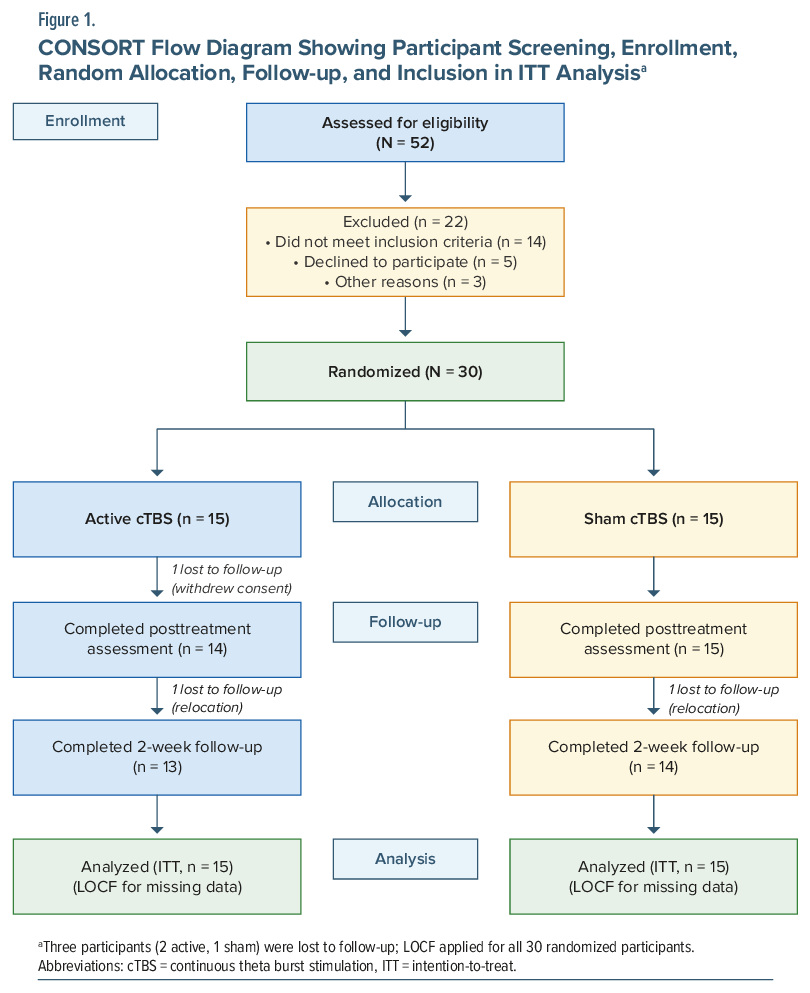
Eligible participants were adults aged 18–60 years meeting DSM-5 criteria for insomnia disorder with a Sleep Condition Indicator (SCI) score <16 on the validated Hindi version.14 Participants were outpatients maintaining stable preexisting psychotropic medication regimens, which were unchanged throughout the study. No psychotherapy was provided during the study period. Exclusion criteria included prior electroconvulsive therapy within 6 months, metallic implants in the head or neck, significant neurological illness, and unstable medical conditions. Of 52 individuals assessed for eligibility, 22 were excluded (14 did not meet inclusion criteria, 5 declined to participate, and 3 for other reasons), and 30 were randomized (Figure 1).
Randomization, Blinding, and Stimulation Protocol
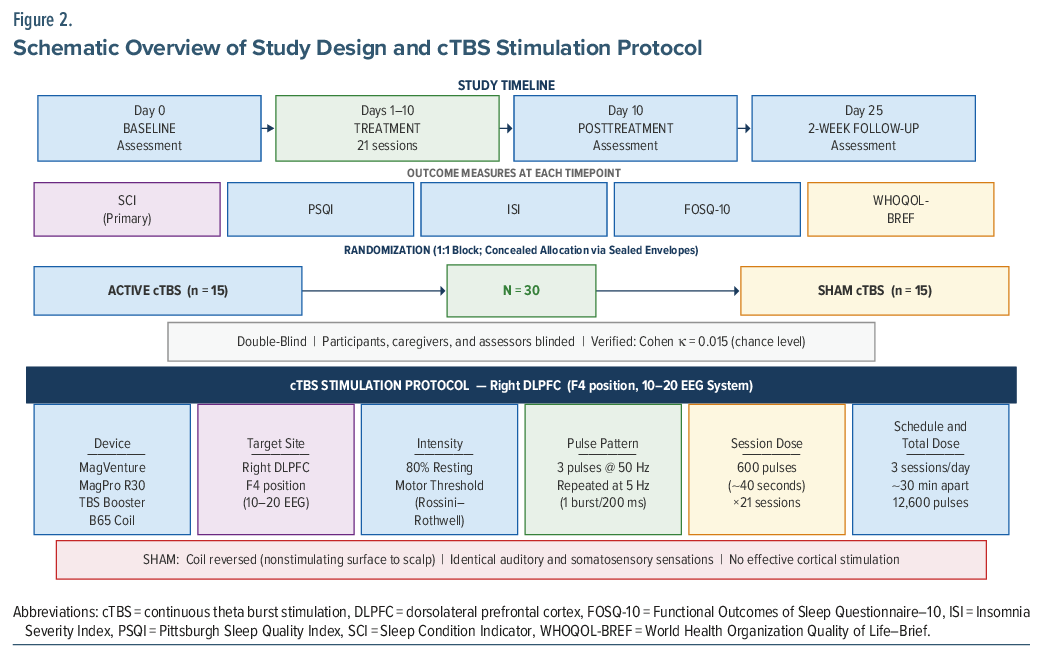
Participants were randomly allocated 1:1 using block randomization, with allocation concealed via sequentially numbered, opaque, sealed envelopes. Participants, caregivers, and all outcome assessors were blinded to treatment assignment throughout the study. Blinding integrity was formally verified at study completion (Cohen κ=0.015, indicating chance-level guessing). cTBS was delivered using the MagVenture MagPro R30 system with a TBS booster module and figure-of-eight B65 coil. The right hemisphere was targeted based on evidence implicating right prefrontal cortical hyperarousal in insomnia pathophysiology.15 The rDLPFC was localized at the F4 electrode position of the international 10–20 EEG system.16 Each session followed the protocol described by Huang et al10: bursts of 3 pulses at 50 Hz repeated at 5 Hz, 600 pulses per session (∼40 seconds), at 80% of the resting motor threshold (RMT) determined by the Rossini-Rothwell method.17 Twenty-one sessions were delivered as 3 sessions per day (∼30 minutes apart) over 7 treatment days within 10 days (cumulative dose: 12,600 pulses). Sham stimulation used the coil reversed to reproduce auditory and somatosensory sensations without cortical stimulation.18 The complete study design and stimulation protocol are summarized in Figure 2.
Outcome Measures
Assessments were conducted at baseline (day 0), posttreatment (day 10), and 2-week follow-up (day 25). All outcome assessments were administered in person at the study site by the first author (N.G.) who was blinded to treatment allocation. Assessments were not conducted online. The primary outcome was the SCI (8 items; scores <16 indicate clinically significant insomnia; higher scores reflect a better sleep condition).14 Secondary outcomes included the Pittsburgh Sleep Quality Index (PSQI; range: 0–21; higher = poorer sleep quality),19 Insomnia Severity Index (ISI; range: 0–28; higher = greater severity),20Functional Outcomes of Sleep Questionnaire–10 (FOSQ-10; higher = better sleep-related functioning),21 and World Health Organization Quality of Life–Brief (WHOQOL-BREF) (higher = better quality of life).22 Safety was assessed after each session using a standardized 14-item rTMS adverse effect checklist.23
Statistical Analysis
Sample size was estimated using a large effect size (Cohen d=0.90) from a published meta-analysis of rTMS for insomnia,9 targeting 95% power at α=.05 (2-tailed;G*Power 3.1) with 25% dropout allowance, yielding a minimum of 30 participants. All analyses used SPSS v28.0 on an intention-to-treat basis24 with last observation carried forward for missing data. Mixed-effects repeated-measures analysis of variance examined main effects of time (day 0, day 10, and day 25), group, and group×time interactions. Effect sizes were quantified as partial eta-squared (ηp2). Statistical significance was set at P<.05.
RESULTS
Baseline Characteristics and Comparability
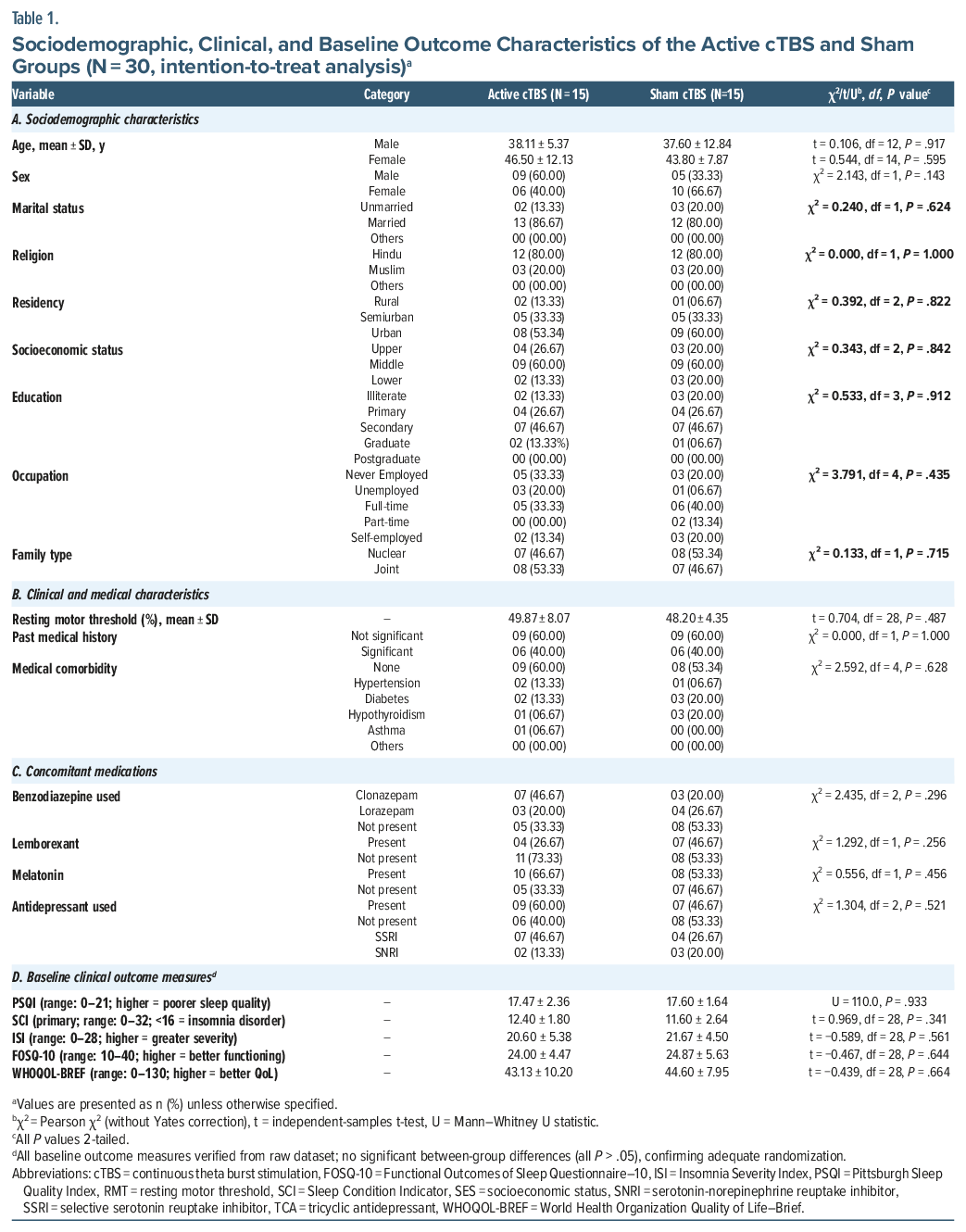
Both groups were well matched at baseline across all sociodemographic, clinical, and pharmacologic variables (Table 1). No significant between-group differences were observed in age, sex, RMT, medication use, or any clinical outcome measure (all P > .05), confirming adequate randomization.
Safety and Tolerability
The 21-session protocol was well tolerated. The only adverse event was mild transient headache in 3 participants (2 active, 1 sham) during the first 2 treatment days, resolving spontaneously without intervention or session modification. No serious adverse events were recorded.
Within-Group Outcomes
Mixed-effects analyses revealed highly significant within-group improvements from baseline to day 25 in both groups across all 5 outcomes (all P ≤.003; Table 2).
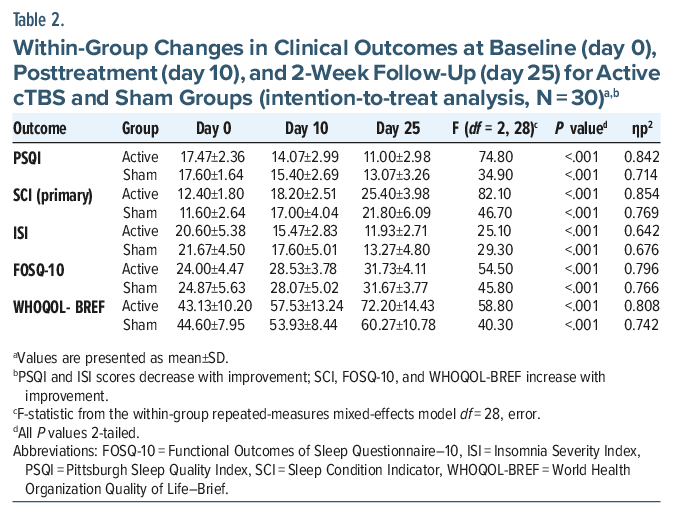
In the active group, effect sizes were large across all outcomes (ηp2 range: 0.642–0.854). The sham group similarly demonstrated large within-group effect sizes (range: 0.676–0.769).25
Between-Group Interaction Effects
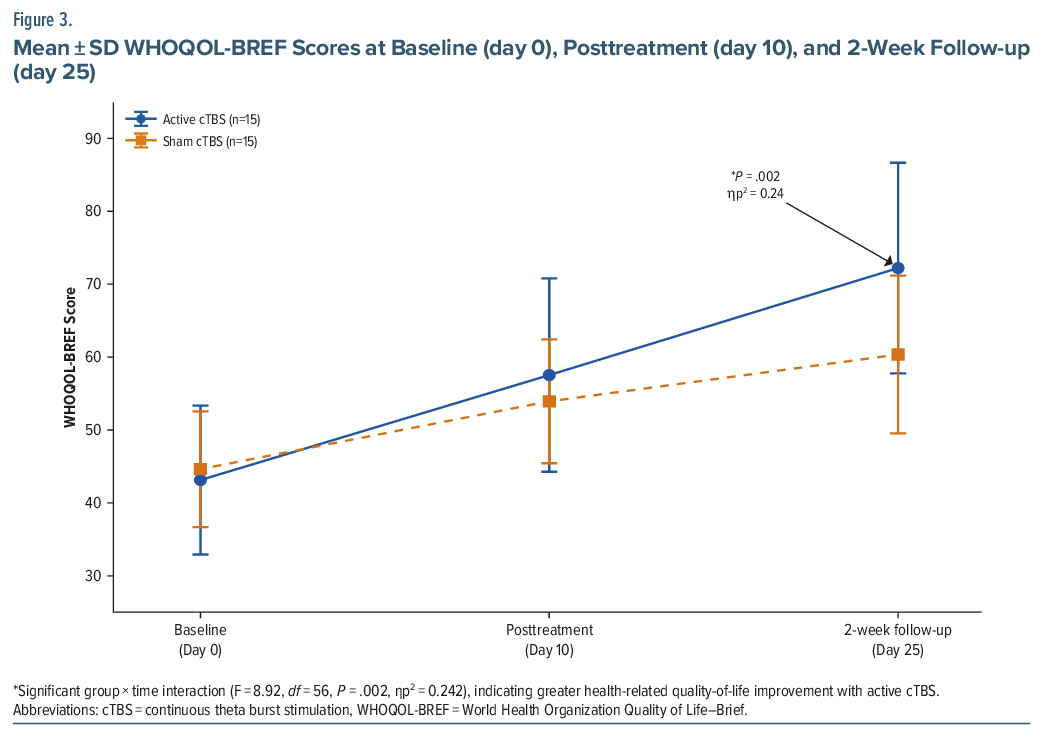
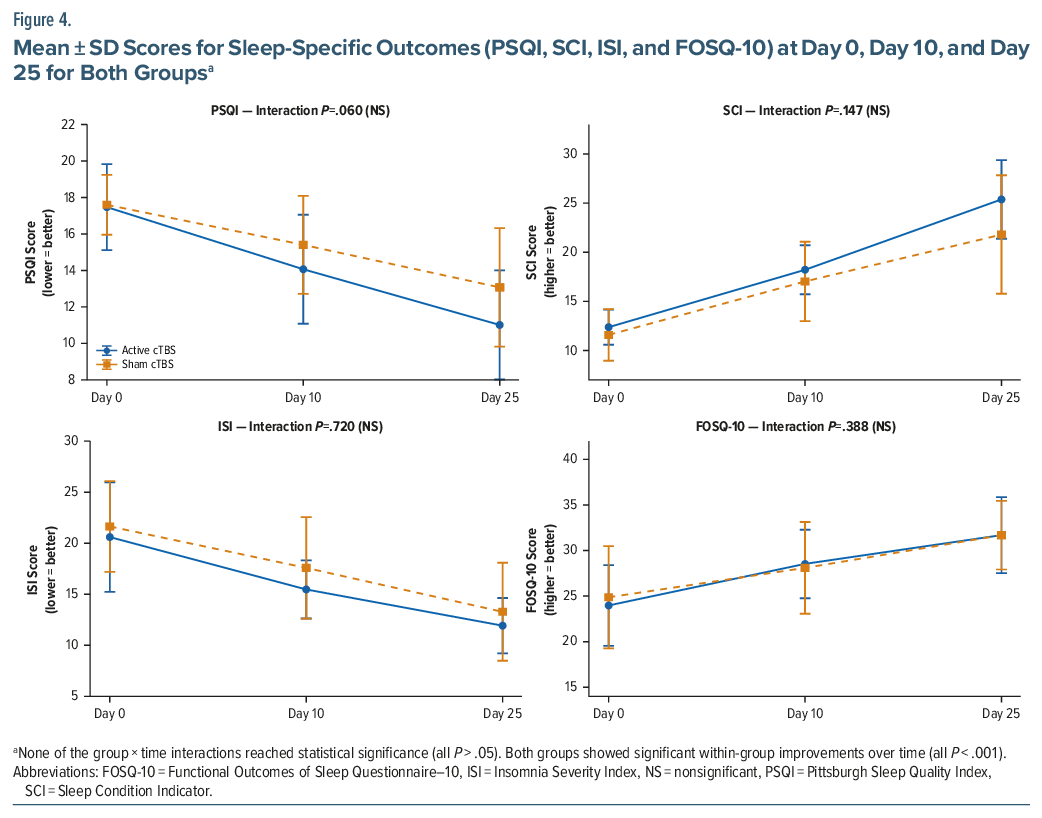
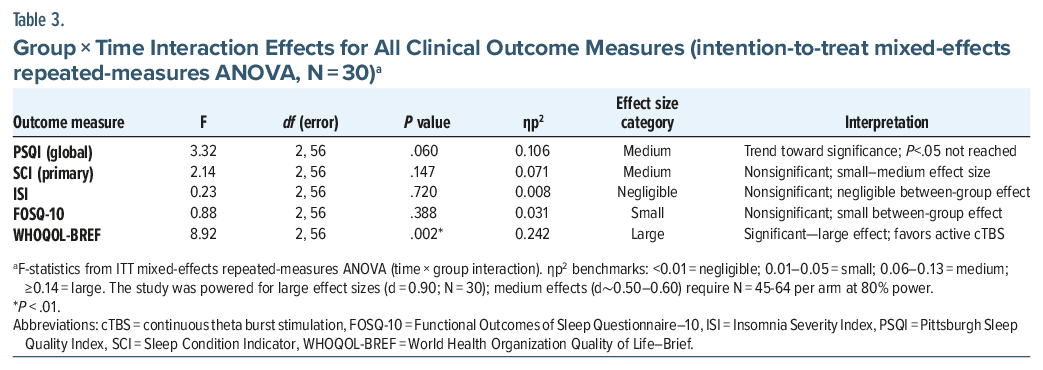
Table 3 presents group×time interaction effects. A statistically significant and large interaction was observed for health-related quality of life (WHOQOL-BREF: F=8.92, df=56, P =.002, ηp2 =0.242; Figure 3). From baseline to day 25, WHOQOL-BREF scores increased by 29.07 points in the active group versus 15.67 points in the sham group, representing a clinically meaningful differential benefit. For all sleep-specific outcomes, interactions were nonsignificant: PSQI (F =3.32, P =.060, ηp2 =0.106), SCI (F=2.14, P =.147, ηp2 =0.071), ISI (F=0.23, P = .720, ηp2 =0.008), and FOSQ-10 (F=0.88, P =.388, ηp2 =0.031); Figure 4 illustrates the parallel improvement trajectories across these outcomes.
DISCUSSION
This randomized sham-controlled trial evaluated an intensive 21-session cTBS protocol targeting the rDLPFC in insomnia disorder. Both groups demonstrated clinically meaningful improvements across all sleep-related and quality-of-life measures, with large within-group effect sizes. Active cTBS produced a statistically significant and large advantage in health-related quality of life (WHOQOL-BREF; F=8.92, P =.002, ηp2 =0.242), while group×time interactions for sleep-specific outcomes did not reach statistical significance. These substantial sham-group improvements likely reflect nonspecific factors including placebo response, expectancy effects, and regression to the mean, phenomena that are well documented in neuromodulation research.
The robust sham group improvement is consistent with the well-documented susceptibility of self-report sleep measures to nonspecific factors in neuromodulation trials.25 The PSQI interaction showed a trend toward significance (P =.060, ηp2 =0.106), and the SCI demonstrated a small-to-medium effect (ηp2 =0.071), likely reflecting genuine neurobiological effects undetectable at this sample size, which was powered for large (d=0.90) but not medium effect sizes (d∼0.50–0.60; requiring ∼64–100 participants per arm at 80% power).
The significant quality-of-life advantage of active cTBS is a clinically noteworthy and patient-centered finding. The rDLPFC plays a critical role in executive function, affective regulation, and default mode network connectivity. The active group’s day 25 advantage (Δ=29.07 vs 15.67 points) may reflect sleep-mediated downstream benefits, direct prefrontal neuromodulatory effects, or an interaction between cTBS-induced neuroplasticity and pharmacologic treatment. Our findings broadly align with Zhu et al,11 who reported significant sleep improvements following 10-session cTBS in primary insomnia. The present study used a substantially more intensive regimen (21 sessions) yet yielded similarly modest sleep-specific between-group effects, raising questions about dose-response relationships that warrant systematic investigation.
Limitations
Key limitations include the following: (1) the small sample size (N=30), underpowered for medium effect sizes; (2) all participants used stable psychotropic medication regimens, which may have independently improved sleep and narrowed the treatment contrast; (3) exclusive reliance on self-report measures without polysomnographic or actigraphic end points; (4) use of the 10–20 EEG system without neuronavigation-guided targeting; and (5) a short 2-week follow-up precluding conclusions about durability. Future trials should address these limitations by enrolling medication-naïve participants, using polysomnography as a coprimary end point, using neuronavigation-guided targeting, and conducting follow-up of ≥3 months.
CONCLUSION
rDLPFC-targeted cTBS over 10 days is safe and well tolerated in individuals with insomnia disorder. Active cTBS produced a significant and large advantage in health-related quality of life, representing a meaningful patient-centered therapeutic benefit. The failure to detect significant between-group differences on sleep-specific outcomes should be interpreted in the context of limited statistical power, pharmacotherapeutic confound, and exclusive reliance on subjective measures. Larger confirmatory trials incorporating polysomnographic end points, medication-naïve populations, neuronavigation-guided targeting, and extended follow-up are needed to establish the definitive role of cTBS in the management of insomnia disorder.
Article Information
Published Online: November 12, 2026. https://doi.org/10.4088/PCC.26m04225
© 2026 Physicians Postgraduate Press, Inc.
Submitted: March 8, 2026; accepted June 24, 2026.
To Cite: Garg N, Garg S, Dhyani M. Efficacy and safety of intensive continuous theta burst stimulation over the right dorsolateral prefrontal cortex in insomnia disorder: a randomized sham-controlled trial.
Prim Care Companion CNS Disord 2026;28(6): 26m04225.
Author Affiliations: Department of Psychiatry, Shri Guru Ram Rai Institute of Medical and Health Sciences, Shri Guru Ram Rai University, Dehradun, Uttarakhand, India (all authors).
Corresponding Author: Shobit Garg, MD, DPM, Department of Psychiatry, Shri Guru Ram Rai Institute of Medical and Health Sciences, Shri Guru Ram Rai University, Dehradun, Uttarakhand, India 248001 ([email protected]).
Financial Disclosure: None.
Funding/Support: None.
Acknowledgments: The authors thank all study participants and the clinical and nursing staff of the Department of Psychiatry, Shri Guru Ram Rai Institute of Medical and Health Sciences, Dehradun.
Additional Information: In the writing of this manuscript, the authors used Claude (Anthropic) for language editing and manuscript preparation assistance. The authors have reviewed the content and take full responsibility for the content of the publication.
ORCID: Shobit Garg: https://orcid.org/0000-0001-5913-9021
Clinical Points
- Both active continuous theta burst stimulation (cTBS) and sham stimulation produced large within-group improvements in sleep outcomes in adults with DSM-5 insomnia disorder, underscoring the substantial nonspecific response to neuromodulation interventions in this population.
- Active cTBS targeting the right dorsolateral prefrontal cortex (21 sessions, 12,600 total pulses) conferred a statistically significant and large advantage in health-related quality of life (World Health Organization Quality of Life–Brief; F=8.92, P =.002, ηp2=0.242) over sham.
- The intensive protocol was safe and well tolerated; larger trials with polysomnographic end points, medication-naive participants, and neuronavigation-guided targeting are needed to definitively establish efficacy.
Journal of Clinical Psychiatry, all rights reserved.