
Original Source: Journal of Clinical Psychiatry, all rights reserved. —
Major depressive disorder (MDD) affects individuals across all racial and ethnic groups globally.1,2 However, Black and Latino populations are particularly vulnerable to severe and persistent depressive episodes.3,4 In 2024, the National Survey on Drug Use and Health reported that 6.1% of Blacks/African Americans and 6.8% of Latinos/Hispanics in the US have experienced an episode of MDD in the past year.5,6 Depression among these populations has been linked with multiple factors such as racial discrimination, low socioeconomic status, mental health stigma, difficulty in accessing adequate mental health care, and poor care quality.7–11 When depression goes untreated in these populations, it significantly diminishes their quality of life and daily functioning, elevating the risk of disability, lower work productivity, and increased use of health care resources.4,12,13
Psychological treatments for depression target changes in individuals’ cognition and behavior.14–16 Commonly used psychological or behavioral therapies include cognitive behavioral therapy (CBT), behavioral activation (BA), problem-solving therapy (PST), psychoeducation, and mindfulness.17,18 However, studies have shown that these psychological treatments are often less effective among Black and Latino populations, partly because they have not been developed and sufficiently adapted to the cultural contexts, needs, or perspectives of these groups.19–21 To address this need, several evidence-based behavioral therapies have been tailored to improve the relevance, accessibility, and effectiveness of interventions and its delivery, while ensuring they remain patient-centered, culturally sensitive, and responsive to the unique values, preferences, and lived experiences of individuals from these populations.22 Several adaptations to the care delivery model and system-level processes have been implemented to fully engage Blacks and Latinos in their depression management. A study that examined the value of a multisector coalition approach (Community Engagement and Planning [CEP]) compared to individual program technical assistance (Resources for Services [RS]) for treating depression in Blacks and Latinos using an expanded model of depression collaborative care revealed statistically significant effects of CEP for depression (P =.006).23
Previous reviews have shown that cultural adaptations to psychological interventions such as CBT, BA, interpersonal psychotherapy, and psychoeducation are more effective than standard interventions for treating a range of mental health conditions, including depression, anxiety, posttraumatic stress disorder (PTSD), and psychosis, among racial and ethnic minority populations in the United States (US), including Black/African American, Hispanic/Latino, Chinese, Asian American, and Indian American groups. These adaptations included language-translation, modifying the context of the intervention, and racial concordance of the interventionists.24–28 Similarly, another review reported that adapted psychological interventions tailored for Black and minority ethnic groups were associated with significant reduction in mental health symptom severity compared to nonadapted interventions across all target conditions (depression, anxiety, PTSD, eating disorders) and adaptation types (P=<.01 [95% CI =-0.77 to -0.48]); particularly, culturally adapted interventions seemed to enhance accessibility, acceptability, and implementation. Meta-regression analysis did not show any significant association of increased effectiveness with the interventions for reducing depression (P =.5340 [95% CI =-0.55 to 0.28]).22 However, other reviews have highlighted nonsignificant effects of cultural adaptations to CBT interventions for ethnically diverse populations, including Blacks and Latinos, for symptom reduction (d=0.00, P=.99) and treatment engagement (d=0.14, P =.12). They further emphasized the need for clearer guidelines to define cultural competence and support the appropriate delivery of these interventions.29
However, we currently lack a comprehensive understanding on the effectiveness of adapted psychological interventions for Black and Latino populations, underscoring the need for a synthesized review examining differences in interventions and adaptations across these populations. Toward this end, we conducted a systematic review to synthesize and critically appraise the empirical evidence on the effectiveness of psychological interventions specifically adapted to ameliorate depression among Black and Latino populations in the US. We focused on these populations as they collectively comprise 32% of the US population and face a range of complex barriers to accessing and utilizing mental health services and acculturation-related difficulties.30 Insights from this review inform our empirical understanding about the nature and characteristics of adaptations to psychological interventions that are found to be effective for improving depression in Black and Latino populations. Additionally, the review highlights gaps and future opportunities for intervention effectiveness and implementation research for these populations.
METHODS
The review followed the Preferred Reporting Items for Systematic Reviews and Meta-analyses (PRISMA) 31 and was registered and available in PROSPERO (CRD420251105411).
Search Strategy
A medical librarian (L.Y.) performed a systematic search of Ovid MEDLINE, Embase, Scopus, Cochrane Central Register of Controlled Trials (CENTRAL), Cochrane Database of Systematic Reviews (CDSR), and ClinicalTrials.gov to find mental health intervention studies addressing depression and involving Black/African American (AA) and Hispanic/Latino populations, published from the inception of each database through July 2025 (see Appendix 1: Search strategy). According to the National Institute on Minority Health and Health Disparities, Black/AA are defined as individuals with origins in any of the Black racial groups of Africa, including, for example, African American, Jamaican, Haitian, Nigerian, Ethiopian, and Somali, whereas Latinos/Hispanics are individuals of Mexican, Puerto Rican, Salvadoran, Cuban, Dominican, Guatemalan, and other Central or South American or Spanish culture or origin.32 The search was limited to original research studies conducted in the US to reduce heterogeneity, as depression treatments vary across health care systems,33 and the challenges faced by Blacks and Latinos are shaped by distinct historical, political, and socioeconomic contexts.34
Title and Abstract Screening for Eligibility
Article titles and abstracts were screened for eligibility by 3 reviewers (K.C., E.E., V.B.). Studies were eligible if they met the following eligibility PICO criteria: Population: Blacks/AAs and Hispanic/Latinos, the population was determined based on the reporting used in the original studies including self-identified race, ethnicity, and/or cultural background where applicable; Intervention: psychological interventions adapted for improving depression in Black/AA and Latino/Hispanic populations; Comparison: randomized controlled trial (RCT) design with 2 or 3 arms; Outcome: depression as primary outcome (see Supplementary Table 1: Eligibility criteria). A reviewer (J.A.) confirmed titles and abstracts requiring an additional review for eligibility.
Full-Text Screening for Inclusion
Titles and abstracts that met the eligibility criteria and seemed relevant were retrieved for full-text review and independently screened by 3 reviewers (K.C., V.B., R.D.) using the inclusion criteria. The reviewers also manually screened the references of the included studies for additional articles. All reviewer disagreements were adjudicated by a fourth reviewer (J.A.) and resolved through team discussion (see Supplementary Table 2: List of excluded articles).
Data Synthesis and Analysis
Two reviewers (D.M., R.D.) independently extracted data on the study setting, recruitment strategy, population, interventions, comparison groups, and outcomes. Study characteristics were coded based on patient age (eg, adult/older adult), participants’ clinical context, type of population, study design and number of arms, and site(s) (single/multi). Intervention characteristics were classified by nature and type of psychological intervention (CBT, mindfulness, etc), intervention adaptation, intervention dose/frequency, booster/maintenance, intervention duration/length, delivery modality, and interventionist (provider administering the intervention).
Intervention adaptations were characterized based on the components underlining the intervention into 2 broad categories: (1) cultural adaptations, referred to as systematic modifications of an evidence-based treatment or psychological intervention protocol to consider language, culture, and context in such a way that is compatible with the client’s cultural patterns, meanings, and values and enhance cultural relevance35; and (2) collaborative care adaptations, referred to as modifications in service delivery to enhance access, coordination, and effectiveness of the psychological intervention by integrating mental health and primary care services, involving team-based approaches, including primary care providers, mental health specialists, and care managers.36,37 Informed by a modified cultural sensitivity framework,38 we further categorized cultural adaptations underscoring the included interventions into language, persons, metaphors, content, and context (see Supplementary Table 3: Data coding and Supplementary Table 4: Cultural sensitivity framework).
Meta-analysis. We conducted a meta-analysis to ascertain the cumulative effect of psychological interventions on depression symptoms and/or severity assessed at 1–3 months and 4–6 months. Studies were excluded if they had insufficient data reported for a pooled analysis and if they compared the intervention with >2 control groups. A random-effects model was used, statistical heterogeneity was assessed using the I2 test statistic, and all analyses were conducted using Review Manager (RevMan) 9.16.1.39 Missing data such as mean and standard deviation (SD) were calculated from the available data for analysis, and standardized mean differences (SMDs) were calculated when appropriate, to ensure comparability by standardizing the effect sizes across studies with different measurement scales within RevMan.
For the meta-analysis, the effect of interventions on depression symptoms and/or severity was measured using depression scores over time (continuous variable). Few studies reported absolute scores at different time points, while others compared changes in scores between the intervention and comparison groups.
Stratification for subgroup analysis was conducted for groups with ≥2 studies.40 The effect of interventions on depression scores at 4–6 months was further stratified by intervention delivery format, presence of cultural or combined cultural and collaborative care adaptations, and number of components in the intervention. Due to the limited number of available studies, we were unable to conduct a subgroup analysis based on the type of population (comparing Blacks to Latinos) and individual vs group formats.
The other outcomes from the included studies are reported in Supplementary Table 5: Other outcomes reported in included studies.
Narrative analysis. We summarized findings from the included 3-arm trials and studies with insufficiently reported data using a narrative synthesis.
Risk of Bias (RoB) Assessment
The RoB of included studies was independently assessed by 2 reviewers (R.D., D.M.) using the Cochrane Collaboration criteria for RCTs41 and reported using RevMan. Risk was assessed across 5 bias domains: selection, performance, detection, attrition, and reporting. Any discrepancies were resolved through team discussion.
RESULTS
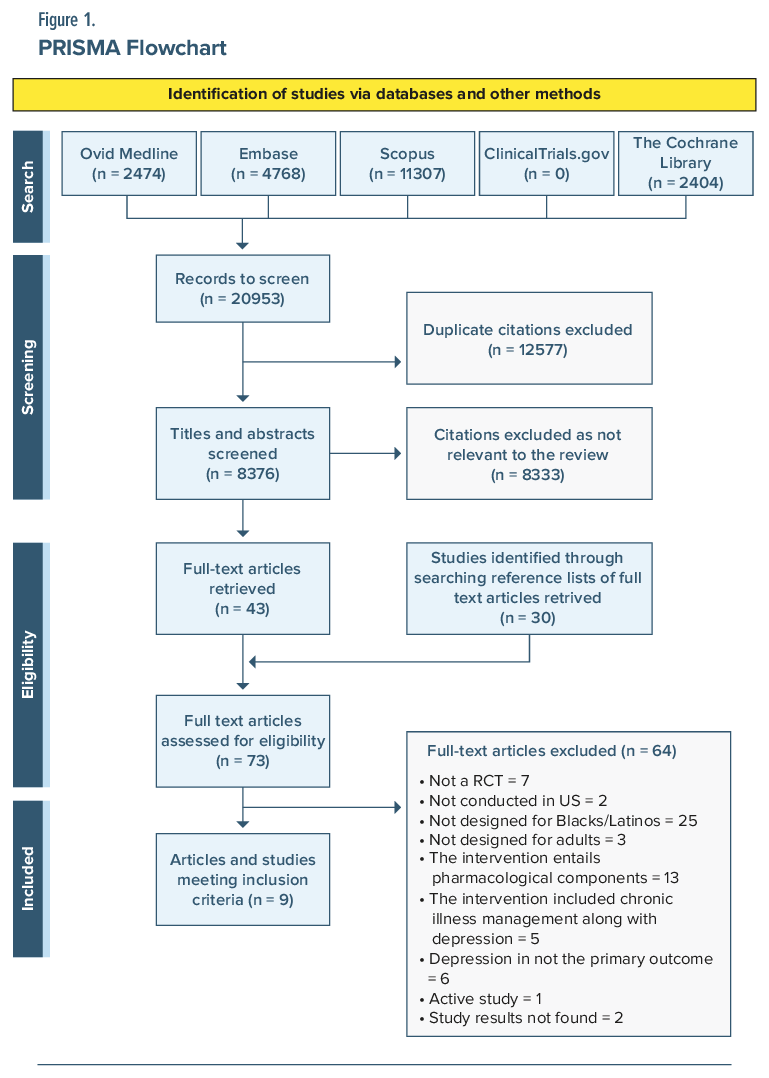
Nine studies were included in this review (Figure 1).
Study Characteristics
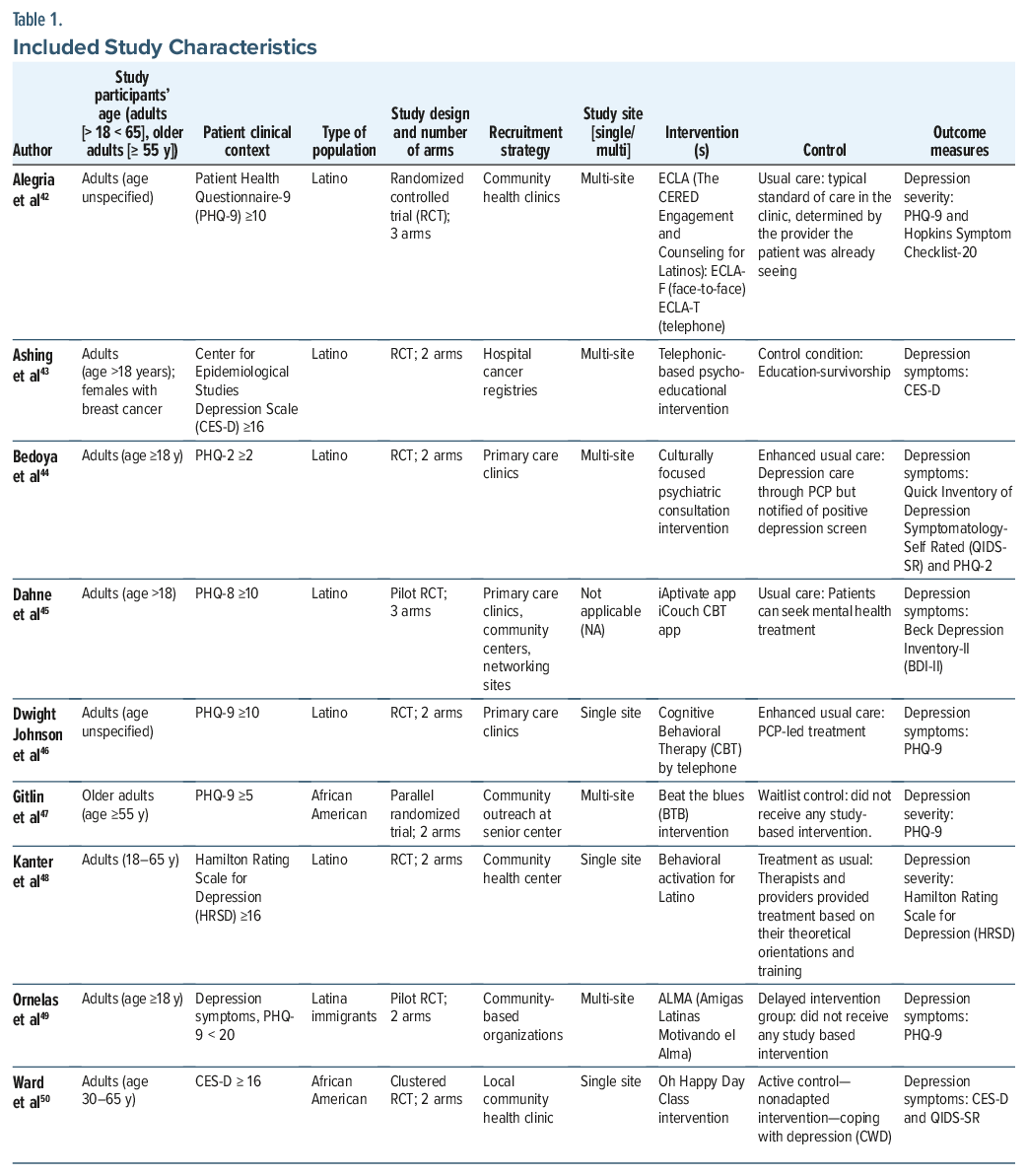
Table 1 presents the included study characteristics. All studies were published between 2011 and 2023. Five studies were conducted across multiple sites,42–44,47,49 and 3 studies were conducted at a single site.46,48,50
Population
By design, all studies targeted AAs or Latinos who screened positive for depression. Six studies used depression screening tools like various versions of Patient Health Questionnaire (PHQ),42,44–47,49 2 studies used the Center for Epidemiological Studies Depression scale (CES-D) scale,43,50 and 1 used the clinician-administered Hamilton Rating Scale for Depression (HRSD).48 Recruitment methods varied across these studies, with 2 studies recruiting patients directly from primary care clinics’ outpatient settings44,46 and 6 recruiting via community clinics and community outreach (social networking sites, Craigslist, and flyers).42,45,47–50 One study recruited participants from the hospital cancer registries, as the study focused on breast cancer patients.43
The study population varied in age, gender, and race/ethnicity. Six studies included adults (age ≥18 and <65 years),43–45,48–50 1 study targeted adults (≥ age 55 years),47 and 2 studies did not specify ages.42,46 Two studies exclusively targeted a female population.43,49 Two studies targeted AAs,47,50 and 7 studies included Latinos.42-46,48,49
Interventions
Psychotherapy treatments studied included psychoeducation (n = 6),42–45,47,50 BA (n = 4),45–48 CBT (n = 5),42,44–46,50 mindfulness (n = 1),49 and PST (n = 1).43 The intervention delivery ranged from 2 to 12 sessions, provided either weekly or biweekly, with each session lasting from 40 minutes to 2.5 hours. Moreover, only 2 interventions provided a booster/maintenance session, where one study provided a booster session 1 month postintervention,43 and the other study provided the booster session 3 months postintervention.50 Most interventions in the included studies (n = 7)42–47,50 had at least 2 or more components, while 2 interventions48,49 had a single component.
These treatments differed in delivery methods, the types of adaptations needed to tailor interventions to the population, and the interventionists (ie, providers delivering the treatment) (Table 2). Delivery methods included several modalities; 1 study used digital applications for intervention delivery,45 4 studies delivered their interventions in-person,44,47,48,50 and 2 studies delivered interventions through telephone.43,46 Two interventions were delivered using a hybrid approach either in-person or telephone or online.42,49 Most interventions were delivered at an individual patient-level, except 2 administered in a group format.49,50
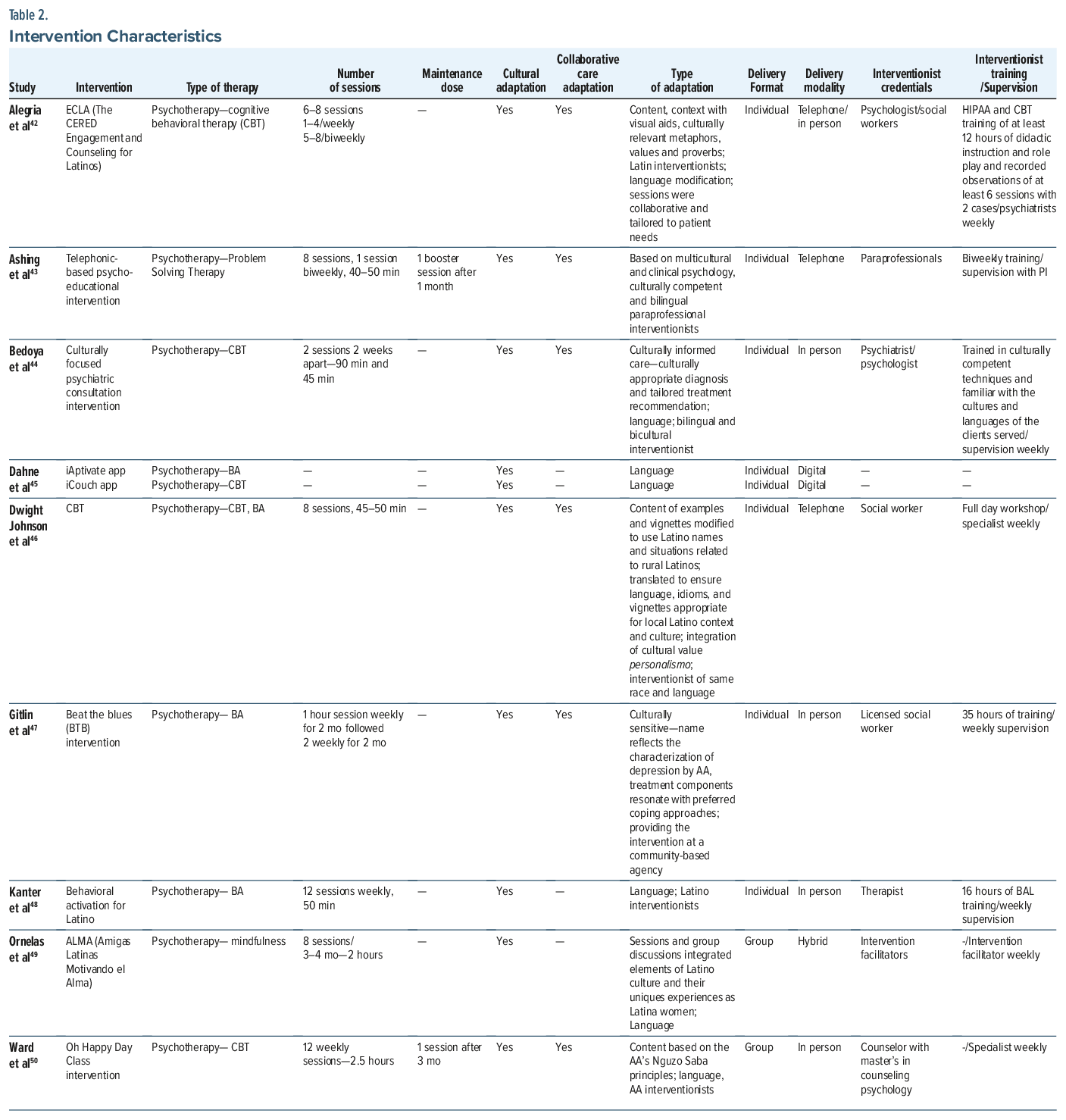
Characteristics of intervention adaptations. All interventions in the included studies were culturally adapted. Out of the 9 included studies, all studies reported language-based adaptations, where they were delivered in Spanish language specifically for the Latino population42–46,48,49 or language preferred by the target population.47,50 Six studies matched interventionists (persons) with the target population’s ethnicity.42–44,46,48,50 Two studies further mentioned that they offered training to interventionists for delivering their culturally adapted interventions.46,47 Two studies indicated that they used culturally relevant metaphors while delivering the interventions.42,46 Eight studies mentioned modifying the content of the intervention to include values, culture, and traditions of the target population.42–47,49,50 Two studies considered changing contexts during the intervention, where one study mentioned usage of vignettes appropriate for local Latino context and culture46 and another integrated unique experiences of Latina women.49
Six interventions also incorporated collaborative care adaptations42–44,46,47,50 in addition to cultural adaptations to address specific patient needs, emphasizing patient-centered care, involvement of primary care physicians and care managers in the intervention, and providing community resources and referrals.
Interventionists. Interventionists varied in terms of their credentials, level of supervision needed, and training. Two studies46,47 employed social workers, 2 employed specialists (ie, psychologists and psychiatrists),42,44 2 used experienced mental health counselors and therapists,48,50 and 2 studies employed facilitators and paraprofessionals43,49 for delivering interventions. However, 1 study was delivered remotely through a self-guided digital application without requiring interventionists.45 Additionally, all interventionists were supervised by a specialist weekly or monthly to ensure fidelity except for 1 study, which was delivered through a digital application.
Comparison Group
The comparison groups varied across studies. Three studies compared the intervention with usual care,42,43,48 2 with enhanced usual care,44,46 and 1 with active control.50 Two studies used waitlist/delayed intervention group as control where the comparison group was provided with the intervention after the RCT was completed,47,49 and another study used both active care and usual care as controls.45
Outcomes
Studies assessed depression by calculating depression scores based on depression symptoms (n=6) and depression severity (n=3). Depression scores used numerical values derived from standardized questionnaires (eg, Beck Depression Inventory, PHQ-9, etc) to assess depression symptoms and/or severity. One study46 used a categorical measure, reduction in symptom severity rate, indicated by a >50% improvement in Hopkins Symptoms Checklist depression score.
The studies also reported outcomes related to anxiety, quality of life, functional well-being, and BA (see Supplementary Table 5: Other outcomes reported in included studies).
Meta-Analysis of Psychological Interventions for Depression Outcomes
Only 6 of the 9 studies were eligible for a meta-analysis. Meta-analysis findings summarizing the impact of psychological interventions on depression are illustrated in Figure 2.
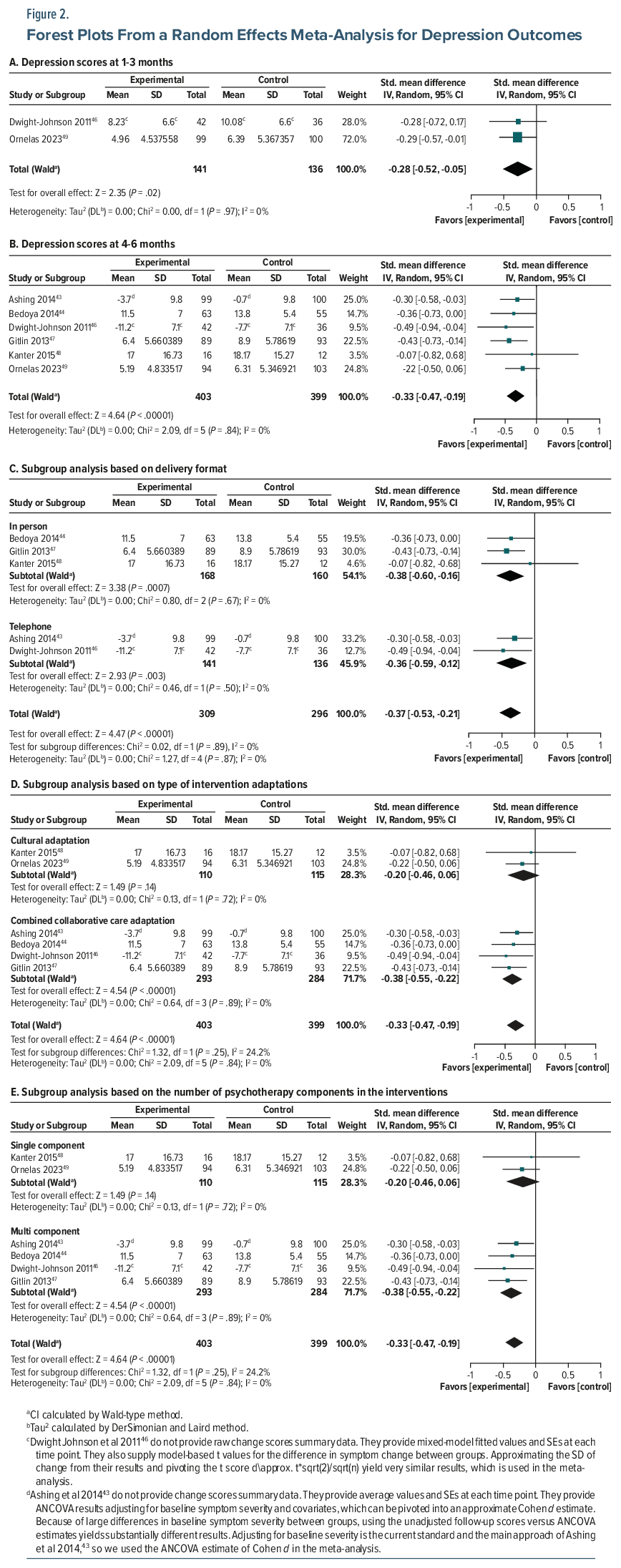
Depression scores at 1–3 months. Two studies46,49 measured depression scores based on depression symptoms between 1–3 months after the start of the intervention, totaling 136 patients in the comparison group and 141 in the intervention group. The intervention group demonstrated a small but statistically significant reduction in depression scores compared to the control group at 1–3 months (SMD=−0.28, 95% CI [−0.52 to −0.05], P=.02), with no heterogeneity observed across studies (I 2 =0%) (Figure 2A).
Depression scores at 4–6 months. Six studies43,44,46–49 assessed depression scores between 4–6 months, totaling 403 patients in the intervention group and 399 patients in the comparison group. The intervention group showed a statistically significant reduction in depression scores compared with the control group at 4–6 months (SMD=−0.33, 95% CI [−0.47 to −0.19], P<.00001), with no observed heterogeneity across studies (I 2 =0%) (Figure 2B).
Subgroup Analysis
Depression scores at 4–6 months stratified by intervention delivery format. We stratified interventions delivered through in-person versus telephone. Among interventions delivered in person (n=3 studies),44,47,48 the pooled analysis demonstrated a statistically significant reduction in depression scores at 4–6 months (SMD=−0.38, 95% CI [−0.60 to −0.16], P=.0007), with no observed heterogeneity across studies (I 2 = 0%). Telephone-delivered interventions (n=2 studies)43,46 were also associated with a statistically significant reduction in depression scores (SMD=−0.36, 95% CI [−0.59 to −0.12], P=.003), with no observed heterogeneity across studies (I 2 =0%). The test for subgroup differences between in-person and telephone intervention groups was not statistically significant (P=.89) without any heterogeneity (I 2 =0%), suggesting that intervention effectiveness did not differ by delivery modality (Figure 2C).
Depression scores at 4–6 months stratified by type of intervention adaptation. We compared the group of interventions that had only cultural adaptations against the interventions that had combined collaborative care adaptations. Among interventions incorporating cultural adaptation elements alone (n=2 studies),48,49 the pooled analysis did not demonstrate a statistically significant improvement in depression scores at 4–6 months (SMD=-0.20, 95% CI [-0.46 to 0.06], P=.14), with no observed heterogeneity across studies (I 2 =0%). Interventions incorporating both cultural and collaborative care adaptations (n=4 studies)43,44,46,47 demonstrated a statistically significant reduction in depression scores (SMD=-0.38, 95% CI [-0.55 to -0.22], P<.00001), with no observed heterogeneity across studies (I 2 =0%). The test for subgroup differences between interventions incorporating cultural adaptations alone and those combining cultural and collaborative care adaptations was not statistically significant (P=.25), indicating no evidence of a difference in effects between the subgroups, with low observed heterogeneity across studies (I 2 =24.2%) (Figure 2D).
Depression scores at 4–6 months stratified by number of intervention components. We compared the interventions with a single psychotherapy element and the interventions with 2 or more psychotherapy elements. Interventions including a single psychotherapy component (n = 2 studies)48,49 did not demonstrate a statistically significant improvement in depression scores at 4–6 months (SMD = -0.20, 95% CI [-0.46 to 0.06], P = .14), with no observed heterogeneity across studies (I 2 = 0%). In contrast, interventions incorporating 2 or more psychotherapy elements (n = 4 studies)43,44,46,47 demonstrated a statistically significant improvement in depression scores (SMD = -0.38, 95% CI [-0.55 to -0.22], P < .00001) and showed no observed heterogeneity across studies (I 2 = 0%). The test for subgroup differences based on the number of intervention components showed no statistically significant difference between the two subgroups (P = .25), with low observed heterogeneity (I 2 = 24.2%) (Figure 2E).
Narrative Analysis of Psychological Interventions for Depression Outcomes
Three studies not included in the meta-analysis are narratively summarized here. Ward et al50 evaluated the efficacy of the culturally adapted Oh Happy Day Class (OHDC) intervention, which combined CBT with psychoeducation adapted from Coping with Depression (CWD). The OHDC was culturally adapted by modifying the content based on the AA’s Nguzo Saba principles, used culturally congruent language, and was delivered by 2 AA counselors with master’s degree in counseling psychology. The intervention is a 12-module group therapy with each weekly class lasting 2.5 hours. The OHDC was compared against an active control, CWD which was a multimodal psychoeducational treatment for depression, where patients were educated on skills and techniques to cope with problems related to depression. CWD is also a 12-module group therapy with each weekly class lasting 2 hours and was delivered by 2 White psychologists. Both OHDC and CWD included a booster session for 3 months postintervention. The authors found that both OHDC and CWD reduced depression symptoms over time, at 6 and 12 weeks, and 3 and 6 months, with OHDC showing a greater reduction in depression symptoms. Alegria et al42 evaluated the effectiveness of ECLA (The CERED Engagement and Counseling for Latinos) intervention delivered in 2 modalities: telephone ECLA (ECLA-T) and face-to-face ECLA (ECLA-F) compared to usual care for treating depression. The ECLA intervention incorporated CBT and was adapted to include culturally relevant metaphors, values, and proverbs, and materials tailored for lower health literacy needs. The intervention consisted of 6 modules delivered across 6–8 sessions. The first 4 sessions were conducted weekly, followed by the fifth and sixth sessions delivered biweekly. These sessions were delivered by psychologists, social workers, or counselors who were Latino women with prior CBT experience. The depression outcomes were measured postintervention and at 2-, and 4-months follow-up postintervention. They reported that both ECLA-T (effect size =0.64, P=.01) and ECLA-F (effect size =0.56, P<.05) were more effective in reducing depression symptoms than usual care. Furthermore, they reported that they did not find any significant difference between the impact of ECLA-T and ECLA-F (P=.69).
Dahne et al.45 examined the efficacy of ¡Aptívate! (a Spanish language BA mobile app along with psychoeducation on mood and activity) against an active control, iCouch CBT (Spanish language CBT mobile app), and treatment as usual (TAU). Depressive symptoms were assessed every week up to 8 weeks. The study findings showed that ¡Aptívate! showed significant decrease in depression symptoms over time compared to TAU (P=.01). There were no significant differences in depressive symptoms between ¡Aptívate! and iCouch CBT (P=.66) or iCouch CBT and TAU (P=.16).
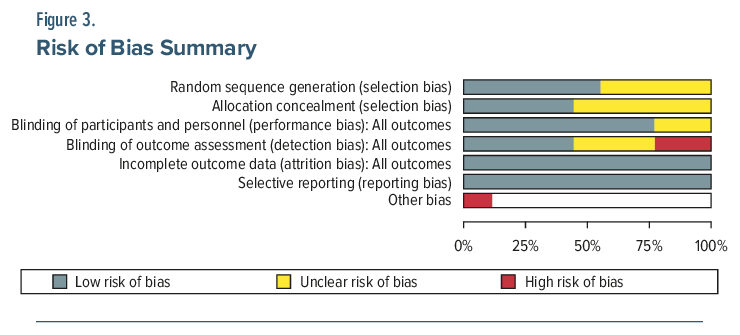
Risk of bias (RoB). RoB of included studies was low for most domains except for a few studies with high risk due to nonblinding of outcome assessment45,46 and differential enrollment of participants44 (Figure 3).
DISCUSSION
Depression is a growing public health concern in Black and Latino populations.51,52 This systematic review examined the effectiveness of evidence-based psychological interventions adapted for Blacks and Latinos to reduce depression. We identified only 9 randomized clinical trials evaluating adapted psychological therapies for depression among Black (n=2) and Latino (n =7) populations. The risk-of-bias assessment indicated that the included studies were generally of good methodological quality. The included studies focused mostly on adults aged 18 to 65 years, with only 1 study examining those over 55.47 Only 2 studies specifically adapted interventions for female Latino patients, consistent with other systematic reviews that also report predominantly female samples.24,53 Research shows that gender norms can create significant barriers to recognizing depression and seeking care among Latino men,54 and another study similarly highlighted gender-related differences in attitudes and coping preferences among AA populations.55
Most interventions (n=7) integrated multiple psychotherapy components, such as psychoeducation, BA, and CBT. While the combination of components differed across studies, a consistent feature was the emphasis on educating participants about emotional health and its role in overall well-being.
This review found that all interventions in our included studies were culturally adapted to their target populations. We noted a few key adaptations that made the interventions culturally relevant, among which language adaptation and modifying the content of the interventions were most common. Language was a major barrier to accessing mental health care in Latino population, and delivering interventions in the native language, such as Spanish, has shown effectiveness similar to that of English language interventions.56 Changing the content of the intervention to reflect the values, customs, and traditions of the AA and Latino populations such as use of the Latino cultural value personalismo (to conduct the first session in-person)46 or integration of Nguzo Saba principles50 in the intervention was effective in addressing the mental health needs of these populations. Racial concordance of interventionists was also considered as a part of the cultural adaptation.42–44,46,48,50 A retrospective study57 found that participants with depression symptoms were more likely to value seeing providers who shared or understood their culture. Moreover, cultural competency training for providers offers a sustainable and scalable approach to addressing disparities in the treatment of depression.58 Another recent systematic review found that 72% of the peer-delivered (mental health support delivered by community members) mental health interventions effectively reduced depression symptoms among Latinos, indicating that peer support is a culturally responsive strategy for improving mental health outcomes.59 Combining efforts to increase workforce diversity with widespread cultural competency training may yield clinically and statistically significant results for Black and Latino populations.
These interventions varied considerably in their implementation, including dosage, timing, format, delivery modality, interventionist training and supervision, and fidelity monitoring. Such adaptations helped better address the mental health needs and preferences of Black and Latino populations, with studies incorporating strategies such as flexible delivery approaches and collaborative care adaptations. Research shows that using collaborative care models and patient-centered care approaches improved depression and increased engagement.60–62
Our review findings highlighted statistically significant reductions in depressive symptoms at 1–3 months (SMD =−0.28) and 4–6 months (SMD =−0.33). Although the effect sizes were small, they suggest that adapted psychological interventions may provide meaningful benefits at the population level, particularly given the high burden of depression among Black and Latino populations. These findings also suggest that the adapted interventions lead to potentially sustained improvements in depression outcomes over time. This is consistent with other similar reviews22,25 that have reported significant improvements in depression with culturally adapted treatments.
Subgroup analyses indicated significant reductions in depression symptoms for both in-person and telephone-delivered interventions. However, the absence of a statistically significant subgroup difference suggests that there is insufficient evidence to conclude that one delivery format is more effective than the other. This finding supports the potential use of telephone-based interventions as an alternative to in-person therapy, particularly in settings where access to mental health services is limited.
Although interventions with combined cultural and collaborative care adaptations demonstrated significant effects on depressive symptoms, the absence of a statistically significant subgroup difference indicates that there is insufficient evidence to conclude that these interventions are more effective than culturally adapted interventions alone—which is likely due to the small number of studies and potential differences in intervention characteristics across studies.
Similarly, the subgroup analysis comparing interventions that incorporated a single psychotherapy component with those that included multiple psychotherapy components revealed no statistically significant difference in effectiveness. Although multicomponent interventions were associated with significant improvements in depressive symptoms, the absence of a significant subgroup difference suggests that incorporating additional psychotherapy elements did not result in greater effectiveness.
These findings are consistent with those of another systematic review in health care professionals, which reported no evidence that multicomponent psychotherapy interventions were more effective than single-component interventions.63 While this may suggest that therapeutic benefit is not necessarily determined by the number of intervention components, given the limited number of studies within each subgroup, the findings should be interpreted with caution, and further research is needed to determine whether intervention effects differ by subgroup characteristics.
Implications for Future Research
While the review highlights that adapted psychotherapeutic interventions for Black and Latino populations show promise for improving depression outcomes, we identified several opportunities for future research.
First, this review identified only 9 RCTs conducted over 14 years, highlighting the scarcity of research in this area. Notably, only 2 studies specifically focused on Black populations; therefore, more RCTs evaluating the effectiveness of psychological therapies in Blacks are needed. Studies consistently show that AA and Latino populations are disproportionately affected by social determinants of health, exacerbating mental health challenges.64 Recent data indicate that symptoms of depression among Black and Latino groups increased significantly during the pandemic reporting higher rates of psychological distress.65,66 Future research should prioritize Black populations, as evidence remains limited despite substantial mental health needs and disparities within this population. Second, we pooled Black/African American and Latino/Hispanic populations in the meta-analysis for methodological reasons, with the primary objective of evaluating the overall efficacy of culturally adapted psychotherapy for improving depression outcomes among historically underserved racial and ethnic minority populations.
This approach was necessary because we had limited number of studies within each population to conduct a meaningful subgroup analyses. However, this pooling should not be interpreted as suggesting conceptual or cultural equivalence between these populations. Black/African American and Latino/Hispanic populations have distinct historical, cultural, and social contexts that shape mental health beliefs, health care access, treatment engagement, and intervention preferences. Moreover, each population is highly heterogeneous, with substantial variation in cultural background, migration history, socioeconomic circumstances, racial identity, and lived experiences. Future research should prioritize conducting adequately powered trials of culturally adapted psychological interventions among Black/African American and Latino/Hispanic populations separately to strengthen the evidence base and enable population-specific meta-analyses. Such work should also develop interventions tailored to the unique needs and contexts of specific communities, rather than relying on broad racial or ethnic classifications that may obscure important within-group differences. Third, we found only 1 study that focused on mental health interventions for adults ≥55 years of age.47 With the growing aging population and higher prevalence of depression in this group, it is necessary to address this concerning public health issue. Hence, more research focusing on this age group is needed.67,68 Fourth, we found no studies focused on males, indicating further research in evaluating the adapted interventions in male Black and Latino populations. Fifth, only a small fraction of the included studies were conducted across multiple sites, highlighting the need for more generalizable evidence on effectiveness of adapted interventions in these populations. Sixth, future studies should focus on establishing consistent definitions for both “usual care” and “enhanced usual care,” particularly in research. Standardized comparisons will improve the reliability of findings and enable more meaningful comparisons across studies. Seventh, further research is needed to evaluate the effects of online or hybrid approaches in these populations to determine whether these delivery formats enhance accessibility, engagement, and treatment outcomes compared with traditional in-person models. Eighth, there is an opportunity for future studies to address the use of standardized outcome measures and time points. Ninth, despite the limited heterogeneity in intervention components and cultural adaptations across the included studies, additional work is needed to determine which adaptations and implementation strategies drive intervention effectiveness and to ensure intervention fidelity across diverse populations and settings.69,70 Lastly, further research should determine whether collaborative care components provide incremental benefits beyond cultural adaptation. Incorporating patient participant feedback can provide insights into which underlying aspects of the intervention felt most beneficial, which elements were accessible or challenging, and how the implementation approach influenced their intervention engagement and outcomes. Another approach is using component analyses or dismantling studies to systematically examine different parts of complex interventions. More in-depth understanding of each component could be achieved through mixed-method studies, where qualitative insights from participants are combined with quantitative outcome measures to help isolate practical elements without losing the intervention’s overall integrity.
Study Limitations
This review comes with limitations. First, while included studies reported primary outcomes focused on depression, there was considerable statistical and methodological heterogeneity in how these outcomes were measured and presented. As a result, we recalculated the mean values and standard deviations to ensure consistency and enable inclusion in the meta-analysis. Second, our analysis was limited to the English language and peer-reviewed journal publications. Third, the limited number of studies eligible for meta-analysis constrained the generalizability of the findings. Although this review provides an important synthesis of the available evidence, the relatively small evidence base precludes definitive conclusions regarding the effectiveness of culturally adapted interventions. Fourth, because of the limited number of available studies, we pooled studies of Black/African American and Latino/Hispanic populations for meta-analysis, which may have obscured important between- and within-group differences in intervention effectiveness. Fifth, we could not evaluate the effects and differences between different types of psychological interventions given the small number of included studies and the usage of multiple psychotherapies in a single intervention. Lastly, the review did not include other racial groups outside of Black and Latino populations in the US.
CONCLUSION
Psychotherapy interventions adapted to the needs of Black and Latino populations can be effective in reducing depression symptoms at 1–3 and 4–6 months. While interventions varied in their delivery methods, types of therapy, and implementation approaches, cultural adaptation was a common characteristic across all interventions, implemented through changes to content, language, and/or the matching of interventionists and participants by race or ethnicity. At present, the evidence remains inconclusive regarding the role of specific intervention characteristics and components in shaping psychotherapy effectiveness. Future studies should be well-powered to examine the mechanisms underlying observed differences in outcomes and assess the relative importance of patient demographic differences, control conditions (UC and EUC), intervention adaptations, modalities, and components.
Article Information
Published Online: November 11, 2026. https://doi.org/10.4088/JCP.26r16309
© 2026 Physicians Postgraduate Press, Inc.
Submitted: January 5, 2026; accepted August 3, 2026.
To Cite: Abraham J, Mehta D, Dangeti RS, et al. A systematic review of randomized clinical trials evaluating adapted psychological interventions for depression in Black and Latino populations in the United States. J Clin Psychiatry 2026;87(4):26r16309.
Author Affiliations: Department of Anesthesiology, Washington University in St. Louis, St. Louis, Missouri (Abraham, Dangeti, King, Holzer); Institute for Informatics, Data Science and Biostatistics (I2DB), Washington University in St. Louis, St. Louis, Missouri (Abraham); School of Medicine, Washington University in St. Louis, St. Louis, Missouri (Yaeger); Department of Psychiatry, Washington University in St. Louis, St. Louis, Missouri (Abraham, Lenze); Department of Anesthesiology, Oregon Health & Science University (Mehta)
Corresponding Author: Joanna Abraham, PhD, FACMI, FAMIA, Washington University School of Medicine, 660 South Euclid, Campus Box 8054, St. Louis, MO 63110 ([email protected]).
Drs J. Abraham and D. Mehta contributed equally to this work.
Author Contributions: Dr Abraham conceived the study. Dr Mehta and Ms Dangeti were involved in article screening and data extraction. Drs Abraham and Mehta and Ms Dangeti participated in the data interpretation and helped draft the article. All authors revised it critically for important intellectual content and provided final approval of the version to be published.
Financial Disclosure: Dr Lenze receives research support from Pritikin, XPrize, Foundation, Balvi Foundation, COVID Early Treatment Fund, and Mercatus FastGrants. The other authors have no financial or other relationships to disclose.
Funding/Support: Funding was received from The Foundation for Barnes-Jewish Hospital (WU # 6732; 7149) and the National Institute of Mental Health (P50MH122351).
Acknowledgment: The authors thank the following people for their assistance with screening titles, abstracts, full texts, and data extractions: Krista Cooksey, BS; Esiri Emeje, BS; and Veda Bhalla, BS, of the School of Public Health, Washington University in St. Louis, St. Louis, Missouri; and Bola Gawargious, MD, of the Department of Anesthesiology, Washington University in St. Louis, St. Louis, Missouri.
Supplementary Material: Available at Psychiatrist.com.
Clinical Points
- Culturally adapted psychotherapy interventions appear to improve depression outcomes in Black and Latino populations.
- The evidence base remains limited, with only 9 randomized trials identified, despite substantial mental health disparities affecting these groups.
- Further research is needed to determine which intervention components, adaptation strategies, and delivery approaches are most strongly associated with clinical benefit.
Editor’s Note: We encourage authors to submit papers for consideration as a part of our Focus on Psychotherapy section. Please contact John C. Markowitz, MD, at Psychiatrist.com/contact/markowitz or Rachel C. Vanderkruik, PhD, at Psychiatrist.com/contact/vanderkruik.
Journal of Clinical Psychiatry, all rights reserved.